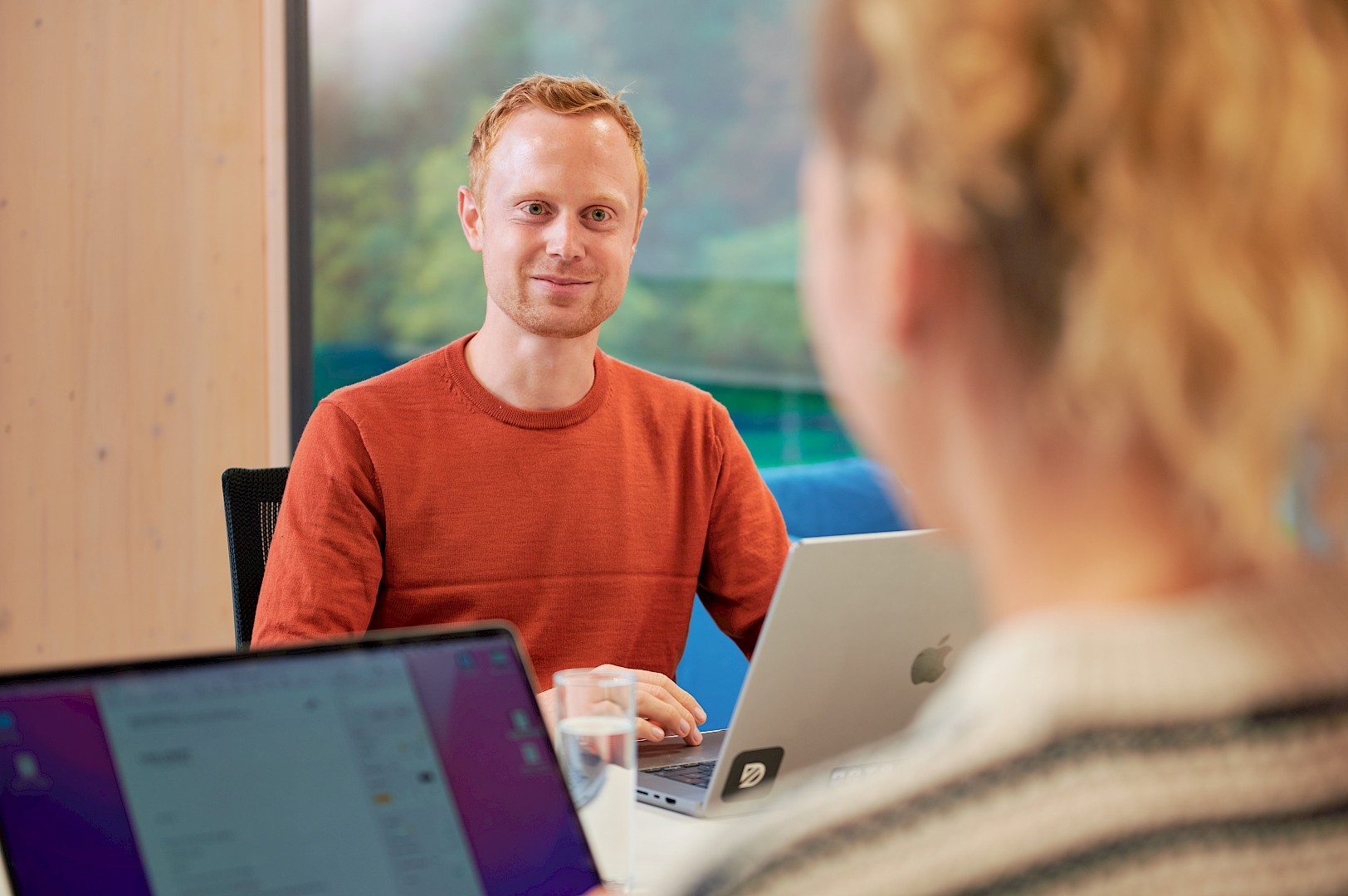
From Nordkirchen to Portugal and Mexico
Coworking spaces as a corporate advantage
Coworking stories - digital.campus Nordkirchen
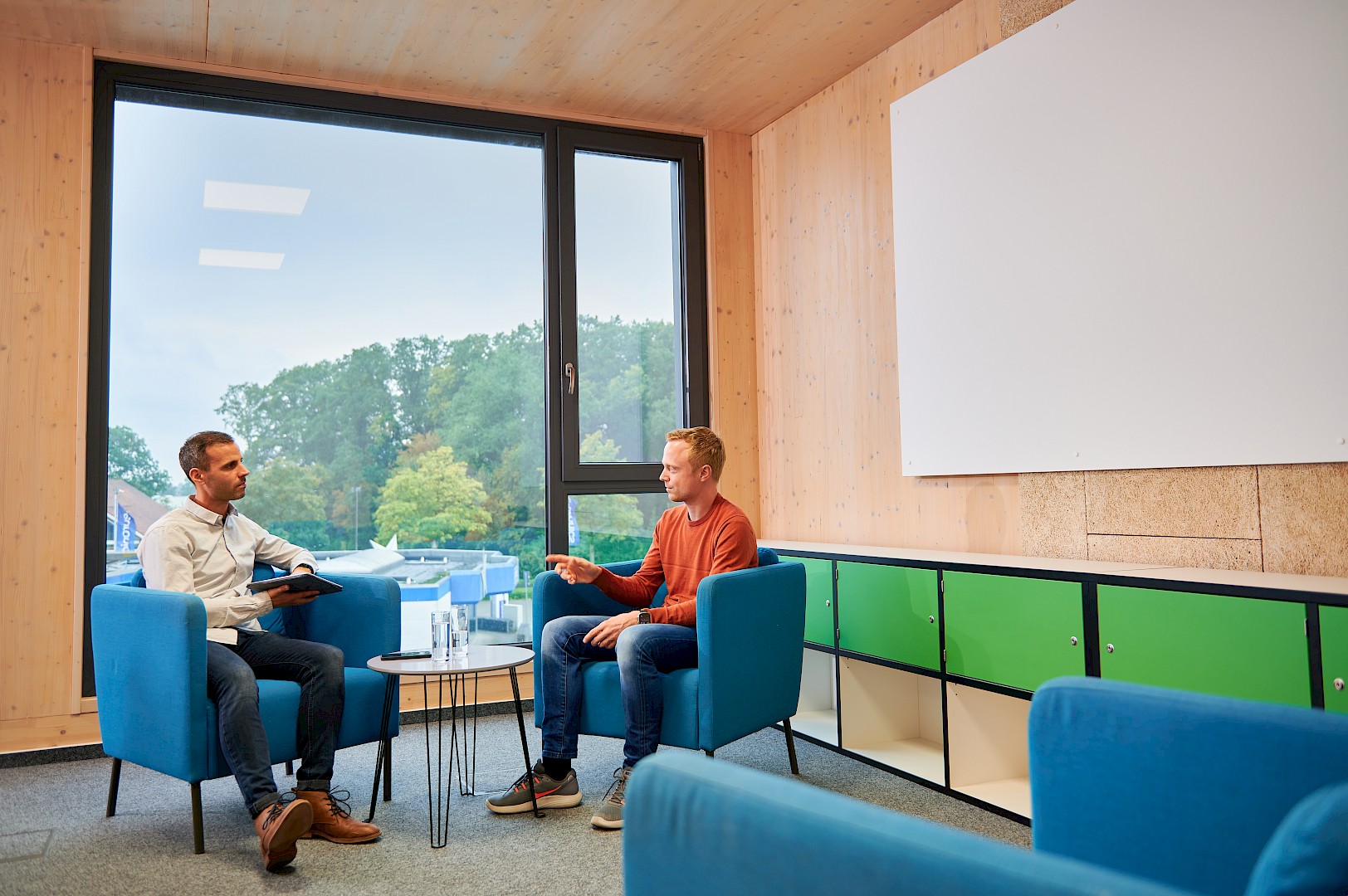
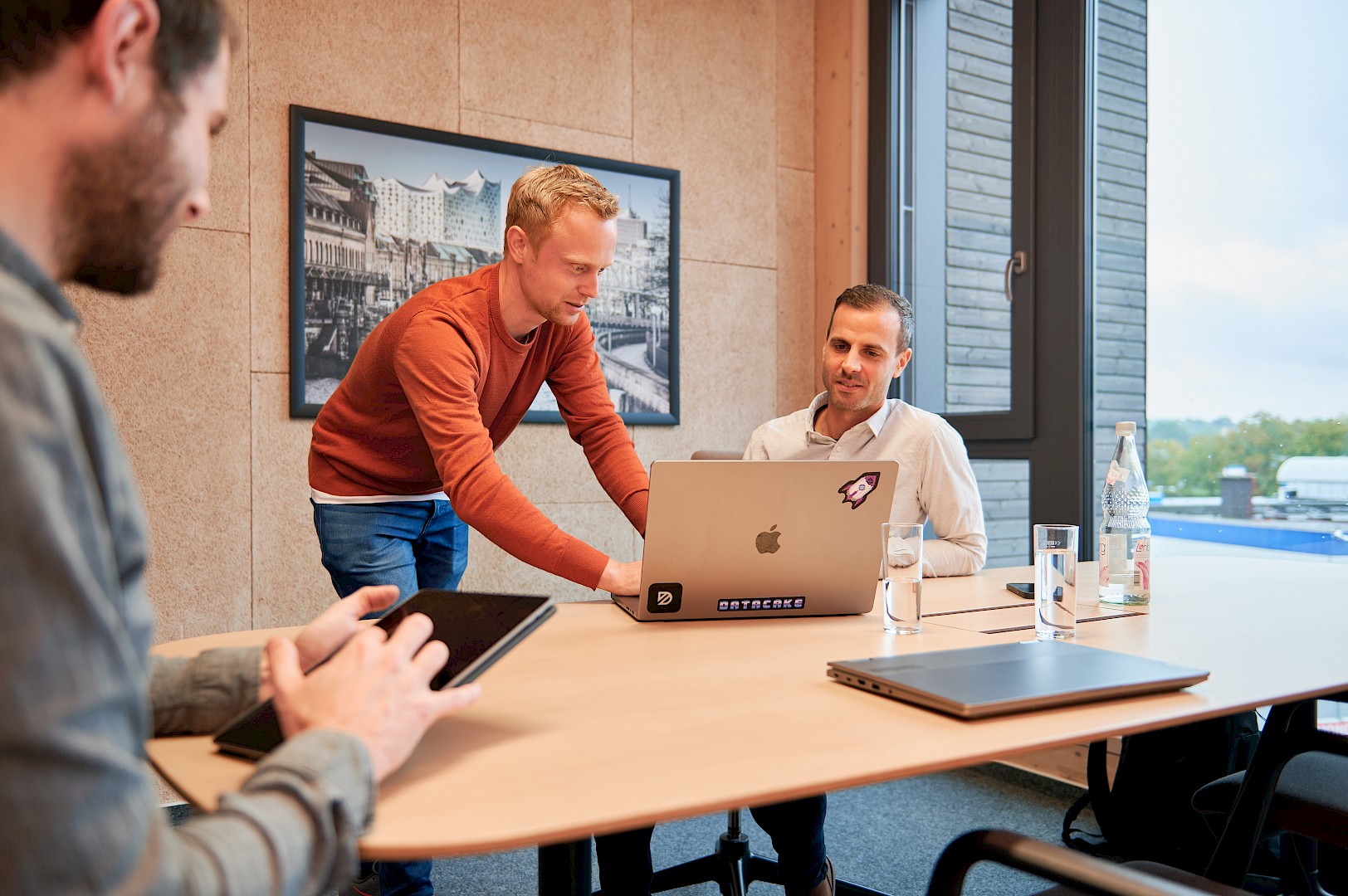
Lukas Klein is the founder and Managing Director of the software platform Datacake and lives in Nordkirchen in southern Münsterland. When he founded his company, he initially rented office space in Münster. However, the team didn't stay there for long: the entire Datacake team now works in coworking spaces - including Managing Director Lukas, who discovered the digital.campus Nordkirchen for himself.
Please note that the following text has been translated freely.
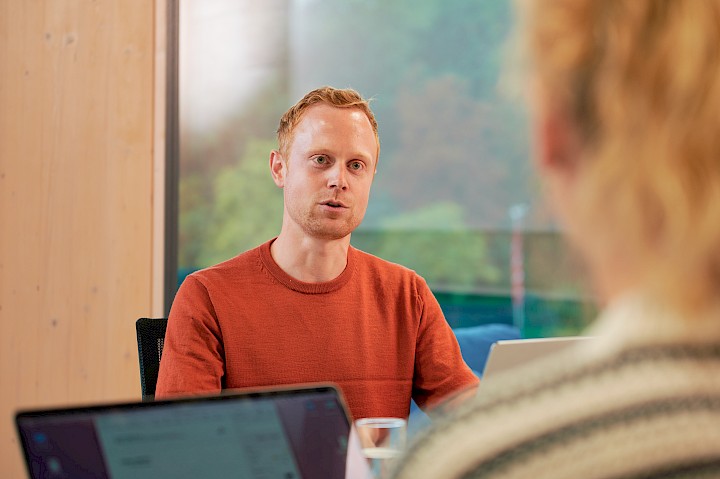
Lukas, when did you first work at digital.campus Nordkirchen and how did it come about?
Lukas Klein: I was involved right from the start: a few years ago, I heard that the municipality of Nordkirchen was asking around to see if there was interest in a platform for dialogue and co-working in the digital sector. The interest was obviously there, because the digital.campus was opened in 2018. At that time, I still had an office in Münster with my company Datacake and commuted from Nordkirchen. But then, with the digital.campus, there was suddenly a place around the corner where I could work and also network - with a much shorter journey.
And your company has now given up the office in Münster? Where does the rest of the team work?
Lukas Klein: Exactly, we no longer have a fixed office space. As our work is entirely digital, it is completely location-independent: We mainly communicate via chats and video calls. Our employees are spread all over the world and all work in coworking spaces: one is from Mexico, one has just emigrated to Portugal, one colleague recently spent a few months in Taiwan and another is based in Hamburg. Because we don't offer our employees a permanent office, we provide them with a budget so that they can rent coworking spaces in the places where they live. We also get together in person twice a year, and we use coworking spaces for this too, where individual rooms can be rented on a daily basis.
In theory, all employees could also work from home. Why do you spend money on coworking spaces instead?
Lukas Klein: Some of us also work from home from time to time. But it's simply good to get out and about, or at least to have the option of leaving your own four walls in the morning and not coming back until after work. Coworking spaces are great for this. And socialising - both private and business-related - also plays a major role. Here at the digital.campus, there are mainly people who also work in the digital sector, but still come from very different industries. It's always exciting to see what others are currently working on. In the coworking space, you can give each other helpful input, inspire each other and make contacts - for example at networking events such as the regular campus breakfast.
Who do you meet at the digital.campus Nordkirchen?
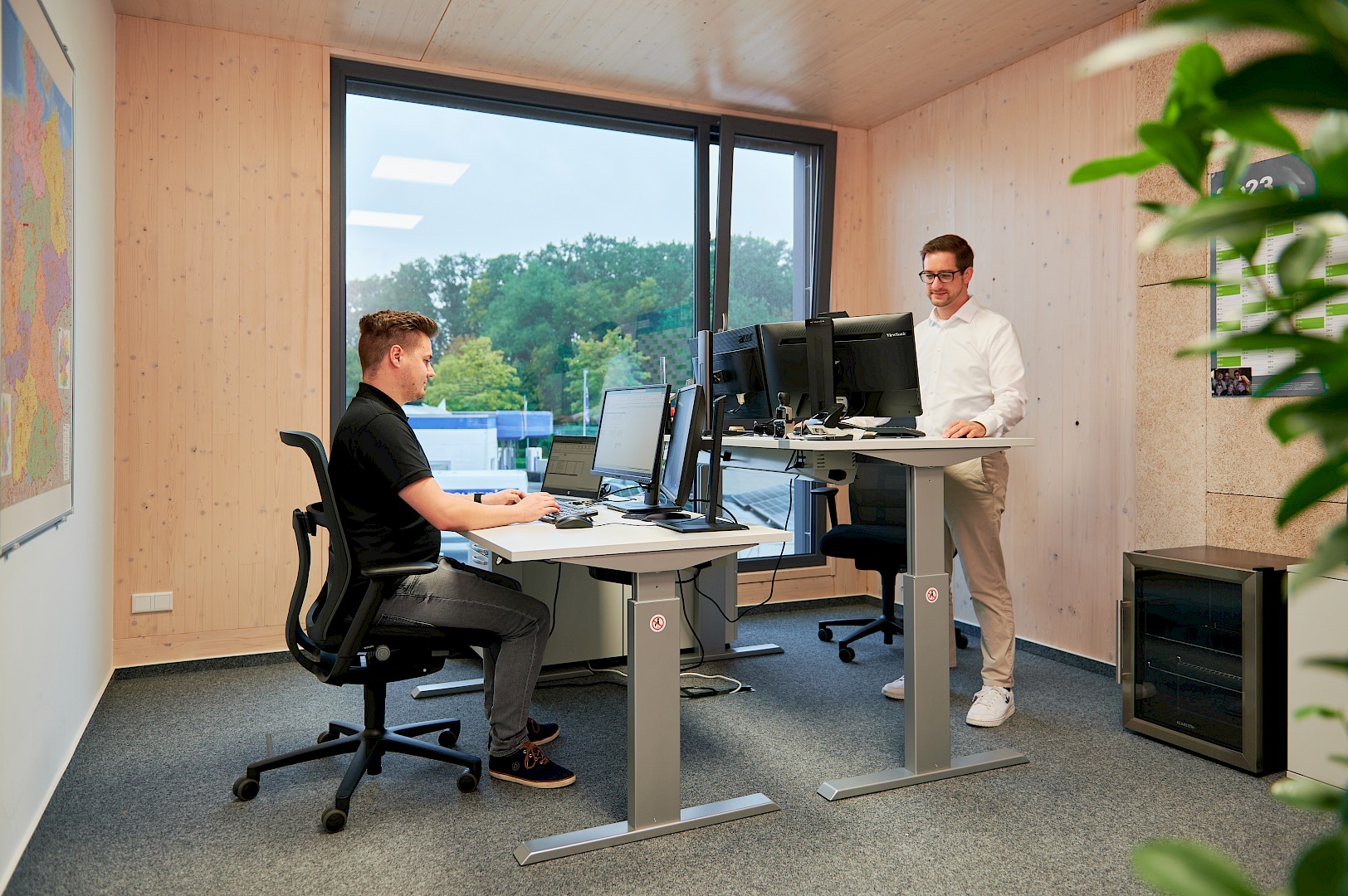
Lukas Klein: The audience is a very colourful mix. There are start-ups working here that are launching new ideas on the market and are sometimes still in the product development phase - as well as regional entrepreneurs who, like us, are out of the start-up phase, previously had their office in a city and are now using the coworking option here because it is more compatible with their place of residence. And you actually also meet more traditional small and medium-sized companies that didn't have much to do with digitalisation before and are getting help from younger, more modern companies. This exchange has already led to fruitful collaborations!
Are there any other advantages of using coworking spaces that benefit your company?
Lukas Klein: Definitely, one very important aspect is the recruitment of new employees. If we were limited to only looking for labour regionally, we would have a much harder time. The fact that there are now coworking spaces almost everywhere - both in the Coesfeld district and in other countries around the world - means that we can search for talent across regions and even internationally. That's a big advantage. Many of our employees have even made it clear from the outset that they want to be able to determine their own location. We wouldn't have been able to attract them with a permanent office in Münster - on the contrary!
You seem to be very convinced of the concept of location-independent working. As a digital company without a fixed office space, Datacake is naturally predestined for the use of coworking spaces - do you think the model will become more relevant for other companies as well?
Lukas Klein: I'm sure of it - you can see that from the high demand. Even in the small town of Nordkirchen, the coworking space is often fully booked. I believe that the topic will become increasingly important because more and more people will get used to the freedom that comes with it and demand it. I myself travelled a lot for a while and worked in coworking spaces all over the world. This flexibility is extremely valuable and therefore a great employee benefit. Of course, this is not so easy to implement in every industry, but in those areas where it is possible, it will be a major field of the future. The best example of this is Silicon Valley in the USA: since the coronavirus pandemic, some of the big companies there have closed their offices because employees can hardly find affordable housing locally. Now many of them have moved to rural areas and can work from there in coworking spaces, which benefits both sides. This shows how important this working model is and will continue to be - not only in Münsterland, but also globally.
To the digital.campus
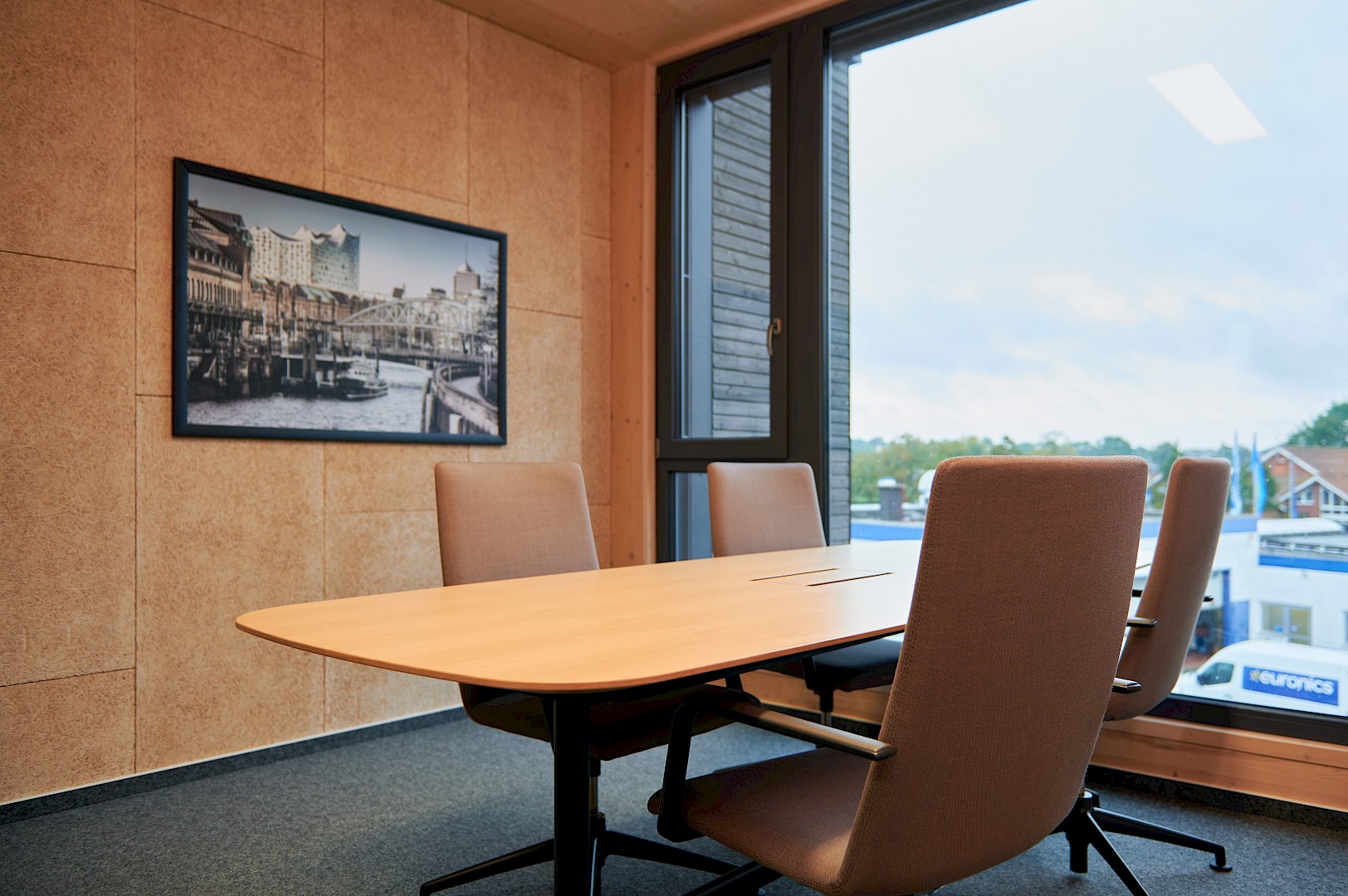
Fast internet was the decisive factor: in 2018, the municipality of Nordkirchen completed the installation of a comprehensive fibre optic network both indoors and outdoors. In order to maximise the benefits of this, the idea was born to create a coworking space and thus a platform for dialogue and networking on digital topics. Mayor Dietmar Bergmann, then business development manager Manuel Lachmann and startup founder Björn Paulus founded the digital.campus Nordkirchen e. V. association - and with it one of the first digital incubators for startups in the region's rural areas. The aim: knowledge transfer and the exchange of ideas between start-ups, companies and the self-employed - with a focus on digital transformation. Three years after it was founded, the digital.campus moved to its current location and offers professionals from a wide range of industries private and shared office and conference rooms for temporary rental. Networking events such as a regular campus breakfast encourage dialogue between users. "We also benefit from this as a municipality," reports Karim Laouari, business development officer at the municipality of Nordkirchen and contact person for the digital.campus. "We gather important ideas from the digital world here in a relaxed atmosphere, which we can then try out in a low-threshold way." For example, the municipality recently equipped e-waste containers with sensors from Datacake - the company of Lukas Klein, whom Karim Laouari met at the digital.campus. "The coworking space brings a wide range of expertise to Nordkirchen - a real win-win situation!"
Direktlink
digital.Campus Nordkirchen