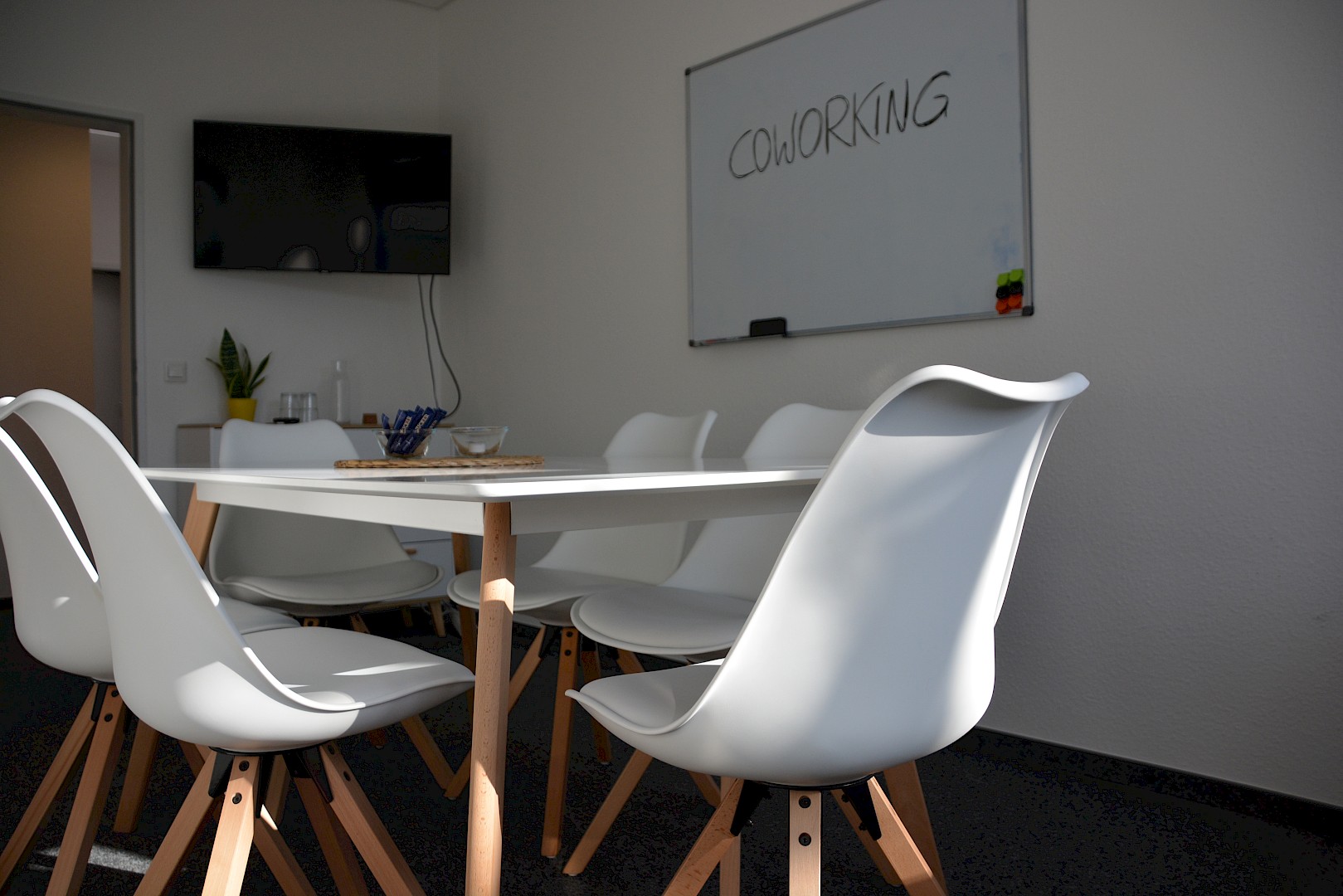
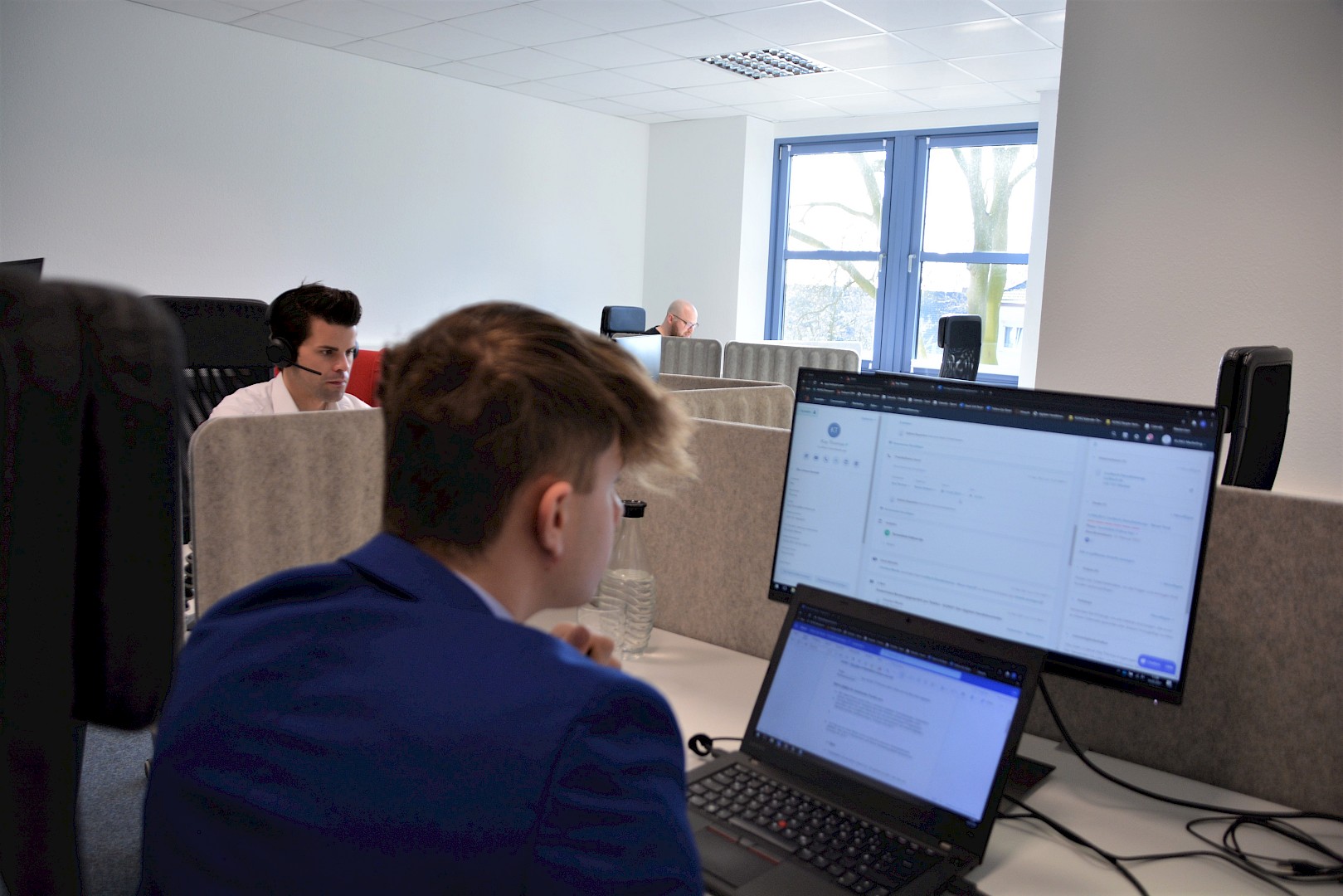
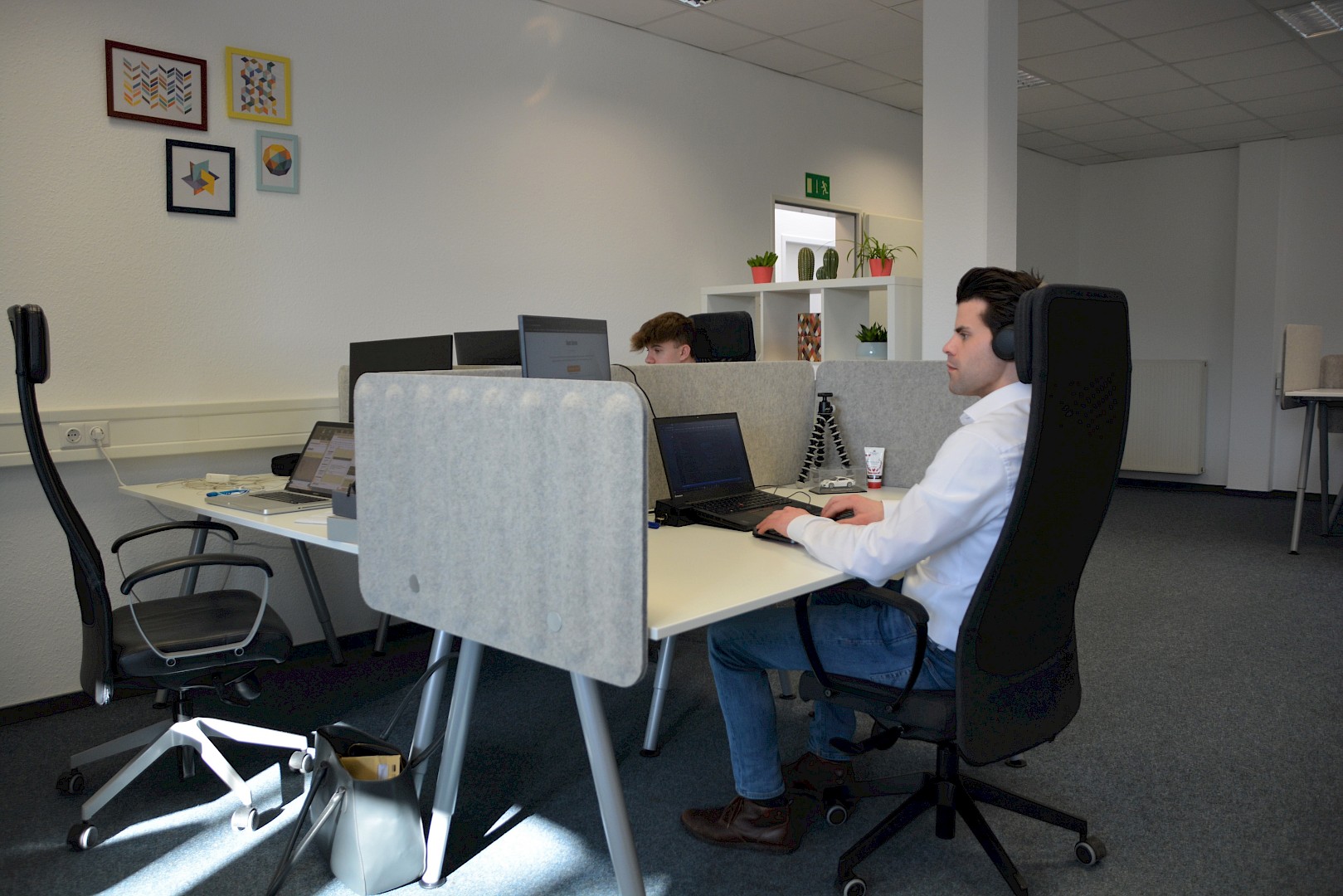
When the most diverse sectors and types come together.
An interview about shared offices, coworking spaces and agile working in Dülmen.
Coworking stories - dülmen.works
Sven Forell, Managing Director of IT service provider ConIT from Dülmen, founded the coworking space "dülmen.works" on the company's premises in 2020. In this interview, he explains how it came about, what advantages it brought and what potential coworking offers for the labour market.
Please note that the following text has been translated freely.
Sven, why did you decide to open the coworking space in 2020?
Sven Forell: The reason why we opened the coworking space was, on the one hand, the available space and, on the other, that we are an IT service provider, an IT consultancy, an IT systems house. I always believed that if anyone could work remotely, it was us. At the same time, I knew the problem that start-ups have in Dülmen and other municipalities: There is a lack of space and places. And you really only have two options: Either you rent an office directly - which is usually relatively difficult as a sole trader - or you do it from home. At home, however, always has the disadvantage that you don't want to have customers sitting at your living room or dining room table. I realised that we don't yet have a coworking space in Dülmen and that would be very exciting for small companies and start-ups in particular. You find a point of contact, you come, rent a meeting room, have a postal address, but you don't have a big investment or a commitment like with a full office.
Have the expectations you had been fulfilled or has it turned out differently than you thought?
Sven Forell: The start was actually quite bumpy, as we really began 2020 in the middle of the corona phase. Despite corona, the response we received was consistently good. This means that everyone involved, such as the business development organisations, found the topic very exciting and supported it, but also that we actually had a wide variety of tenants from day one: We had PhD students who wrote their thesis over six months and actually studied at a university abroad, gaming developers who spent the whole winter programming with us, small individual entrepreneurs and also start-ups that started with one person and ended up with a team of three. So I would say that the basic idea has worked.
That sounds like a versatile use - how is it going at the moment?
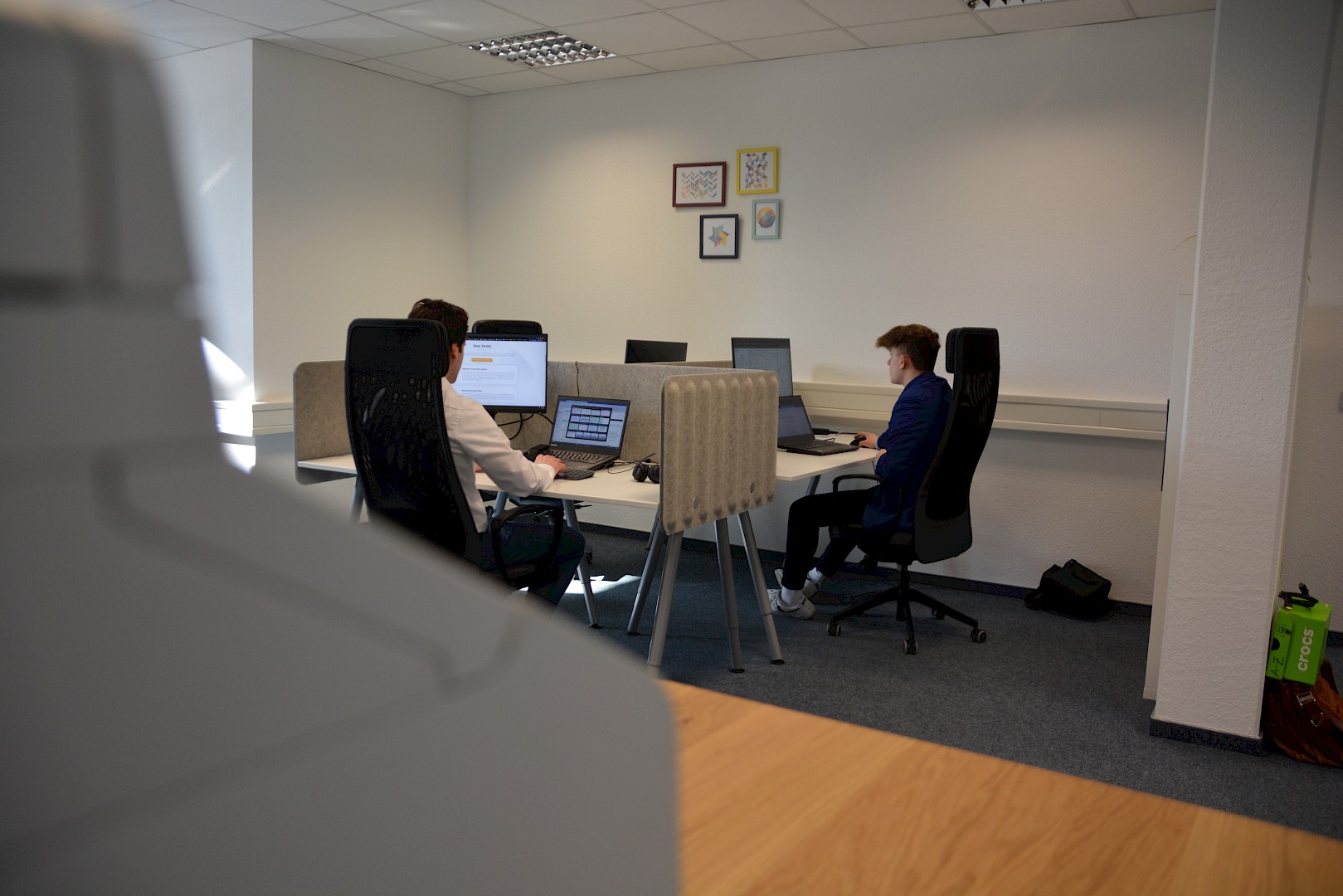
Sven Forell: At some point, we faced the problem that we had grown as ConIT Solutions, which operates this coworking space. As a result, we had to reduce the number of spaces on offer again, simply because we needed the space ourselves. We have now recently moved into new office space and have the opportunity to rent out individual offices. As a result, we have reduced the number of offices on offer somewhat and have become a kind of shared office: currently with a small company that does software development and a freelance photographer who also works with our marketing department. We knew each other through the coworking space and both then moved into the new office space with us.
So you've also moved closer together in terms of cooperation...
Sven Forell: Yes, exactly. When we talk about coworking, it's a new German word for shared office space. We keep realising that individual offices are very popular. I think it hasn't quite sunk in yet that a shared desk model is also possible. Many large companies have not yet embraced this, for reasons of data protection. That's why individual offices still work much better. We also had these requests from companies for individual offices in 2020 - but we weren't able to meet this demand back then.
Is there anyone else who is "missing" from your office community? Are they more likely to be individuals due to the space available?
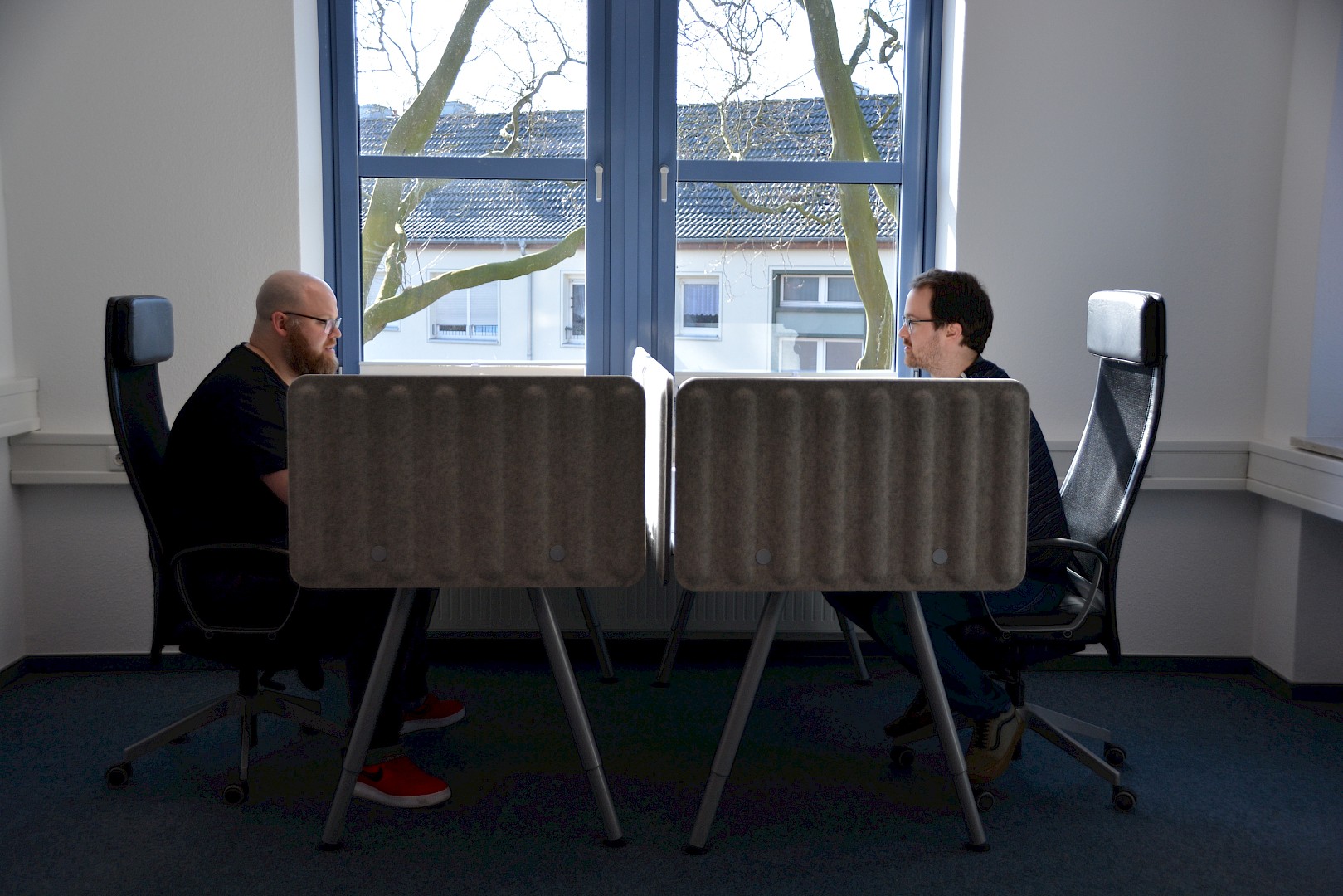
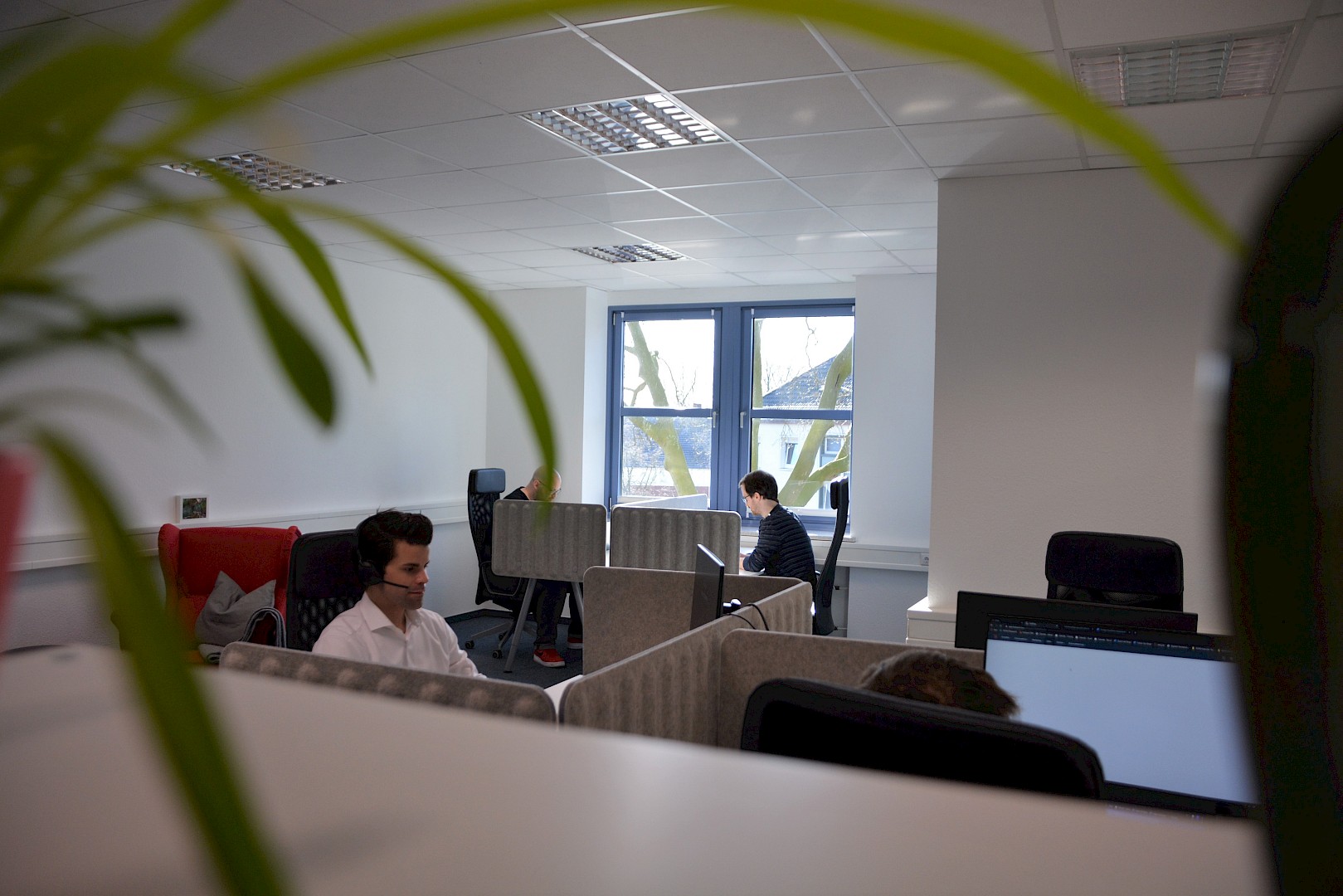
Sven Forell: Coworking thrives on the fact that a wide variety of industries and types come together. The advantage that we had in the initial phase of ConIT Solutions and the founding of dülmen.works as a coworking space was that you can meet at the coffee machine or get into conversation in a different way. Every other person, every other industry has a different perspective on the stories that drive you around. This exchange of experiences is very exciting. It doesn't matter whether it's a sole trader, a small start-up or an established CEO of a company who has rented a space for a day. This combination in particular is very exciting - for all coworkers who are here.
Do you promote networking in any particular way at dülmen.works, or is it traditionally the coffee machine and the daily doings?
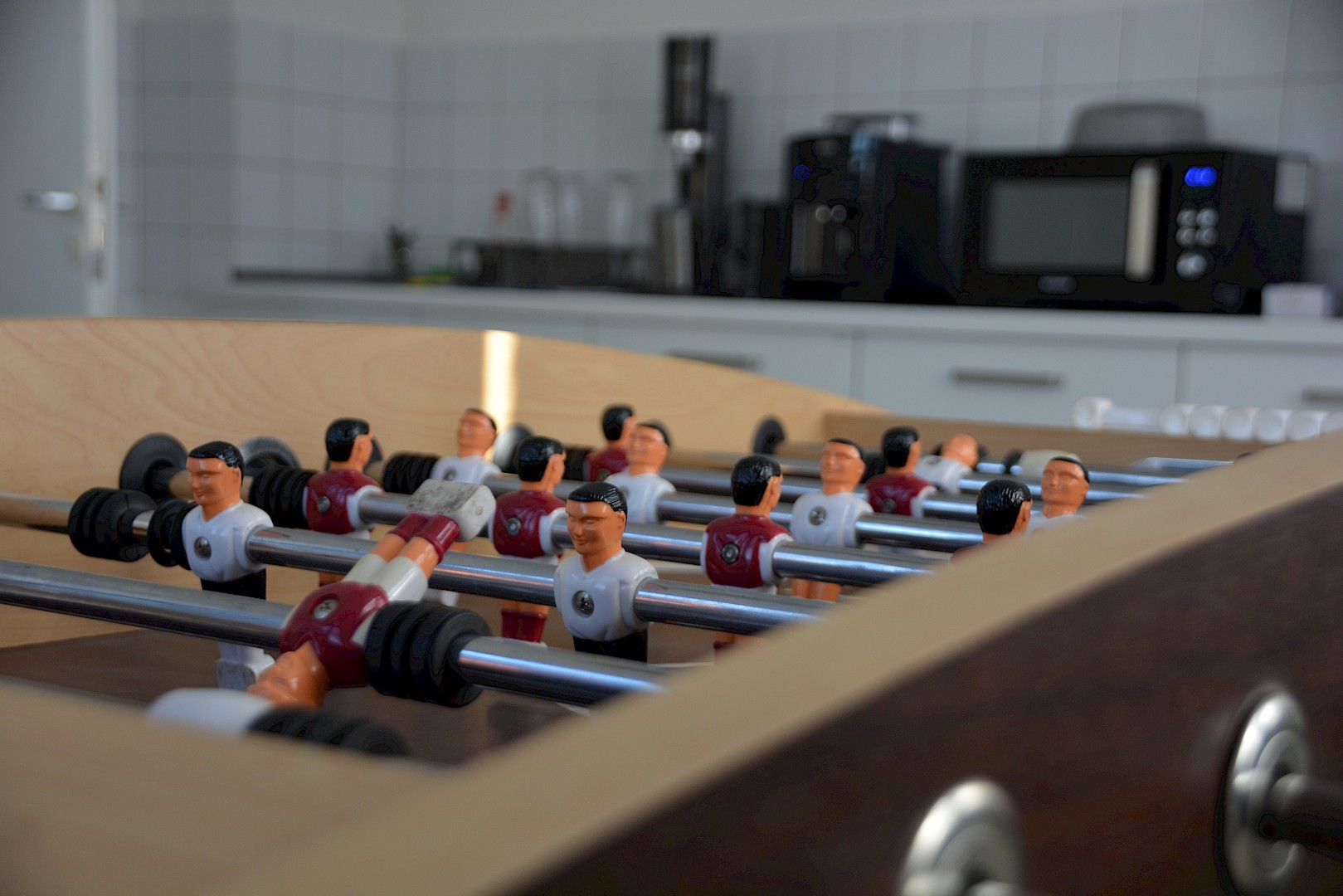
Sven Forell: The coffee machine is actually still a huge point, but so are joint lunch breaks where we all order food together. The company's table football table is of course always a point of contact, as is our Friday beer round, which we used to do regularly. The advantage was that we were already doing these things with ConIT as a company and the coworkers simply joined in. In other words, we didn't start our own initiatives as a coworking space, but simply expanded on what we already had in the company and took people with us.
And will it stay that way or will networking become even more important in the future?
Sven Forell: One thing we started back in 2020 was to set up a regulars' table for young entrepreneurs and start-ups with the city of Dülmen. At the time, it was a pilot project that emerged from a coworking workshop with the district's economic development agency. It was so well received that we simply developed the topic further. After the first meeting, however, the project was cancelled due to the coronavirus pandemic. Back then, we started with an online beer tasting, which was aimed at coworkers from our coworking space as well as a broad range of founders, young entrepreneurs and successors. This resulted in a great round. The following year, we took up the format again and intensified it. It has now developed into a regular start-up get-together in Dülmen, which meets once a quarter. The networking idea is at the centre of this, where everyone contributes knowledge impulses. Last year, for example, we had talks on social media, AI, IT security and tax issues. For us, the regulars' table is something that we always enjoy attending and participating in, even if the proportion of coworking has decreased.
As an employee, I wonder a bit what the advantages of a coworking space are compared to my home office ...
Sven Forell: I think at some point it gets annoying just being at home. You procrastinate - at least that's what I know from my own experience. Of course, working from home as a "modern work" concept also has advantages, as you can decide more freely when to do your work. Nevertheless, at some point there is a lack of social interaction and this is where a coworking space is helpful. We ourselves have a permanent coworking office for our employees in the Borken district, for example, which offers the advantage that people have a second location that they can come to and don't just have to sit in their home office. They can socialise with other coworkers there. They get different perspectives on certain topics and don't "isolate" themselves as much as in the home office.
Yes, that's right. So you as a company also work together with other coworking providers. From the company's perspective, what were the reasons that prompted you to establish this offer for employees?
Sven Forell: It had to do with the fact that, on the one hand, we have a relatively large number of customers in the Borken district and, on the other, a good 40% of our employees come from there. We leave it up to the employees to decide where they work from, whether from their home office or from the office here in Dülmen. However, we have realised that people don't want to travel quite so far to get to the office. This gave rise to the idea of offering coworking for our own employees in the neighbouring district. The advantage of this is that you don't have any long-term commitments and are relatively flexible. There is no capital commitment. If I rent an office, I have to take care of an internet connection and may have a minimum rental period of two years. With a coworking space, I have a high degree of flexibility in this area. Nevertheless, I have the opportunity to offer my employees a location that includes the idea of networking with other companies. We have now expanded the coworking offer for our employees. Even if they are further away, they have the option of going to other coworking spaces. We bear all the costs. For example, if we have a customer appointment for two days in Hamburg, we can go to a coworking space there. That also makes a lot of sense for Workation.
Ok, then there's just one question left: what do you think is needed for coworking to be better recognised and used?
Sven Forell: I think we need to rethink the current world of work. A "modern work" approach is a step in the right direction. Corona was a good catalyst for this. Nevertheless, I have the feeling that it hasn't yet fully caught on. I'm increasingly hearing that there are many companies that prefer to see their people back in the office. However, some have also halved the number of office spaces and are sending people to work from home. I believe that we also need to change something politically. Data protection in particular is an important issue. The question is always, how do I approach all these data protection components in coworking? Ultimately, people and companies are responsible for themselves to a certain extent. Nevertheless, there must also be a legal basis for certain things. However, this often fails because nobody really knows how to deal with it if someone sees something. There are also no clear regulations in terms of occupational health and safety. These are issues that we need to push forward before coworking can really take off.
So in your opinion, more security is needed from the regulatory and legal side to reduce the uncertainty of employers?
Sven Forell: Yes, on the one hand there is the regulatory component, but at the same time employers also need to rethink their approach. An obligation to work from home is basically useless. It has to click with employers so that they voluntarily offer their employees agile working. However, this is primarily a technical problem. As IT consultants and IT service providers, we realise that in many companies it is not technically possible for employees to work remotely in the same way as in the office. There are always some restrictions that we have to solve. Things are moving in the right direction, but I think it will be a few years before we get there.
Direktlink