
Coworking?
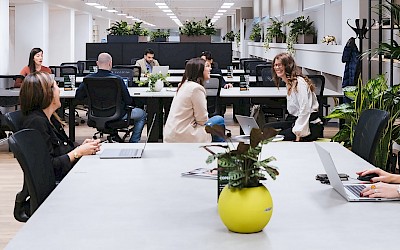
Coworking, which translates roughly as "working side by side", usually takes place in coworking spaces created specifically for this purpose. However, the users of these spaces do not necessarily work on the same task or for the same company. Rather, the basic idea behind coworking is to bring people with different professional experiences and backgrounds together in one place and thus be able to utilise synergy effects particularly well.
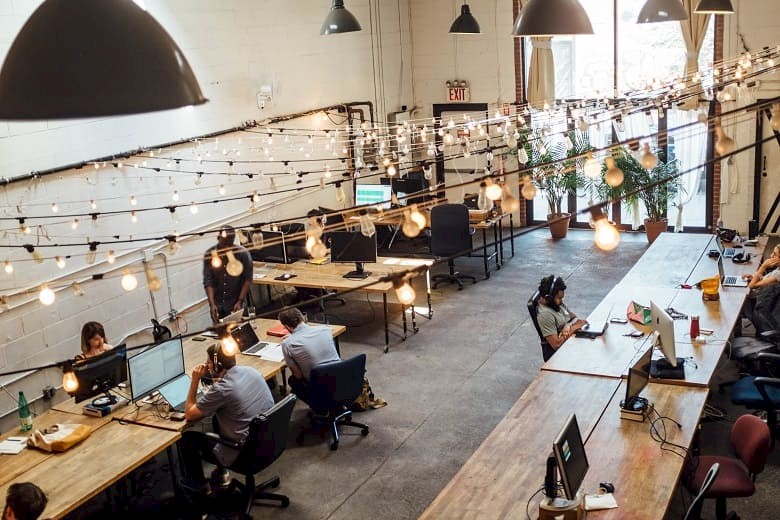
The spaces themselves are usually multifunctional rooms that have flexibly bookable workstations, a certain standard of equipment such as ergonomic office chairs and desks as well as modern hardware or conference and meeting rooms that can be booked by users. Coworking spaces are also referred to as "third places", i.e. as an alternative to the traditional workplace in the employer's office or the home office, and are characterised by flexibility, independence and networking opportunities. The existing community and togetherness in the spaces are a major advantage over working models such as the home office, where employees often lack the social component of working life.
The development of coworking
When the first coworking space was opened in San Francisco in 2005, it was more of an urban phenomenon. As a result, other spaces were also initially opened in urban areas, i.e. large cities and metropolises. Since then, the concept of coworking has established itself worldwide and coworking spaces are also increasingly being found in rural areas.
As a result of the coronavirus pandemic and the associated steps to relocate the office to one's own four walls, companies and employees have learnt that long commutes, especially in rural areas, and large office spaces are not absolutely necessary for productive work. Enormous cost and time savings and an increase in flexibility are the result, which hardly anyone wants to do without today.
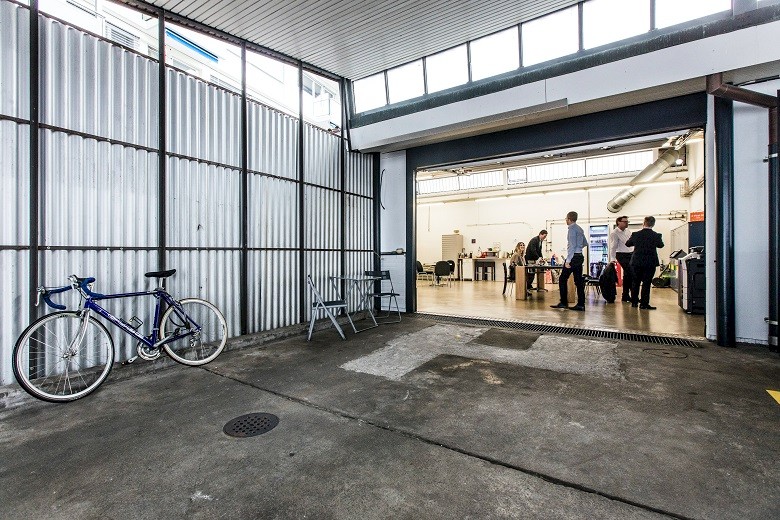
To date, other forms have emerged alongside the original coworking variant. To name just two: In the "workation" model, coworkers can combine their work (work) with their holiday (holiday) and book appropriately equipped spaces that are located near the beach, for example, or have an attached campsite. "Maker spaces are more likely to appeal to users from the craft sector, as these spaces have well-equipped workshops.

Who is coworking suitable for?
Do you enjoy working in company, value a well-equipped workplace or don't have the opportunity to set up your own home office? Then coworking is for you! Flexible renting of one or more workstations in a coworking space can be particularly useful for freelancers and start-ups, as it can save on the costs of your own office space and its equipment. In addition, networking between coworking space users can lead to joint projects and orders.
However, coworking spaces can also be an alternative for employees and companies. As an employee, you save time and money by eliminating long commutes and improve your work-life balance. By enabling coworking for employees, companies strengthen their brand as an employer and can thus attract and retain skilled workers. In many spaces, premises can also be rented exclusively for the company's own employees. Working exclusively in an open space is therefore not a must.
The 5 basic values of coworking
For some, coworking is simply a way of organising everyday life more easily and flexibly, for others it is a way of living and working, and for others economic and financial reasons play an overriding role. However, they are united by the 5 core values of coworking.

Openness
Openness in coworking means that anyone can be a coworker. This is not just reserved for freelancers or solo entrepreneurs. More and more companies are discovering the benefits of coworking for themselves and enabling their employees to do so.

Accessibility
No one is excluded from coworking, regardless of their gender, religion or professional background.
Sustainability
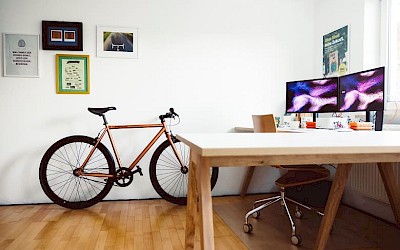
The very concept of coworking is inherently sustainable: several people share the same space and resources - ideally at a distance from their own homes that can be travelled by public transport or bicycle.
Collaboration
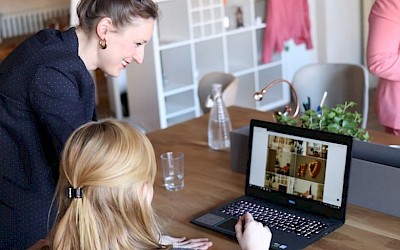
Coworking focusses on a "we-feeling". The more diverse the community in a space is, the better: different perspectives and approaches, ideas and insights can be shared, making it easier to overcome challenges.

Community
Coworking offers particularly good conditions for collaboration. Self-employed people and freelancers in particular find opportunities here to find new jobs and customers. But companies can also benefit from expert knowledge here.


