


Wind power
Due to its high global availability, relatively low costs and high development standard, wind power is considered one of the most promising renewable energies. Wind turbines are usually installed in several wind farms, which are built on land (on-shore) or at sea (off-shore). It is particularly important to install these wind farms in locations with high wind speeds, because the wind speed enters into the tappable wind energy with the power of 3. The efficiency of converting wind energy into electrical energy is around 30 to 50 percent, thanks in no small part to the high-tech gearboxes.
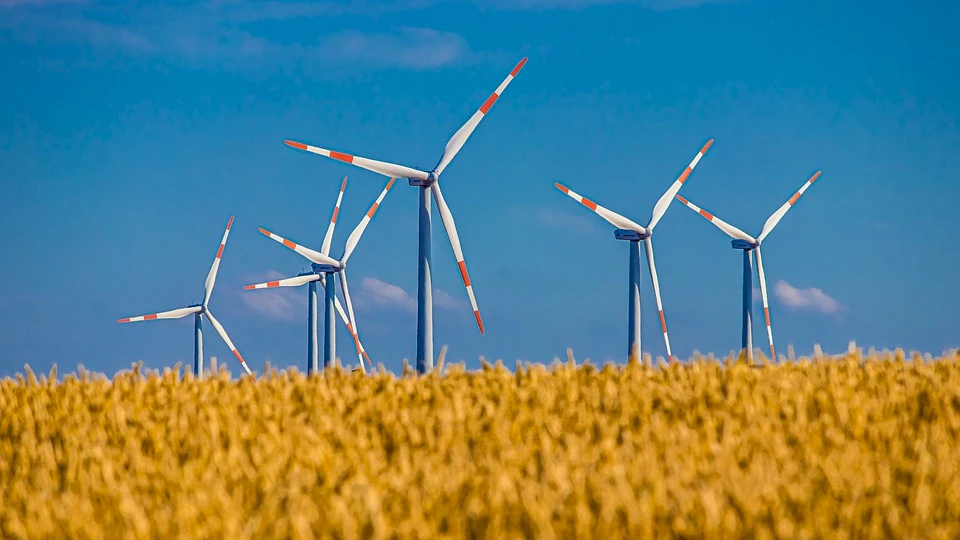 Wind power
© https://pixabay.com/de/photos/windrad-feld-getreide-himmel-4550711/
Prerequisites for use
Dependence on nature
The main disadvantage - especially with onshore turbines - is the irregular power output, which fluctuates with the wind and must be compensated for by sensible power plant management. When the wind is strong, a wind turbine generates 100 per cent of its rated power (= full load), and 0 per cent when the wind is calm.