Family reunification

If you have travelled to Germany as a skilled worker from a third country, your family members are entitled to family reunification under certain legal conditions.

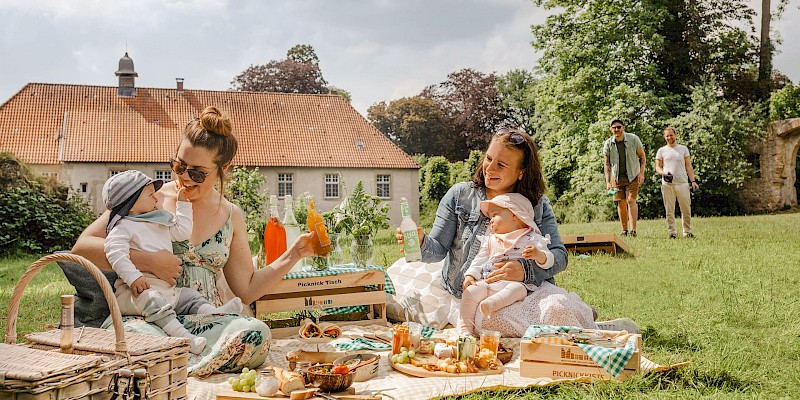
© Münsterland e.V.
What do you need for family reunification?
  • Settlement permit or residence permit
  • Sufficient living space for you and your family members
  • Secured livelihood for you and your family members
  • Proof of basic German language skills for your spouse travelling to Germany
  • There are various simplifications for family members of skilled workers and highly qualified persons. Detailed requirements for family reunification can be found on the website of the Federal Office for Migration (BAMF). Immigration of third-country nationals with subsidiary protection has been suspended for two years since 24 July 2025.

Childcare

Children in Germany have a legal right to a childcare place from the age of one. It is important for children to attend a daycare centre as early as possible so that their development and language skills are promoted in the best possible way.
Source: Federal Office for Migration and Refugees

What models of childcare are there?

  • Child day care: care provided by a childminder on a small scale (up to 5 children), often family-like and flexible.
  • Large-scale day care: A group of several childminders who look after up to 10 children together, usually in rented rooms.
  • Child day care centre (Kita): Institutional care in groups by educational professionals, with fixed concepts and structures.

What are the childcare hours?

In Münsterland, the number of hours is usually standardised; the specific times vary depending on the facility.

  • 25 hours/week (half-day)
  • 35 hours/week (extended care)
  • 45 hours/week (full day)

What are the costs?

  • The costs are not standardised, but are determined by the responsible youth welfare office of the respective local authority (see blue box).
  • The parental contribution usually depends on the parents' income, the amount of childcare time booked and the age of the child (under 3-year-olds are usually more expensive than over 3-year-olds).
  • Catering costs are usually charged separately by the facility and are in addition to the parental contribution.

What is free or discounted?

  • Free nursery years: The last two years before starting school are generally free of charge in North Rhine-Westphalia.
  • Individual exemption from contributions: Families with a low income or who receive social benefits can be exempted from all or part of the parental contribution.
  • Sibling regulation: In many local authorities, only one child (usually the one with the highest contribution) is charged in full, while siblings are reduced or exempt from contributions. The exact structure is determined by the respective local authority.
© Münsterland e.V./Christoph Steinweg
CONTACT POINTS FOR CHILDCARE IN MÜNSTERLAND

Take advantage of the information on childcare and if you have any questions, contact the contact point responsible for your place of residence in the districts or the city of Münster. If you don't know which district your place of residence belongs to, have a look here.

The KiTa-Finder NRW can also help you find a suitable daycare centre in your area.

Link tip

© Münsterland e.V.
Financial support for families

In Germany, there are state benefits that provide financial relief for families after the birth of a child - for example, child benefit and parental allowance.

  • You receive monthlychild benefit for each child - currently €259 (as of January 2026). As a rule, you are entitled to this if you live and work permanently in Germany with your child.
  • Parental allowance helps you if you work less or not at all after the birth of your child. The amount depends on your previous income - at least €300 and a maximum of €1,800 per month.

You can find out where and how to apply for the benefits, who is entitled and what you should look out for here.

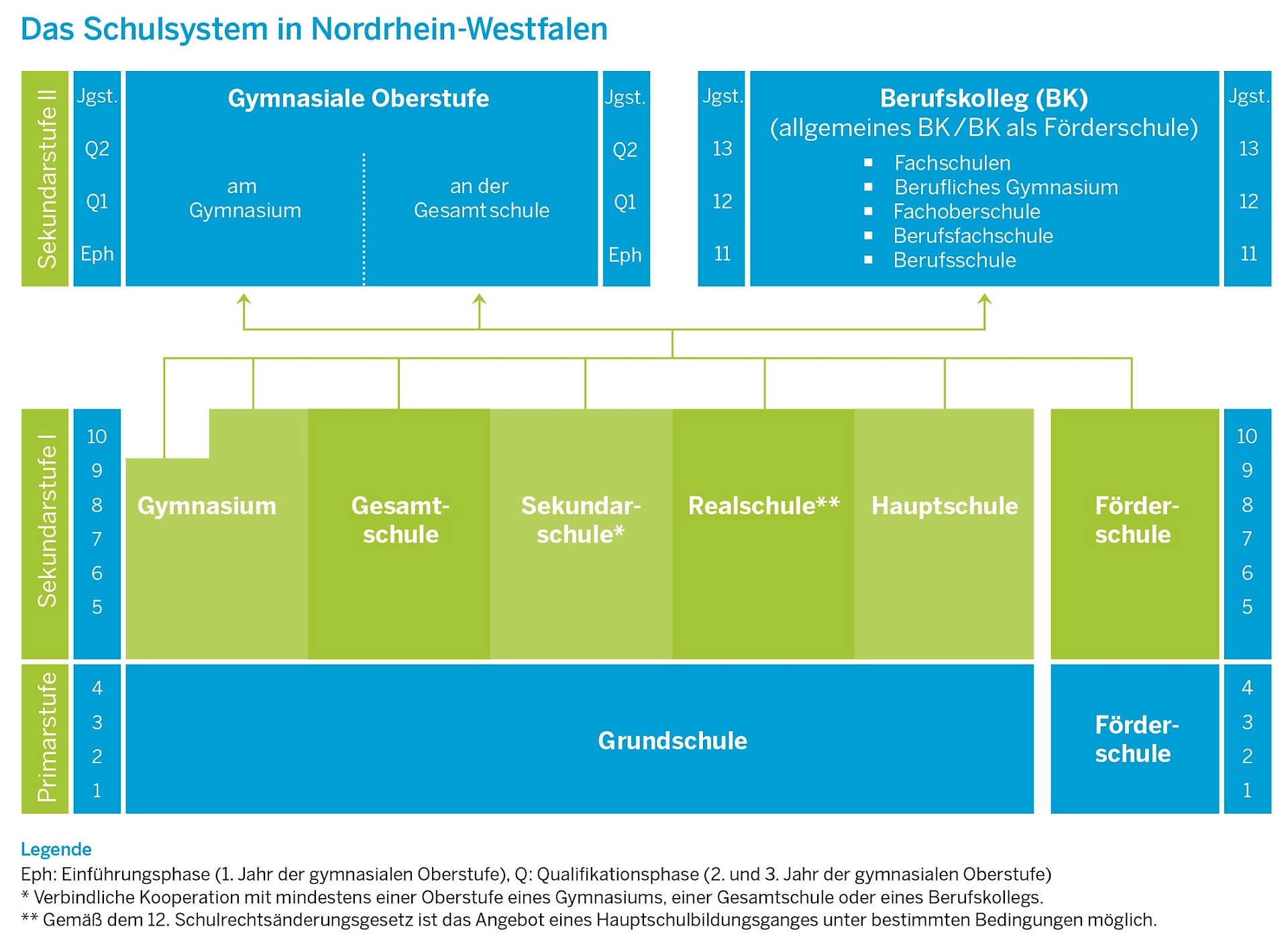
North Rhine-Westphalia school system

If your children are older than six, they have to go to school, as school attendance is compulsory in Germany. Most schools are state-run, so attendance is free of charge. Home schooling is only permitted in exceptional cases, for example in the event of prolonged illness.

Basic structure

  • Primary school: There is at least one primary school in every municipality. This comprises grades 1 to 4 and forms the common basis for all children in the education system.
  • Secondary schools: In most larger cities, there are all types of lower and upper secondary schools (Hauptschule, Realschule, Gymnasium, Gesamtschule, Sekundarschule). In smaller municipalities, not all school types are always available.
  • School-leaving qualifications: At all types of school, pupils can obtain both the Hauptschulabschluss after years 9 and 10 and the Mittlerer Schulabschluss (Fachoberschulreife) or equivalent qualifications. As a rule, the programme leading to the Abitur takes eight years at grammar schools and nine years at comprehensive schools and secondary schools.
  • Travelling to school and bus connections: If there is no suitable secondary school in your own town, there are usually organised school bus or public transport connections to the nearest school.

You can finddetailed information on the different types of school as well as a flyer in various languages on the website of the Ministry of Schools and Education of North Rhine-Westphalia. On the YouTube channel "Schulen im Team" you can find clear explanatory videos on the school system after primary school in several languages.

Contact and registration

Free choice of school: In principle, there is a limited free choice of school in NRW. Parents can choose a school and enrol their child there. However, admission depends on capacity, proximity to home and school concept. There is no legal entitlement to a particular school outside the catchment area or area of responsibility.

School year: The school year in North Rhine-Westphalia begins after the summer holidays, usually in mid-August (varies slightly each year). This differs from many other states, where the school year often starts in January or autumn.

Contact and enrolment:

Primary school (enrolment):
Primary school enrolment in Münsterland is automatically organised by the local authority. This means that parents do not have to enrol their child themselves, but receive an invitation from the responsible authority (education authority or city or district) in good time. When registering at the primary school, a personal interview takes place. The aim is to prepare the child for the start of school in the best possible way.

Typical topics covered during enrolment are

  • the child's linguistic development
  • the general level of development (e.g. motor skills and social behaviour)
  • Parents' wishes regarding the school
  • Possible need for support

Frequently asked questions are, for example

  • Are there any special support needs?
  • How well does the child speak German?
  • Are there any health restrictions?
  • Is childcare required in the afternoon (open all-day school - OGS)?
  • Which school do the parents want for their child?

Secondary schools:

After primary school, the children transfer to a secondary school (e.g. Hauptschule, Realschule, Gesamtschule or Gymnasium). The primary school advises the parents and makes a recommendation. The enrolment is then carried out independently by the parents, usually in the spring before the new school year.

Registration during the year (change of school):

If a child moves to a new school during the current school year, enrolment takes place directly with a school or via the education authority. Admission depends on available places. If necessary, the school authority will allocate a suitable school in the neighbourhood. As a rule, the following are required
  • School reports and previous school records
  • a personal interview.
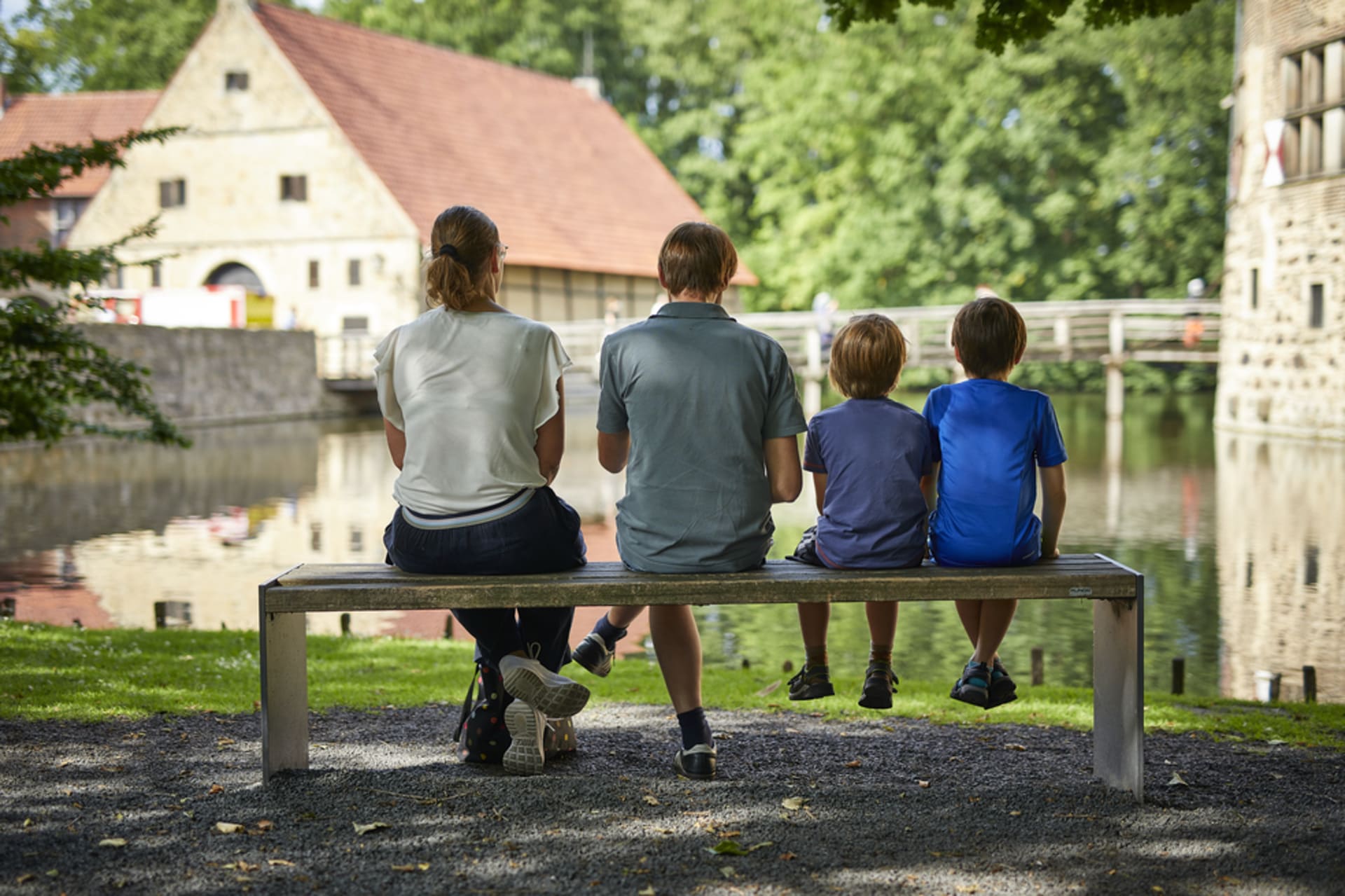
© Christoph Steinweg

There is no central educational counselling centre in Münsterland. Instead, various public organisations work together. These include the school authorities and educational services of the districts and the city of Münster as well as the municipal integration centres. You can contact the advice centre in your place of residence. There you can get help on topics such as school, training or further education. If you don't know which district is responsible for you, have a look here.

You can use the search function on the website of the NRW Ministry of Education to search for specific schools according to various criteria and thus access the relevant data sheet directly.

Important framework conditions

© Münsterland e.V.
  • Language support: Children with no knowledge of German are generally accepted into the school system and receive targeted support in learning German. This includes special support programmes such as German as a second language (DaZ), preparatory classes and additional language support lessons in mainstream classes. The aim is rapid integration into the mainstream class.
  • All-day schooland childcare (OGS): The open all-day school (OGS) is a voluntary childcare programme before and after lessons. It usually includes lunch, homework supervision as well as leisure and support programmes. Participation is subject to a fee depending on income; the lunch money is additional.
  • Costs: Attendance at public schools is generally free of charge (no school fees). Costs are generally only incurred for OGS supervision, lunch, excursions and materials.
  • School uniforms: There are no school uniforms at public schools in Münsterland; pupils wear their own clothes.

Public holidays and closing times

If you are new to Germany, it can be surprising: Many establishments are closed on public holidays and Sundays. This applies, for example, to

  • Kindergartens and schools (usually also on Saturdays)
  • Public authorities and offices (usually also on Saturdays)
  • banks
  • Many shops and supermarkets

Here you will find an overview of public holidays in North Rhine-Westphalia. There may be additional or different public holidays in other federal states.

  • New Year: 1st January
  • Good Friday: March/April
  • Easter Monday: March/April
  • Labour Day: 1 May
  • Ascension Day: May/June
  • Whit Monday: May/June
  • Day of German Unity: 3 October
  • All Saints' Day: 1 November
  • Christmas: 25-26 December

Note: Some public holidays have a different date every year.

TIPS FOR EVERYDAY LIFE

© Münsterland e.V.
  • Find out about holiday periods (important for childcare)
  • Plan purchases in advance
  • Arrange appointments with authorities well in advance
  • Use the emergency services for urgent matters

What is open on public holidays and Sundays?

  • Hospitals and pharmacies (emergency service)
  • Police and fire brigade
  • Restaurants and cafés (often open)
  • Petrol stations and some shops at train stations and airports

Here you will find a calendar for North Rhine-Westphalia with all school holidays, public holidays and bridging days.

Leisure time

Making contacts - especially in rural areas

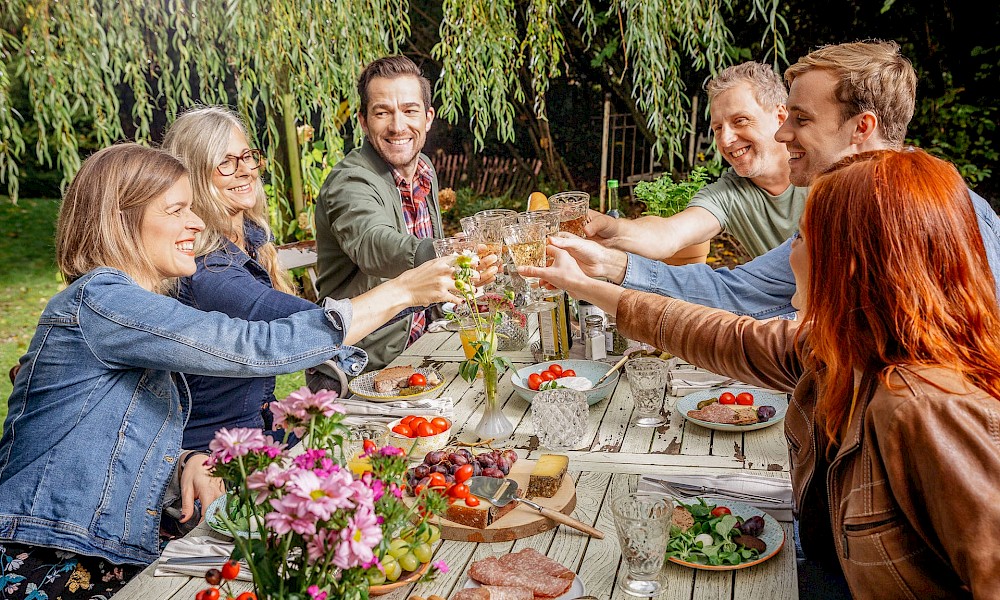
  • Use daycare centres and schools as social centres: Parent networks develop almost automatically at drop-off and pick-up times, at parents' evenings or parties. Actively approach others ("How long have you been here?"), arrange play dates or small outings. Stable friendships often develop as a result - and not just for children.
  • Consciously experience your neighbourhood: Neighbourhoods are often closer in the countryside than in the city. Actively introduce yourself if you are new - a short visit, a friendly ring or a homemade cake open doors and work wonders.
  • Take part in neighbourhood events: Whether it's a street party, barbecue evening or joint clean-up - such events are perfect opportunities to strike up a casual conversation. If there is nothing organised yet, why not initiate something yourself (e.g. "Summer barbecue for the street").
  • Make contacts through club memberships: Club memberships offer an excellent opportunity to make new contacts in Münsterland. The regional club culture is diverse and lively, with numerous active clubs in areas such as sport, music, culture, customs and social commitment. Shooting clubs in particular play an important role by organising competitions, festivals and events that strengthen the sense of community. Clubs in the Münsterland region are often central meeting places for community activities and contribute to regional identity. By participating in club activities, members can easily make new acquaintances and build friendships. Shared interests provide an ideal basis for socialising and networking. In this way, club membership becomes not only a leisure activity, but also a valuable social network. Information on clubs and international communities can be obtained from the Citizens' Office, and you can gain interesting insights into people's regional customs here.
  • Make targeted use of local meeting places: The bakery, weekly market or village shop are social hotspots. Take time for small talk instead of just doing a quick shop, as recurring encounters often lead to real contacts.
  • Show commitment: Volunteering (e.g. at festivals, in the church or at campaigns) makes you visible and brings you into contact with many people at the same time.
  • Make hobbies visible: Actively look for like-minded people (e.g. running groups, handicraft circles, gaming groups) or start something yourself.
  • Use digital channels locally: WhatsApp groups, Facebook groups or apps such as Nebenan help you to make connections quickly - especially for initial contacts or information about events.
  • Show openness & keep at it: Especially in rural areas, relationships sometimes take a little longer. Regularity, reliability and genuine interest are crucial.
  • See children as bridge builders: Playgrounds, sports or birthdays automatically bring people together. Make active use of these opportunities instead of just standing on the sidelines.

A final tip: You can obtain information on clubs and international communities from your local citizens' office.

Events in the Münsterland

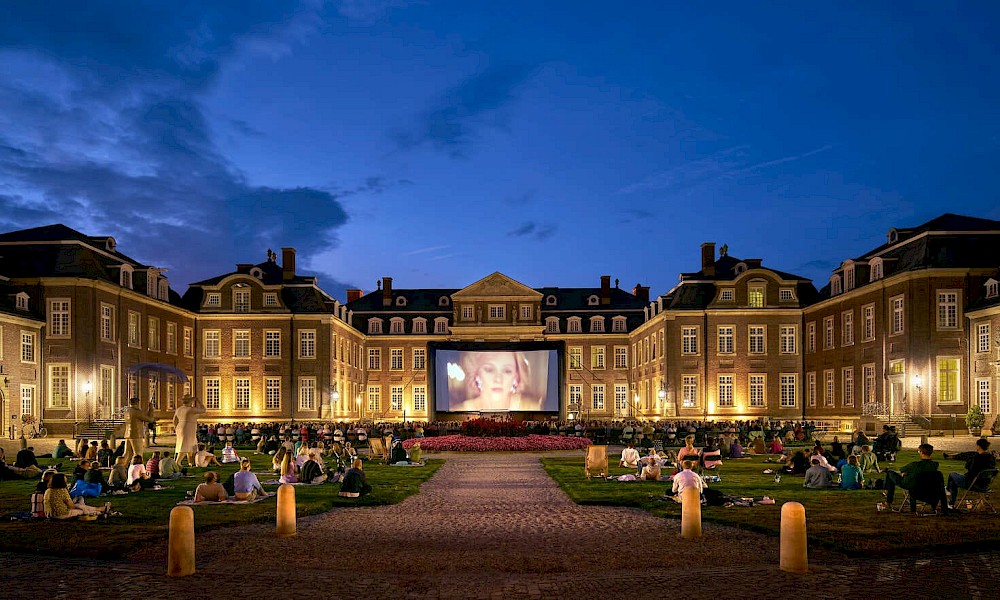
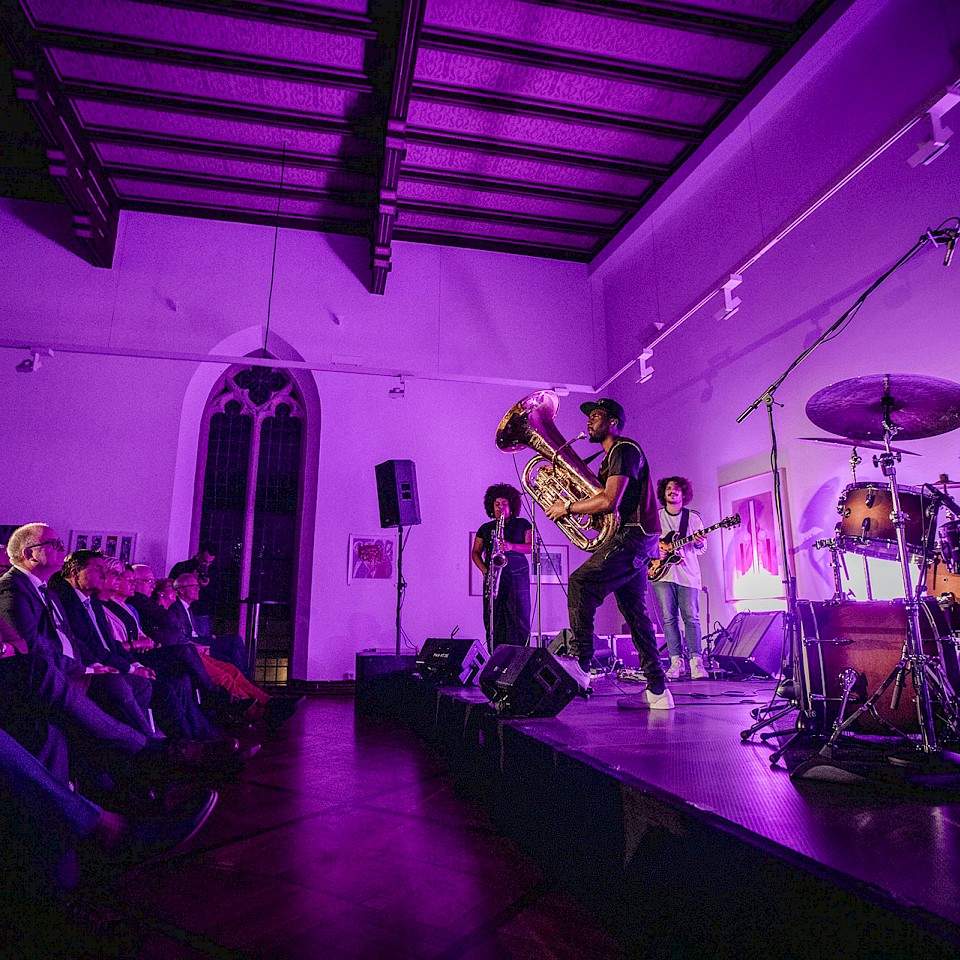
Experience the Münsterland live at great concerts, atmospheric festivals, musicals, exhibitions and readings. Under the open sky, colourful traditional markets, town festivals, knights' games and the wonderful Christmas markets beckon.

The Münsterland events calendar is full to bursting all year round. Be there when castles are transformed into illuminated figures, green spaces into concert halls, meadows into market squares and shopping streets into dining rooms. Choose your favourite event for today, the next weekend or to match your holiday in Münsterland.

Events in the Münsterland

Events in the Münsterland
© Münsterland e.V./Philipp Fölting

The good life in Münsterland

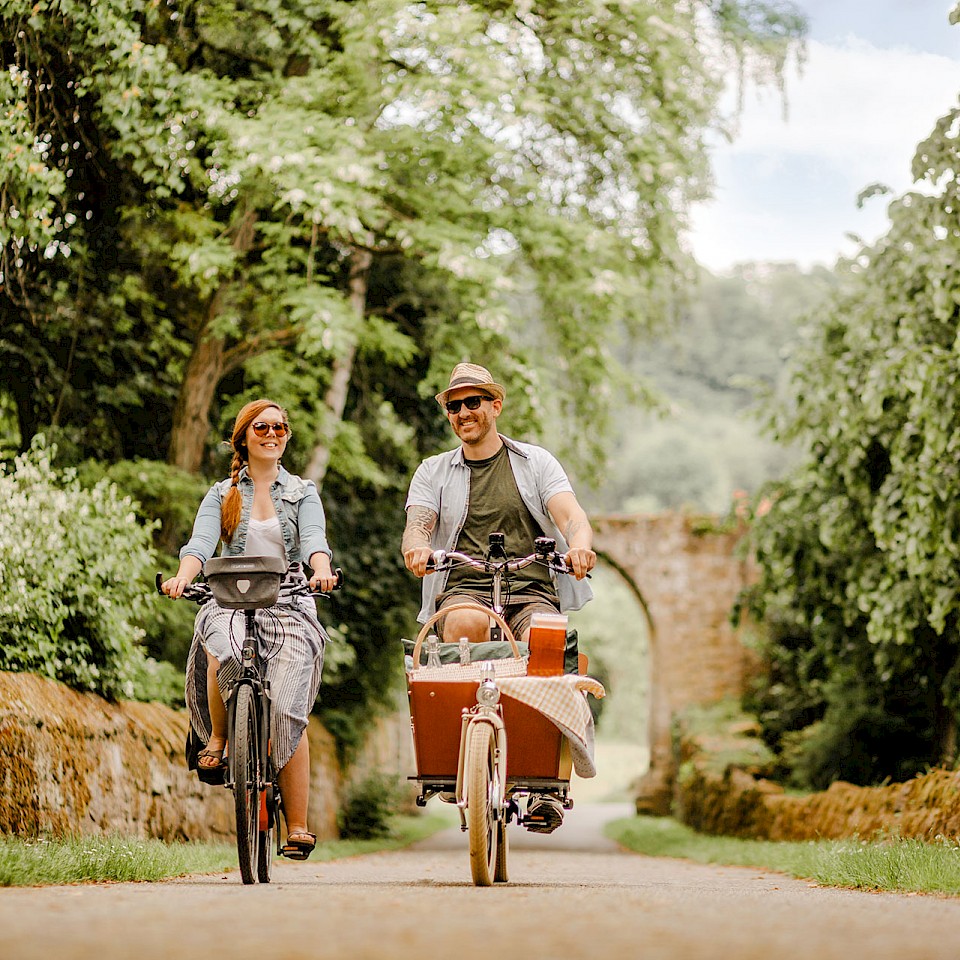
Do you need information about life, living and leisure in Münsterland? Then you've come to the right place! We show you places worth living in Münsterland with information on childcare, schools, excursion destinations, cultural highlights, ... - in other words, everything that makes up THE GOOD LIFE in Münsterland.
Life in the Münsterland.
© Münsterland e.V./Christoph Steinweg
Life in the Münsterland
Learn more...

Your contact persons

Birgit Stübing-Beunink
© Münsterland e.V./Anja Tiwisina
Birgit Stübing-Beunink
Service Onboarding@Münsterland
Consulting for companies
Consulting professionals

0049 2571 94 93 79

Stefanie Prange
© Münsterland e.V./Philipp Fölting
Stefanie Prange
Service Onboarding@Münsterland
Consulting for companies
Consulting professionals

0049 2571 94 93 52

DISCLAIMER

The information provided on this website does not constitute legal advice and is not intended to address any legal issues or problems that may arise in individual cases. The information you find on this website is of a general nature and is for information purposes only. If you need legal advice for your individual situation or problem, please seek the advice of a suitably qualified lawyer. Furthermore, our website is not official information from the Federal Government or any other public authority. Therefore, you cannot rely on the information you find here when contacting German authorities.

If we are unable to provide you with sufficient information through our service, we will act as a guide and direct you to our official and administrative partners in the region. In doing so, we ensure that you are well informed and can get in touch with the office responsible for you. Our service is free of charge for you and your enquiries will be treated confidentially.
Welcome Internationals
© istock/Giuseppe Lombardo
back to the homepage
Learn more...
Close Contact