





Yarn
Yarn is made from staple fibres by spinning. Plant fibres (e.g. cotton, flax, hemp), animal fibres (e.g. wool or silk), synthetic fibres (man-made fibres) and mineral fibres (e.g. asbestos) are spun. Fibres made of natural or synthetic polymers are used as man-made fibres.
Fibres made from natural polymers include fibres made from regenerated cellulose (e.g. viscose, lyocell) and from cellulose esters, protein fibres, polylactide, alginate, chitin, elastodiene and bio-based polyamides. Fibres made from synthetic polymers include polyester, PET, PTT, PBT, polyamide, polyimide, polyamideimide, polyacrylic, elastane, polycarbonate, polystyrene. Furthermore, there are fibres made of inorganic materials such as ceramics, quartz, glass, basalt, carbon, boron, nanotube or metal.
Trends can be identified in the areas of bionic yarns, cotton substitute fibres, yarns and fibres from recycled and processed waste, intelligent yarns and the use of new materials.
Prerequisites for utilisation
Production facility for spinning fibres into yarns
- A production facility with appropriate machinery is needed to produce yarns from fibres.
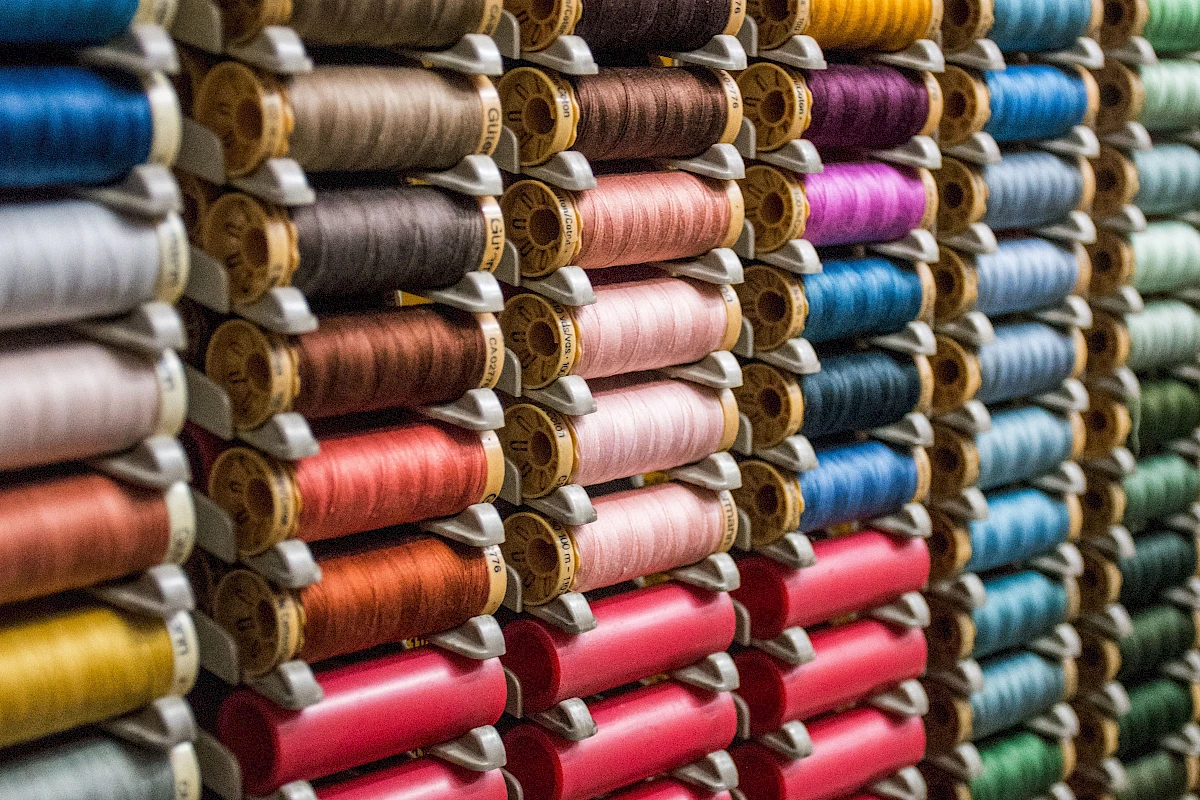 Thread spools in various colours
© Bild von Héctor J. Rivas auf Unsplash