





Fire protection coating
Fire protection coating
To protect wood from fire, it is coated with paints. A distinction is made between intumescent and ablation coatings. Intumescent coatings react to the temperature increase of the environment and form voluminous carbon-containing insulating layers. They usually consist of binders, gas formers, carbon formers, catalysts and other additives and require space during expansion.
Ablation coatings contain substances that change chemically when heat is applied, e.g. evaporate or sublime. This cools the underlying material. They also usually contain substances with a flame-retardant effect. This type of coating is mechanically resilient.
Prerequisites for use:
Application machinery
- Equipment and premises for application on wood-based materials.
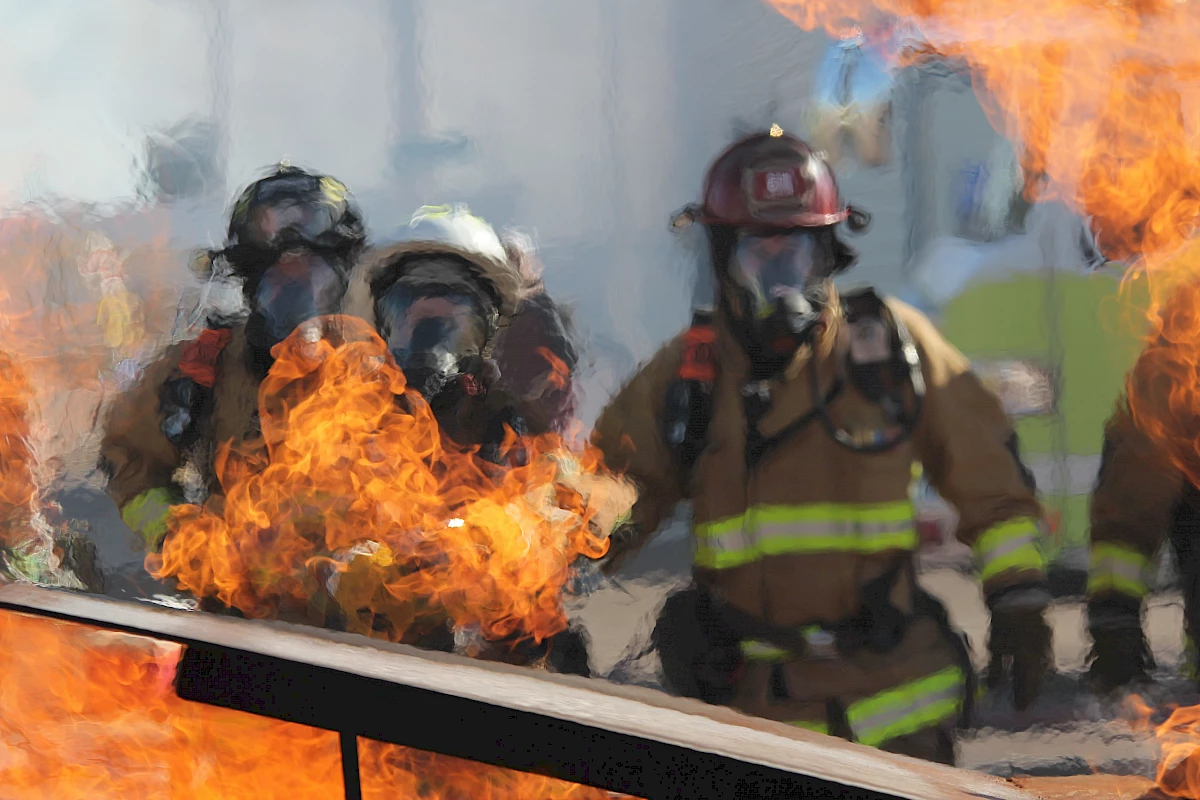 Fire protection coatings prevent the spread of fire
© Bild von Matt Chesin auf Unsplash