das heini – shaking up Münster’s culinary scene

The Solawi Crowdsalat logo
© das heini/Katja Heinisch

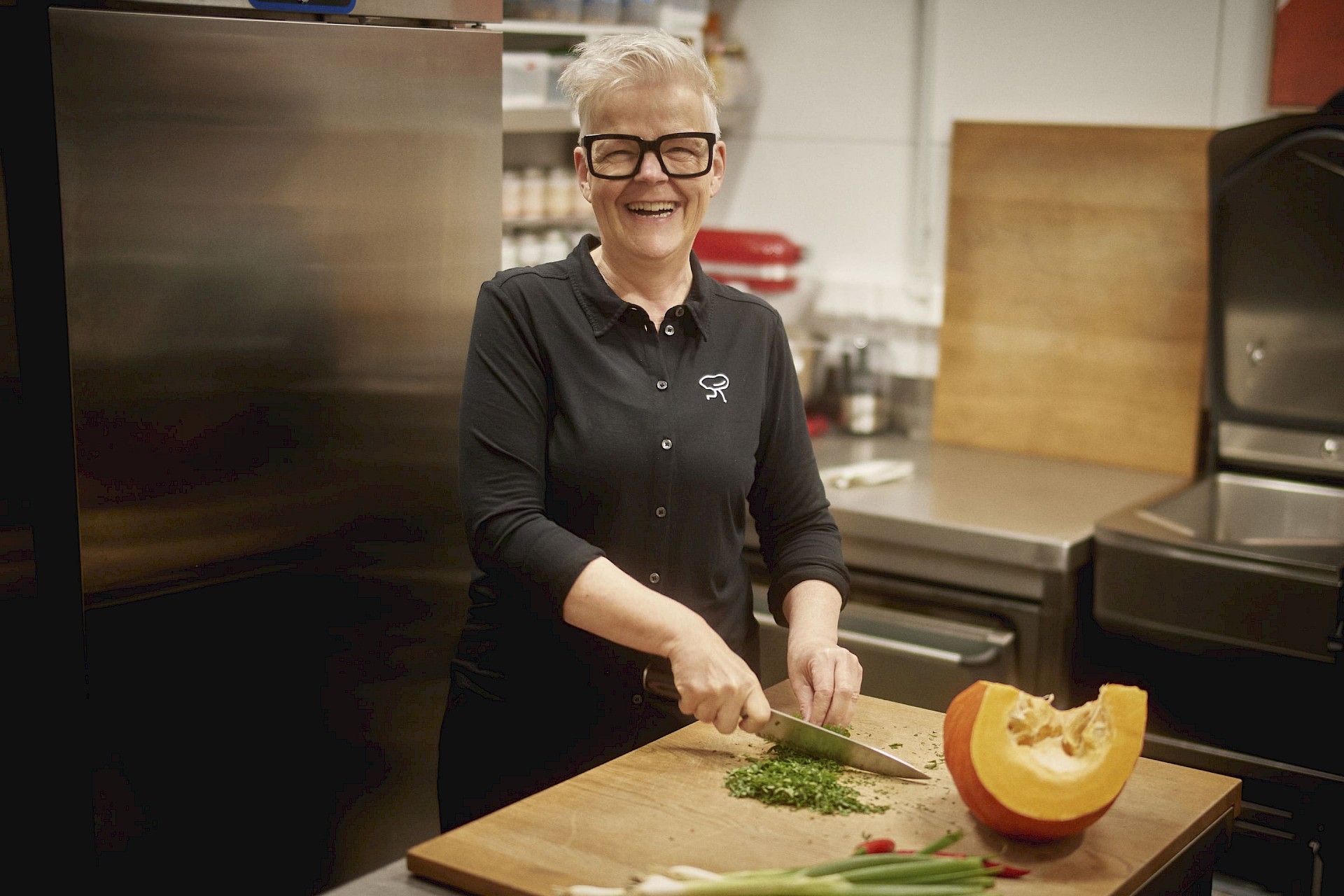
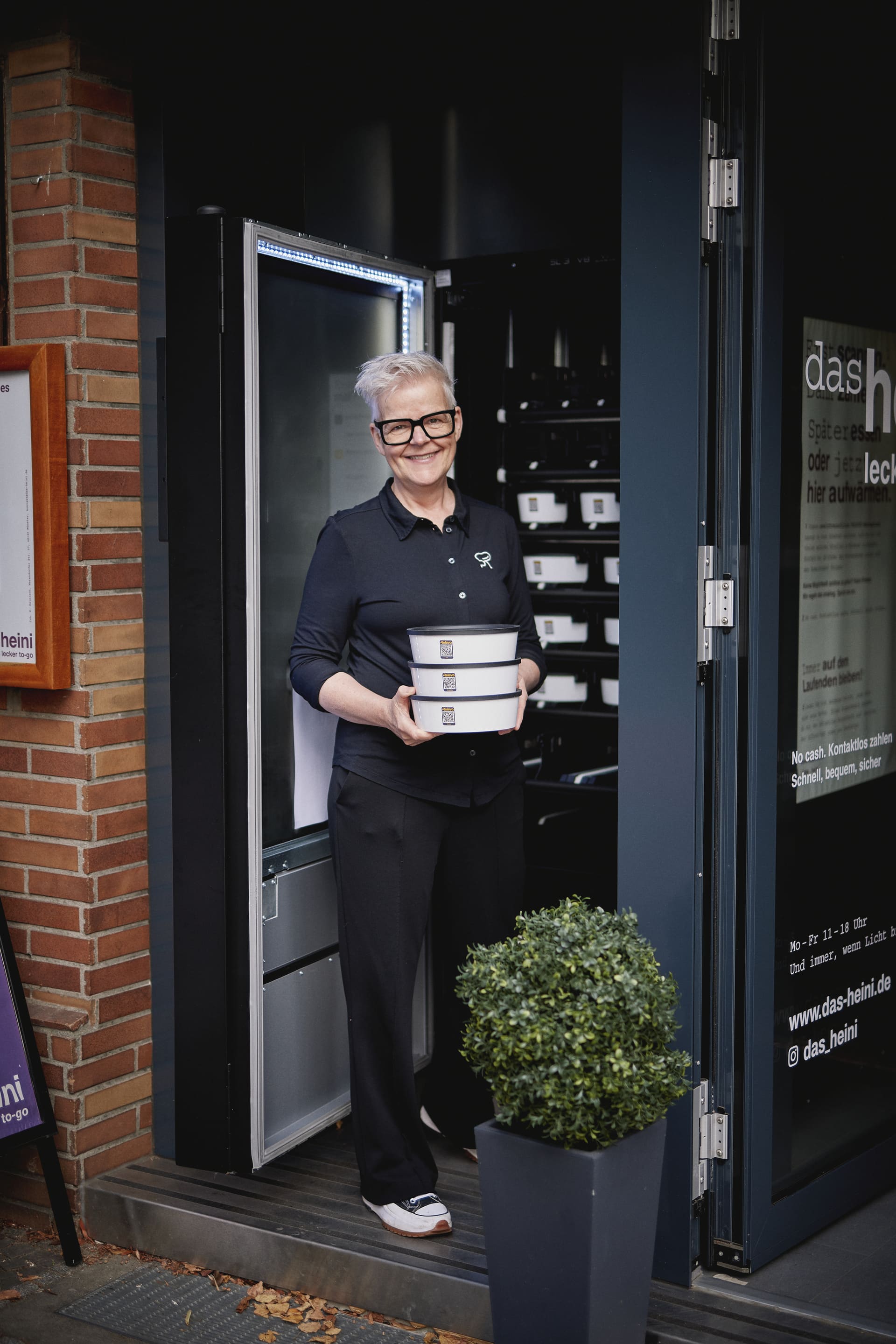
A different dish every day, consistently packaged in reusable containers and always vegan: with ‘heini’, Katja Heinisch brought a dining concept to Münster in November 2024 that does many things differently from most restaurants. Yet the founder doesn’t actually come from a catering background – and perhaps that is precisely part of her story, because Katja had the courage to challenge the status quo and simply get started. 

  • Sustainable eating
  • Münster
1
FROM INTERNATIONAL BUSINESS TO THE KITCHEN

Before Katja opened Heini, she worked for a Silicon Valley start-up and helped build up its European market. Following a takeover, her job was made redundant and, in her late 50s, she was faced with the question: what next?

She eventually found the answer herself, whilst writing various business plans. Katja was already living in the Mauritzviertel and recognised the question from her own working life: where can you get a quick lunch that’s fresh, varied and tasty?

Added to this were 25 years spent in France, which shaped her appreciation of good food, and her daughter, who had encouraged her a few years earlier to adopt an increasingly vegan diet. It was from these experiences that the idea for Heini was born.

2
EVERY DAY IS DIFFERENT – BUT ALWAYS FOLLOWING A CLEAR SYSTEM

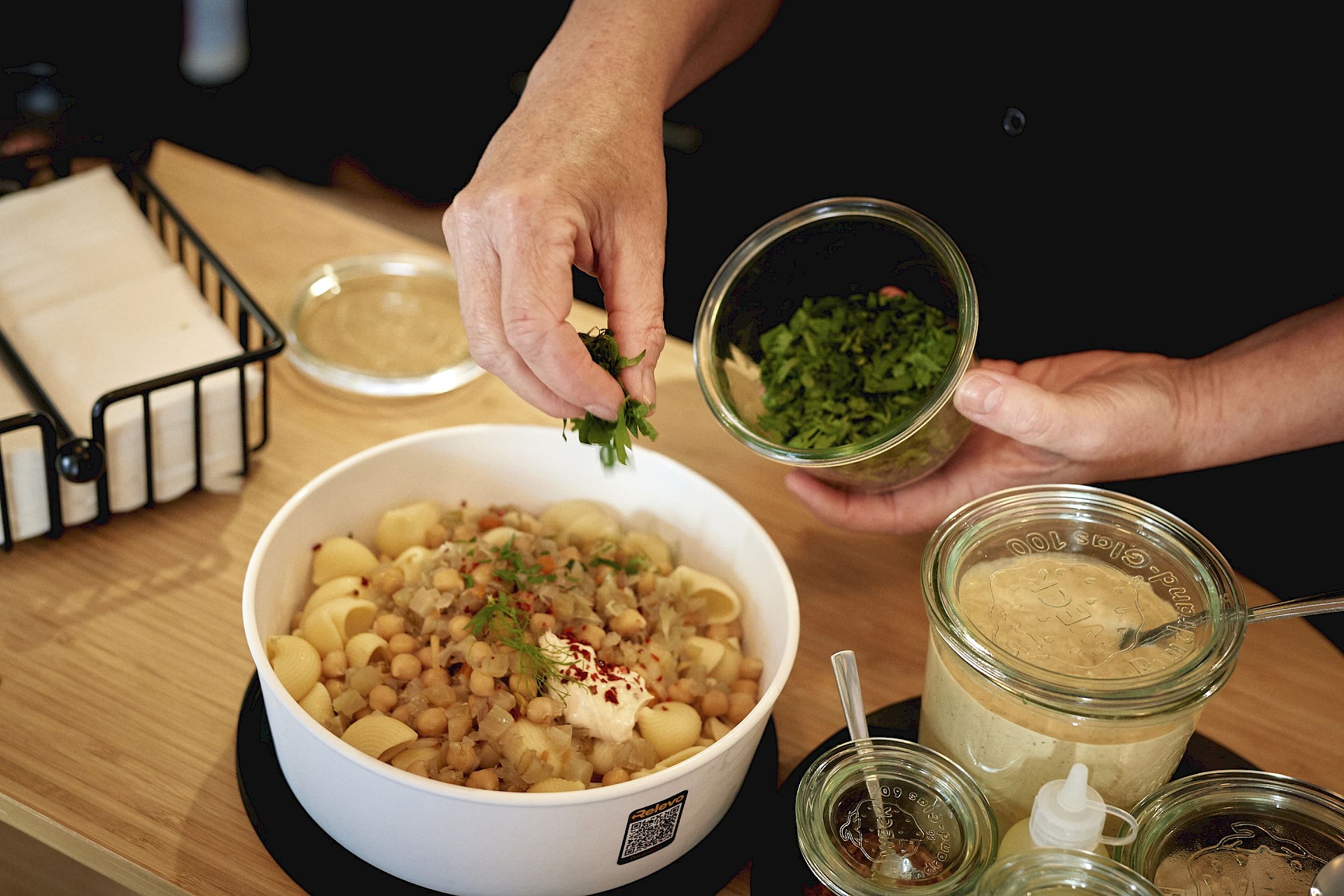
At Heini, there’s just one dish on offer every day – but it’s always a different one. The menu takes you on a journey around the world: French and Italian influences meet Indian, Thai, Indonesian and South American dishes.

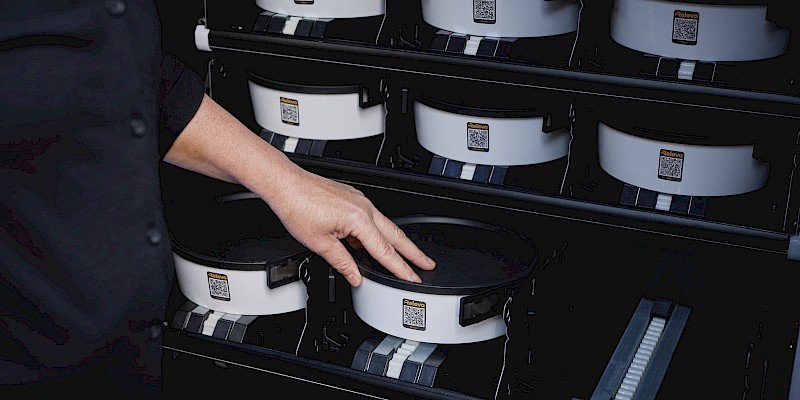
The food is cooked the day before. It is then chilled and portioned into reusable containers. Guests can take it away straight away, eat it on the premises or reheat it later at home. A vending machine, which makes the dishes available round the clock, completes the offering.

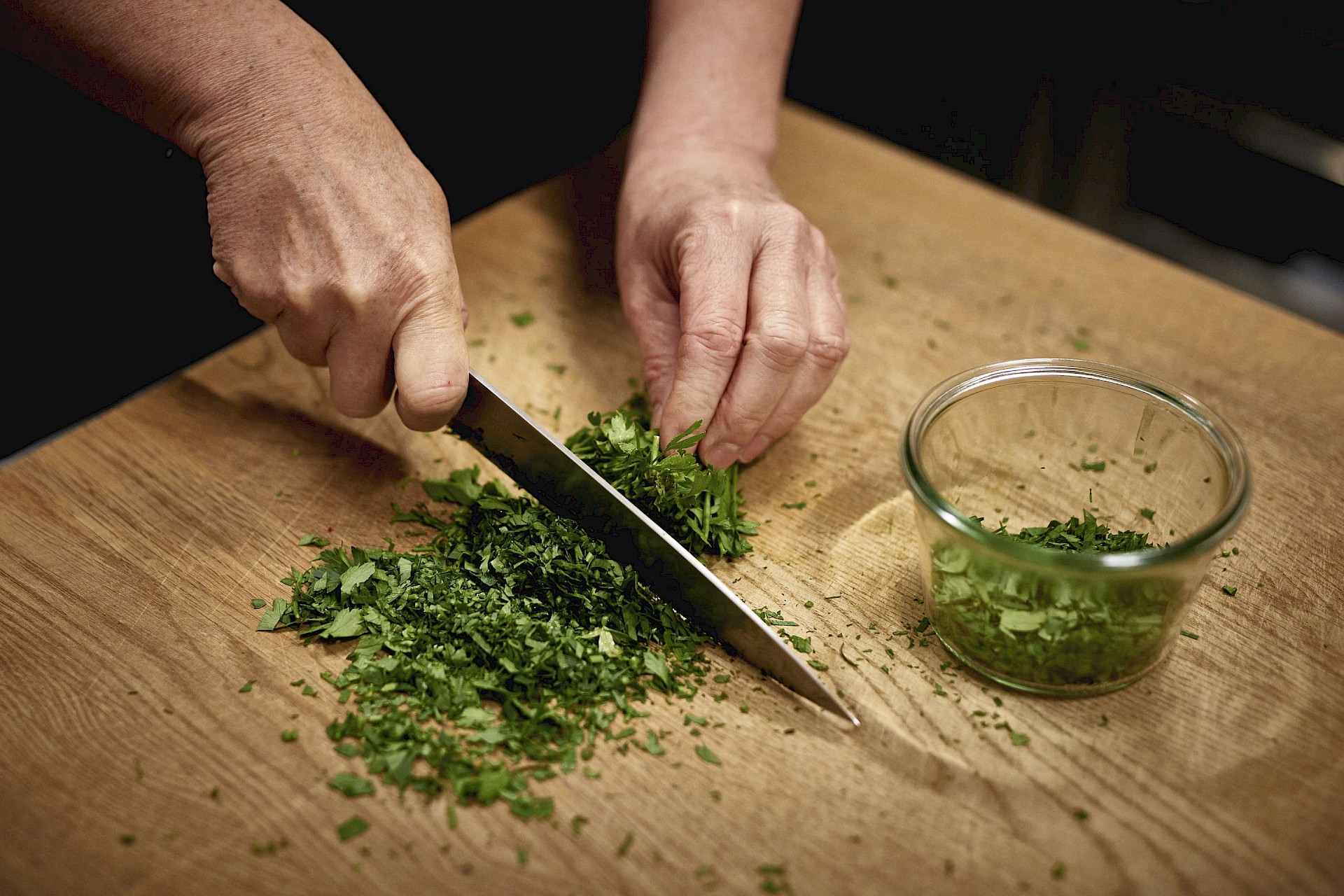
Katja also has clear principles when it comes to sourcing and preparation. Heini sources its vegetables from Ökullus in Münster-Handorf, amongst others, whilst herbs come from Rohlmann in Wolbeck. Where possible, she bases the dishes on seasonally available ingredients.

The team also tries to reuse food scraps: for example, stock is made from suitable vegetable trimmings, and leftover dishes are still offered for sale as long as they are fresh. Anyone taking their food away uses the reusable container system. Sustainability is put into practice at Heini – specific decisions regarding purchasing, preparation and packaging form part of the business model. 

3
THE SHOP IS BECOMING A MEETING PLACE IN THE NEIGHBOURHOOD

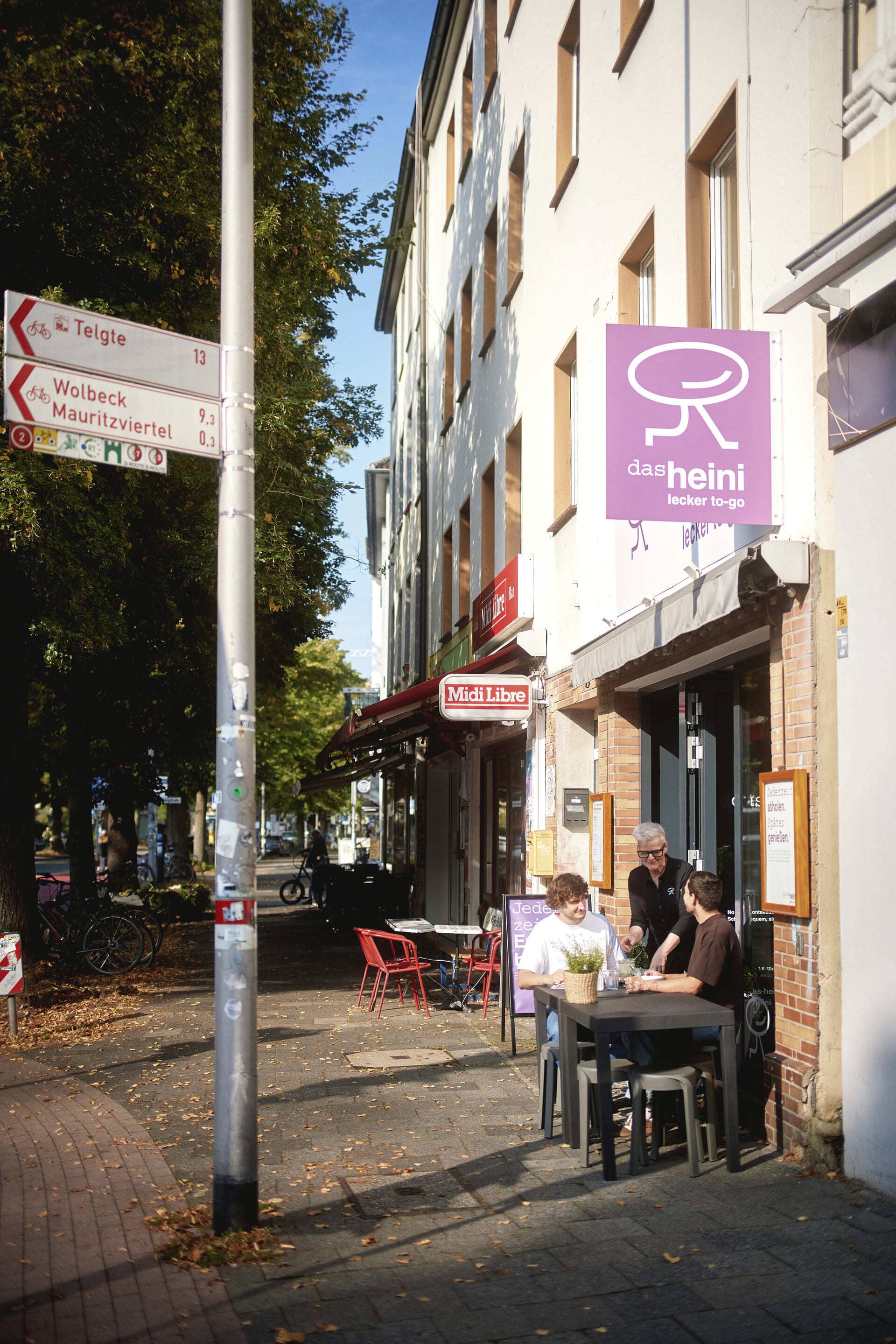
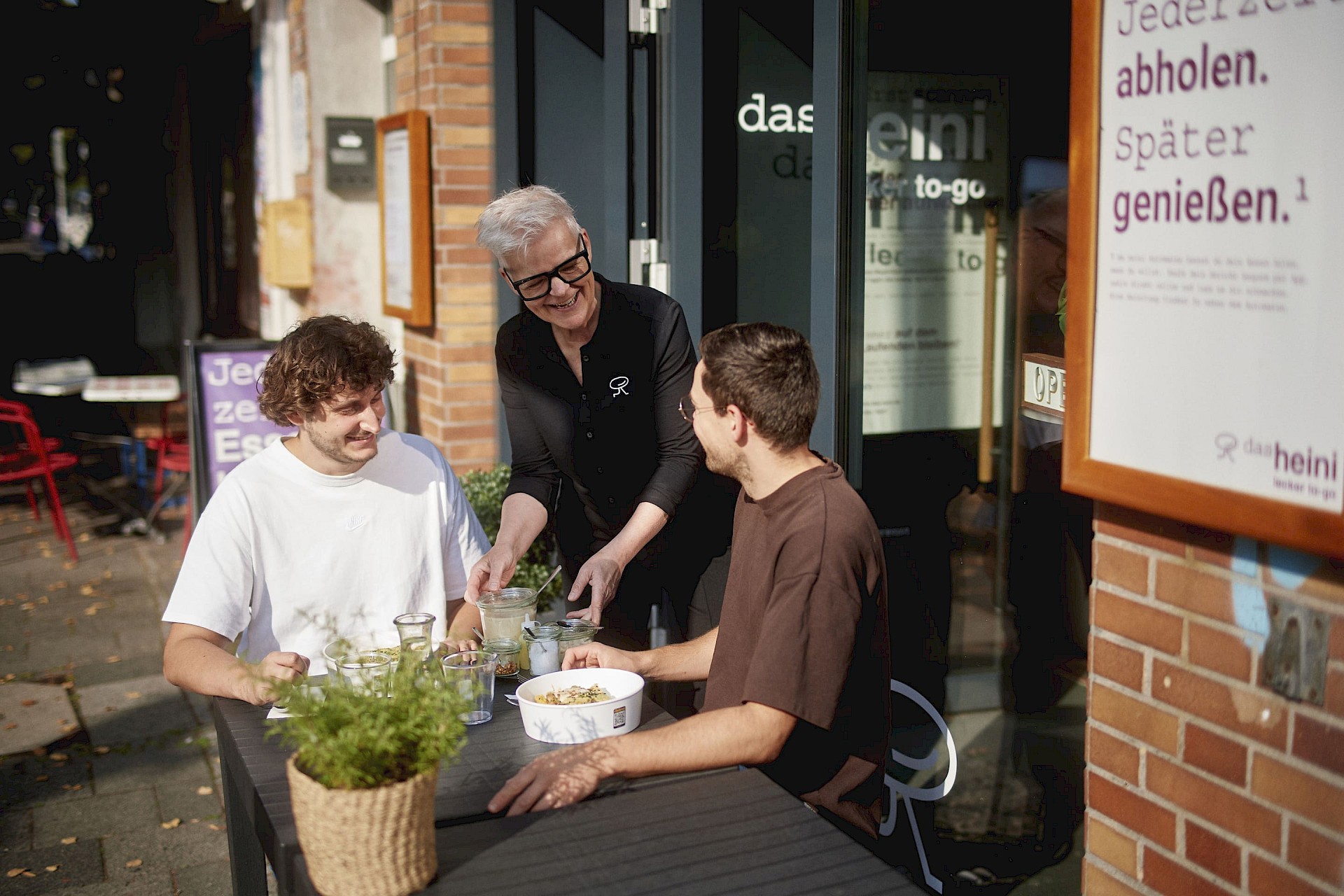
The fact that the dishes are already prepared means that Katja has time for her guests during opening hours. 

At Heini, neighbours strike up conversations, get to know one another and chat. Encounters in the shop have led to new friendships. The clientele ranges from a twelve-year-old schoolboy to a 94-year-old regular. As a result, Heini has become not only a place for a quick bite to eat but also a little meeting place in Münster’s Mauritzviertel.

4
‘THAT’LL NEVER WORK’? NOW MORE THAN EVER!

The road to setting up the business was not always easy, as Katja was unable to secure traditional funding for her catering concept. She was also repeatedly told that customers would not take to the reusable tableware system. Nevertheless, Katja stuck to her idea and financed the start-up using her own funds.

She received support in the form of a start-up grant and coaching. In particular, the guidance provided by a catering finance coach helped her to critically review her financial projections. Katja did not initially have a large network within Münster’s catering industry, which is why she took the initiative to approach people, ask questions and gather insights. 

5
SUPPORT FROM THE REGION AND BEYOND

Along the way, Sophie and Sebastian made use of various support schemes. They consulted with the business development agency and regional funding partners such as the Sparkasse, found out about the start-up grant and initially received LEADER funding, which was followed by further programmes. However, they had to actively seek out many of these opportunities themselves, as there were initially few suitable points of contact for their specific concept.

Networking with other community-supported agriculture schemes across Germany was particularly important. Even before setting up their business, Sophie and Sebastian were part of this network and benefited from advice, personal contacts and the experiences of other community-supported agriculture schemes. Rather than competition, they encountered an open culture of sharing, in which knowledge, documents and practical solutions were passed on as a matter of course – an approach they themselves continue to practise to this day.

Be inspired by more green start-up stories

Photo shoot at Urbanhive
© Münsterland e.V. / Philipp Fölting

Further topics