INCONSU: Heat that makes sense

The Insonsu logo
© Inconsu GmbH

Who says heating always has to be inefficient and expensive? INCONSU shows that there is another way: the start-up from Nottuln uses smart technology to make buildings more efficient, reduce heating costs - and protect the climate at the same time. Read his story to find out how founder Flynn Herbst turned a family idea into a sustainable solution for local authorities.

  • GovTech
  • Nottuln
1
THE IDEA CAME WHEN BUILDING THE HOUSE

Flynn Herbst is 31, comes from Nottuln and realised early on: "I want to start my own business! Not because I don't want to work, but because I want to be free to decide how and what I work on." With this clear attitude, Flynn sought and found his way. After studying business administration with a focus on foreign trade in Hamburg, he moved back to Münsterland. As an IT consultant in the healthcare sector, he gained his first experience in project management. But the desire to have his own company remained.

The brilliant idea came from his family: his father and uncle built a house - including a smart home system. However, the systems on the market were not satisfactory. So Flynn developed his own system together with them. The prototype in the four-party house soon developed into something more: a business idea that is now established as a sustainable solution for local authorities.

2
HEATING CONTROL - SMART, EFFICIENT AND AUTOMATIC

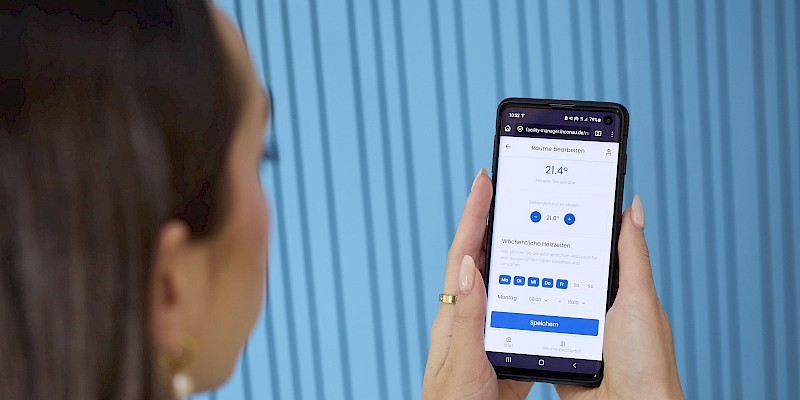
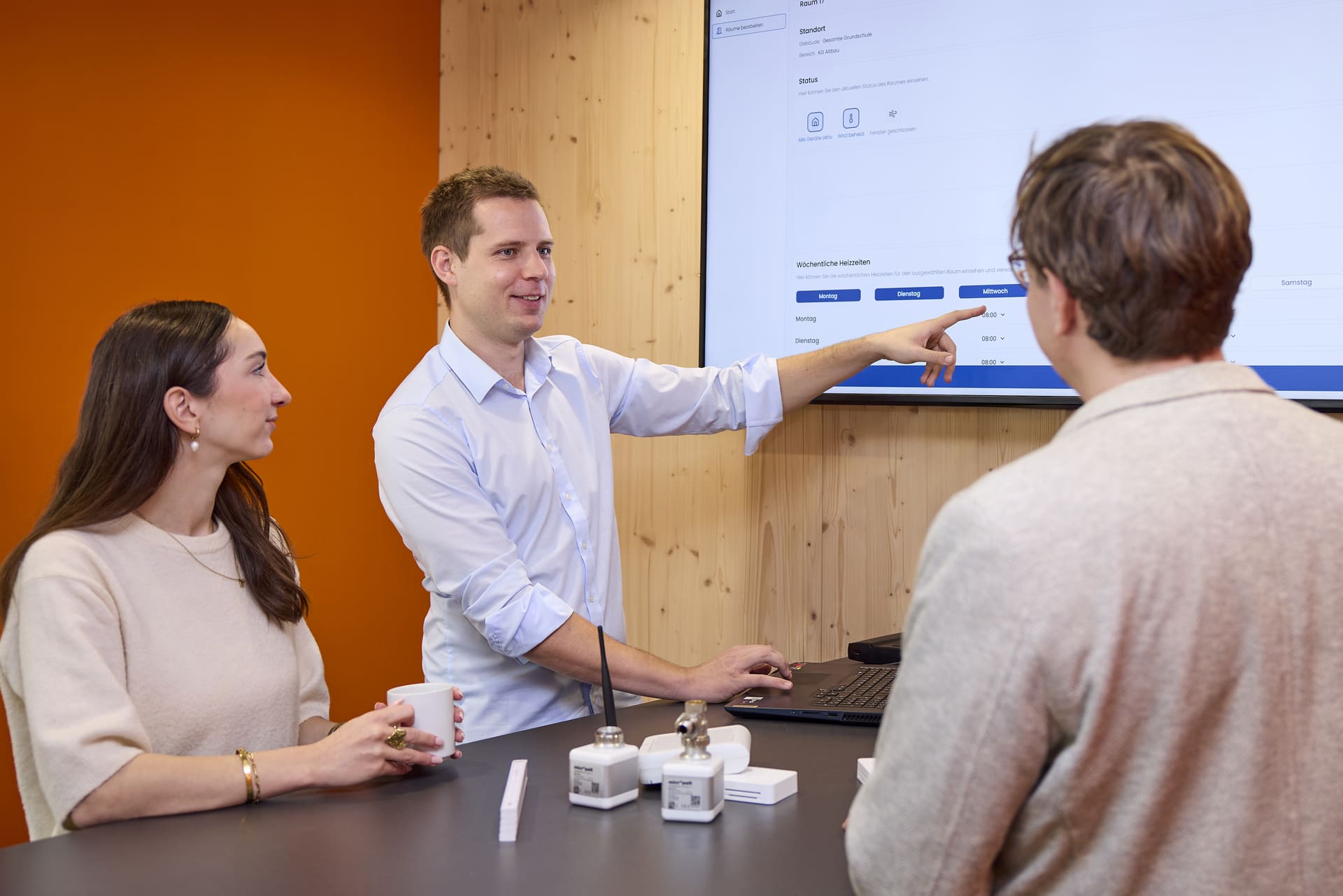
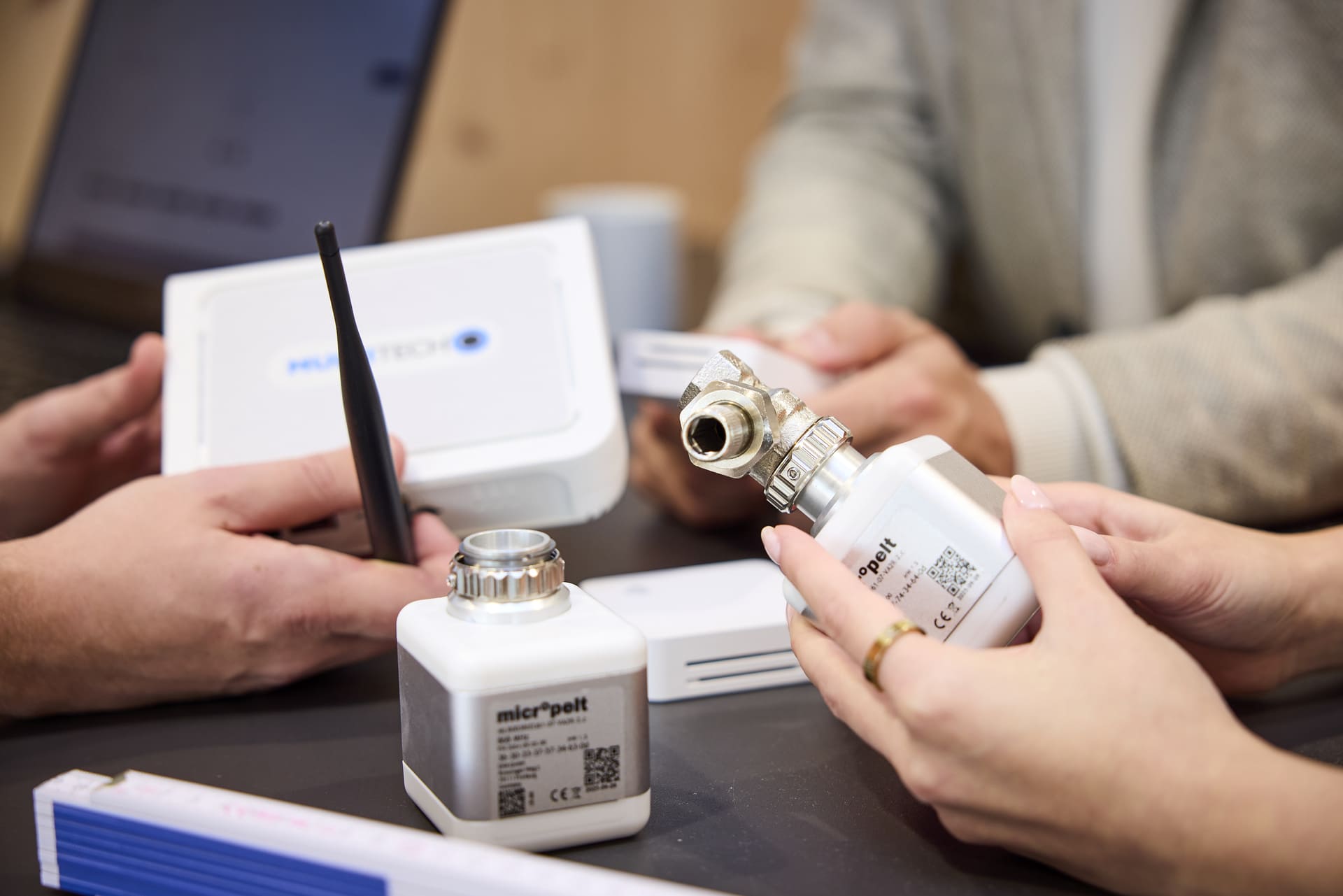
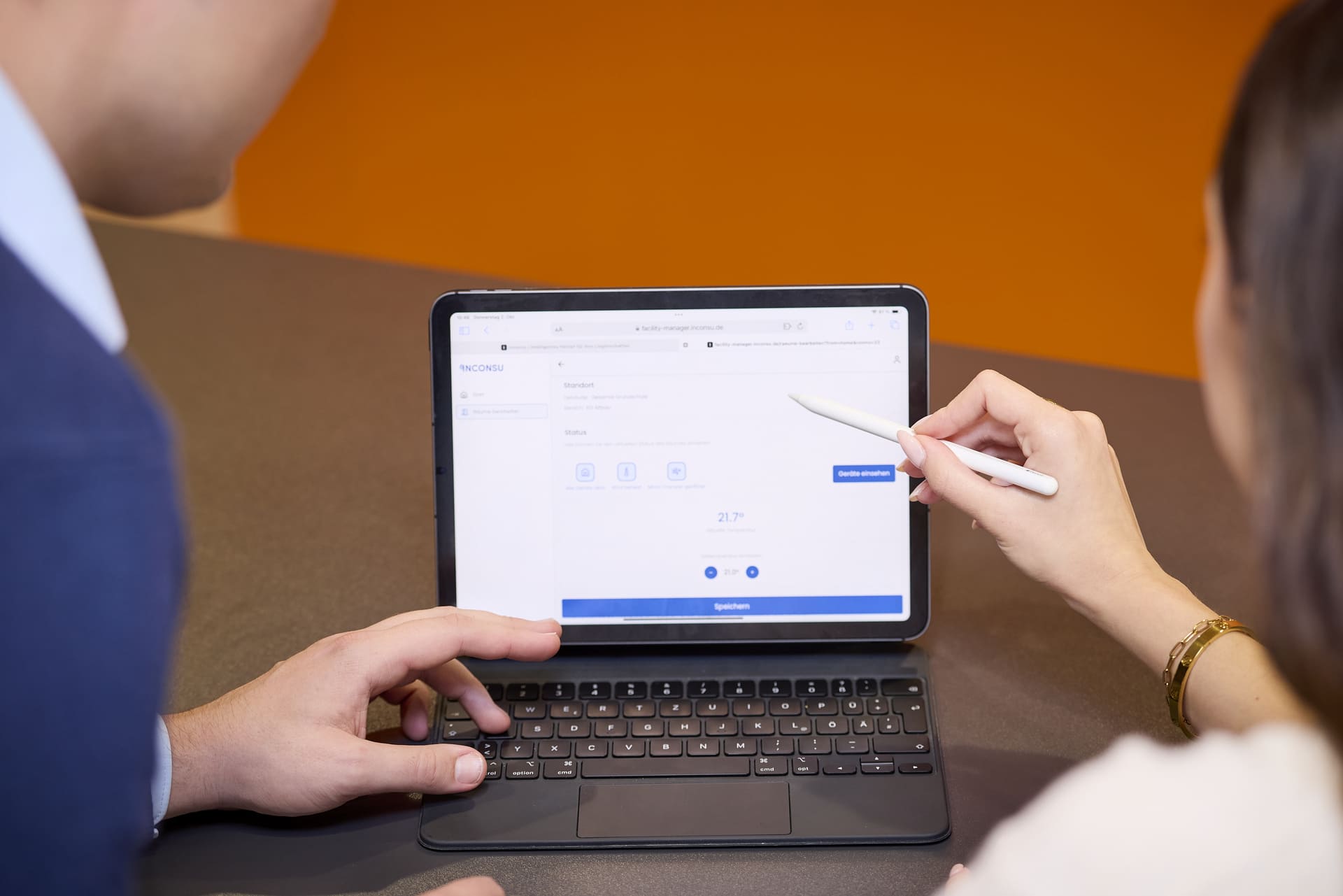
Flynn's young company INCONSU relies on a combination of hardware and software to heat buildings as required. For example, schools or administrative buildings. The software combines three central functions that were previously usually only available individually: room-specific control, which only heats a room when it is actually being used; hydraulic balancing, which ensures that all rooms are heated evenly and efficiently; and automatic adjustment of the flow temperature - i.e. the temperature of the heating water that flows from the boiler into the radiators. This makes heating systems significantly more efficient - without any loss of utilisation.

A practical example shows how this works: In a primary school in Nordkirchen, the software accesses the digital room allocation plan via an interface. This shows which rooms are used at which times, for example "meeting room 1" in the morning and/or "meeting room 2" in the evening. Accordingly, the system regulates the heating output to suit the actual times of use. The temperature is automatically lowered before and after occupancy. This avoids unnecessary energy consumption. This principle can be flexibly transferred to many scenarios.

3
THE DIFFERENCE: TECHNOLOGY WITH VISION

The INCONSU system has a major technical advantage over other solutions: The LoRaWAN wireless technology used enables an extremely long data transmission range. This is ideal for spacious or angled buildings such as schools, town halls or large office complexes. While conventional systems often rely on interference-prone Wi-Fi or short-range wireless technologies, INCONSU's connection remains stable even over several floors. Even if the Internet or WLAN fails, the control system continues to run reliably. A real advantage in everyday municipal life.

The system has already proven itself in pilot projects with the municipalities of Nordkirchen and Nottuln: heating cost savings of up to 40 per cent with an amortisation period of three to four years. At the same time, CO₂ emissions and energy consumption are reduced - a smart step towards climate protection.

4
THE MÜNSTERLAND AS A START-UP LOCATION WITH A TAILWIND

With the support of Münster University of Applied Sciences and an EXIST start-up grant, Flynn's idea took off. Regional players such as Westfalen AG and the REACH - EUREGIO Start-up Centre also became aware of the project early on.

Today, Flynn runs the company as the sole founder with a small team and great commitment. The vision: "We want to show that digitalisation and energy efficiency are not a contradiction in terms. And that smart building control also works in older existing buildings."

5
LEARNING FROM THE FOUNDATION: OPEN, HONEST AND PRAGMATIC

Looking back, Flynn gained valuable experience along the way. Particularly important: learning early on that you shouldn't ignore a bad gut feeling. Be it in team decisions or in the product development process. Addressing problems openly and not putting them off can save a lot of energy and time. He also advises testing market demand as early as possible, preferably before the start of development. After all, if you spend six months tinkering with a solution without knowing whether anyone really needs it, you run the risk of failing to meet demand. Last but not least, the team should talk openly about goals, expectations and their own motivation: Who wants to invest how much time, how do you feel about investors, what is the long-term vision? Clarifying these questions early on creates a solid basis - even for turbulent phases.

Be inspired by more green start-up stories

Photo shoot at Urbanhive
© Münsterland e.V. / Philipp Fölting

Further topics