


Fermentation and Metabolic Engineering
Fermentation and Metabolic Engineering
Metabolic engineering is the controlled influencing and modulation of metabolic pathways for specific metabolites, e.g. to achieve improved cellular properties that can be used industrially in chemistry, medicine or material production. Fermentation is the conversion of organic substances by microorganisms into other products. On a large scale, these processes are carried out industrially in fermenters to obtain products in large quantities.
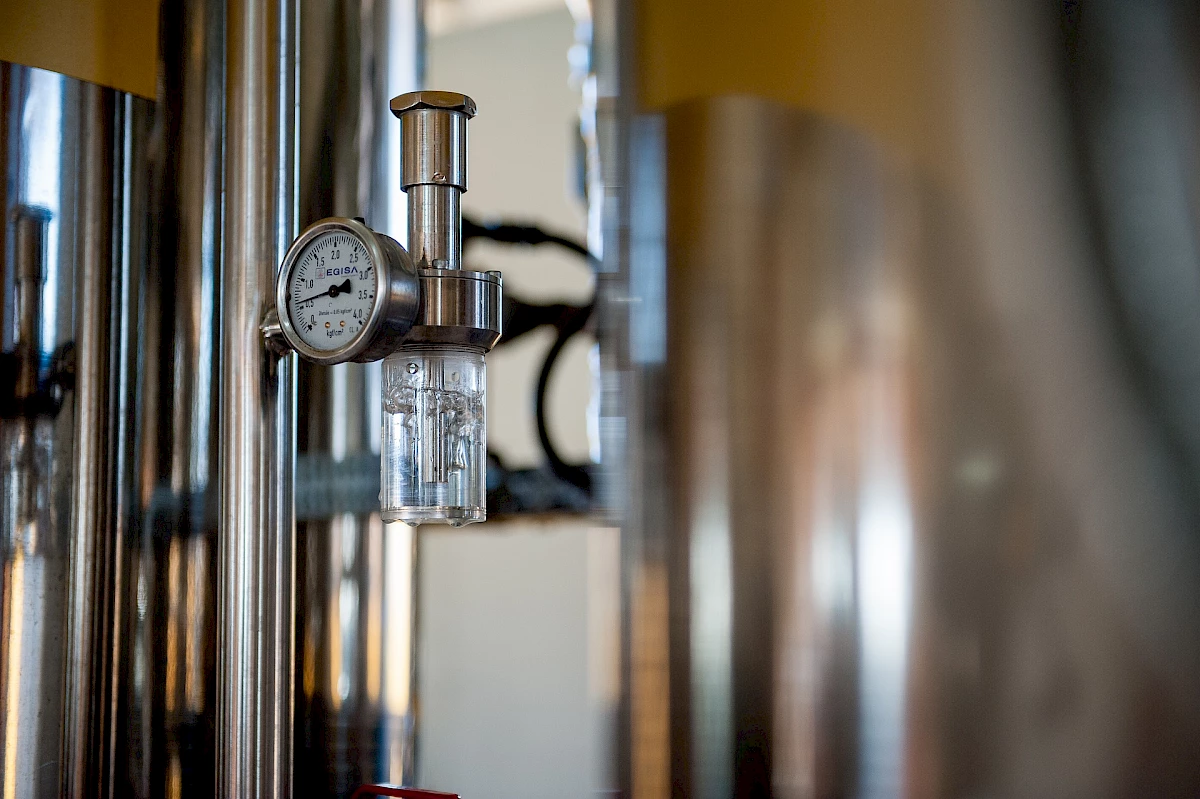 Pressure control in the fermenter
© https://pixabay.com/photos/to-control-the-temperature-beer-4950423/
Requirements for use:
- Space for large fermenters
- Know-how about optimal conditions for microorganisms
- Technical know-how for the operation of fermenters
Regional experts:
Prof. Dr Alexander Steinbüchel
Institute for Molecular Microbiology and Biotechnology, WWU Münster
Institute for Molecular Microbiology and Biotechnology, WWU Münster