A portrait of Haus Brook

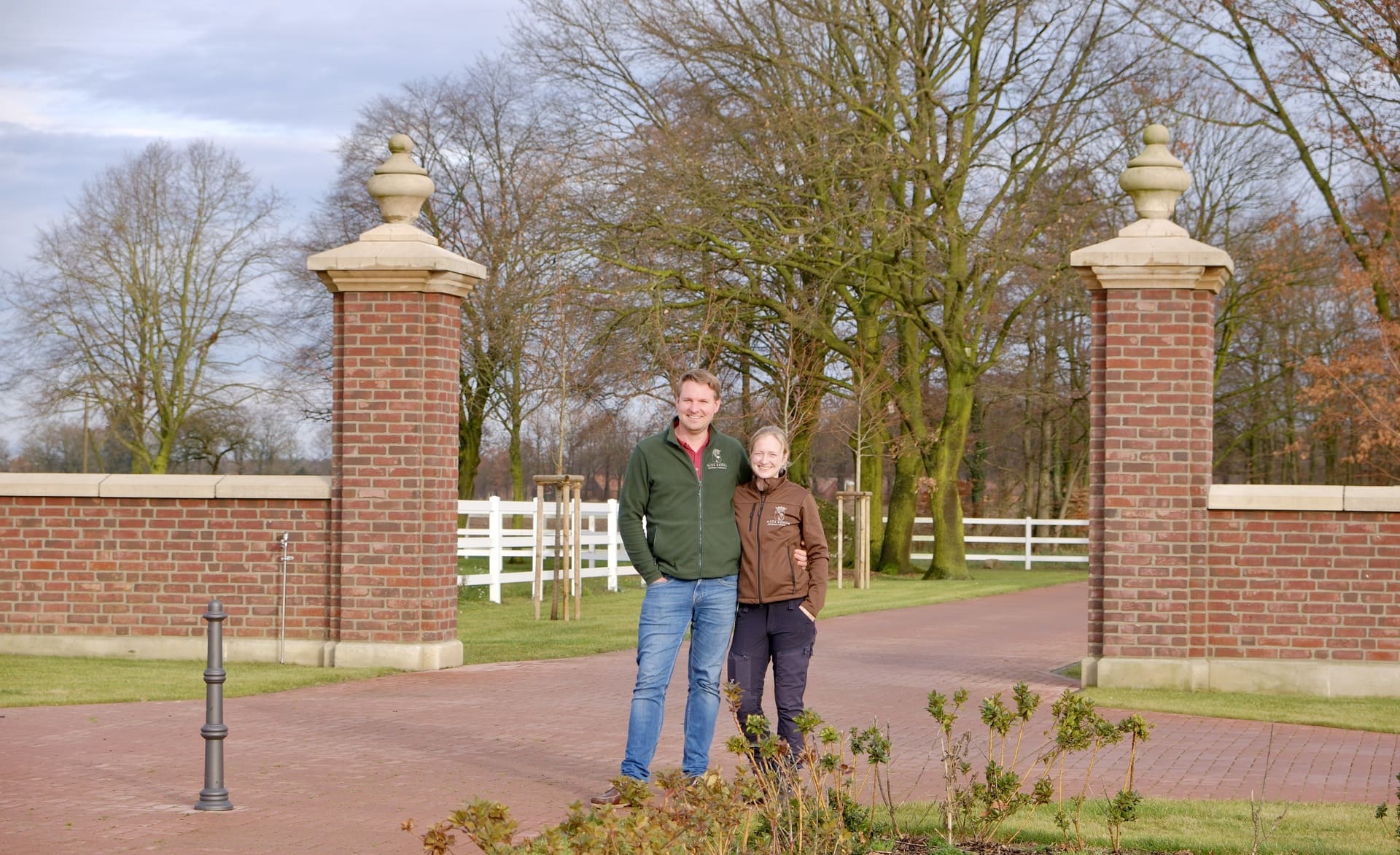
Julia and Christoph Deipenbrock
© Cornelia Höchstetter

Modern horse life in the Münsterland

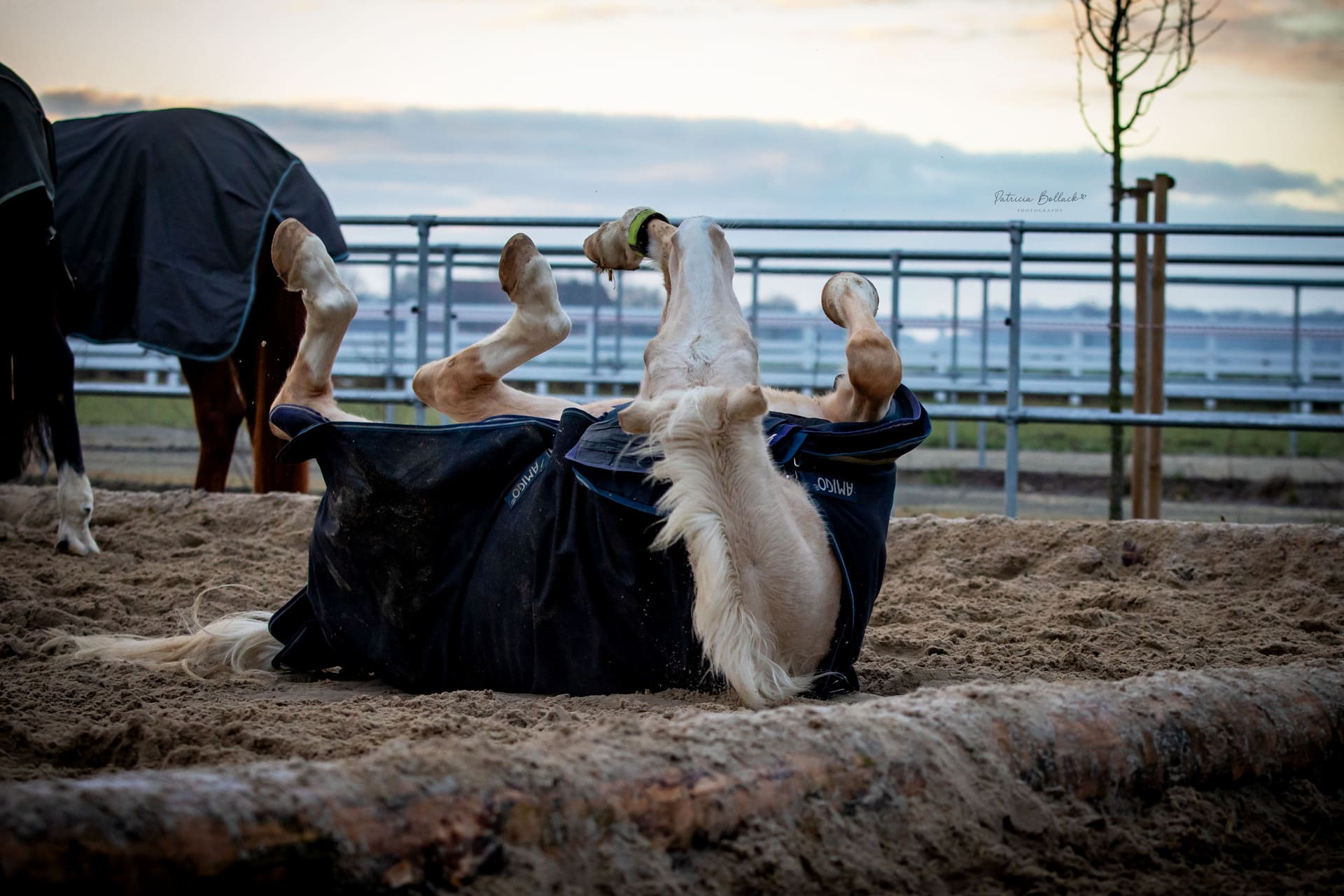
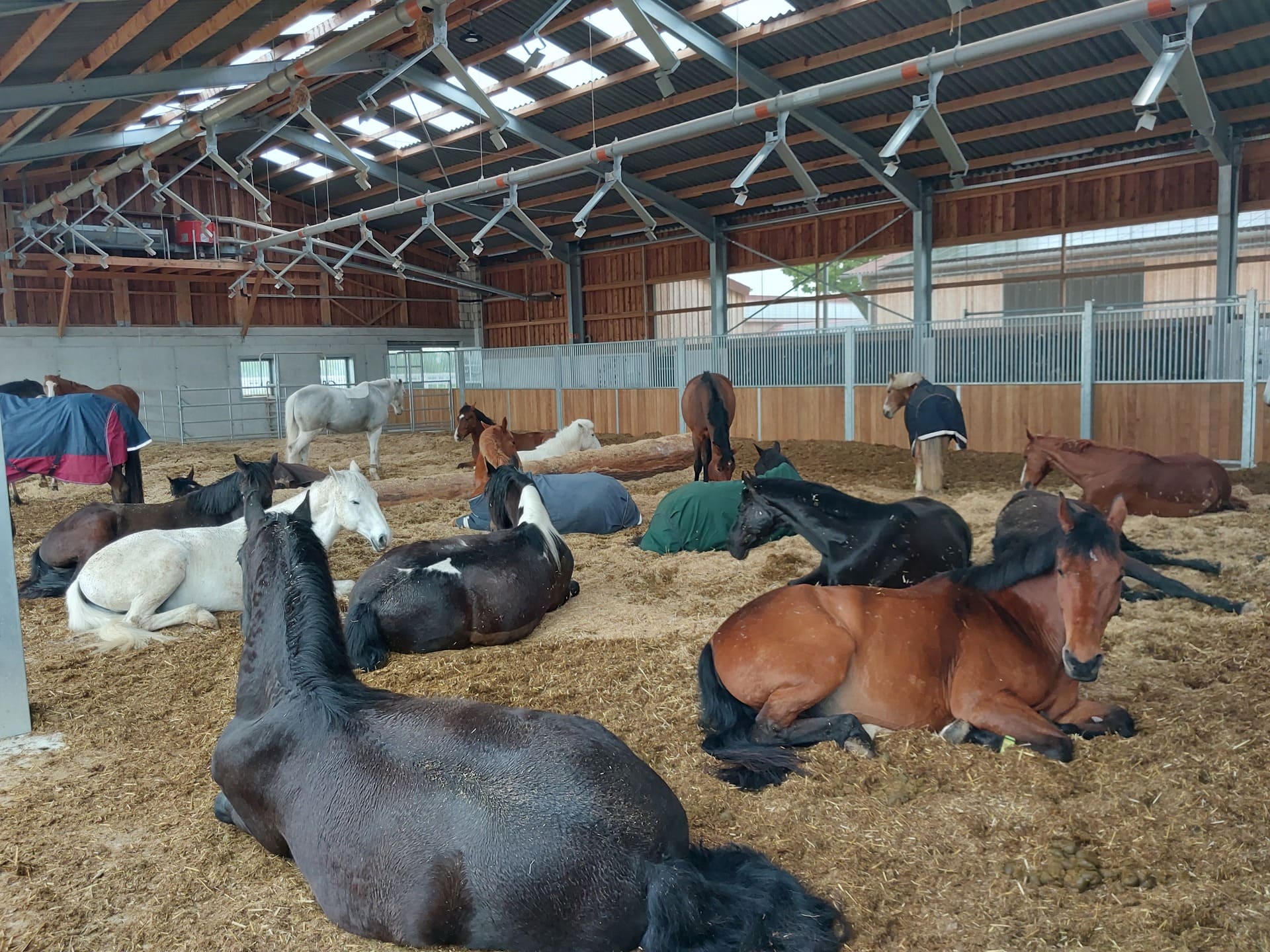
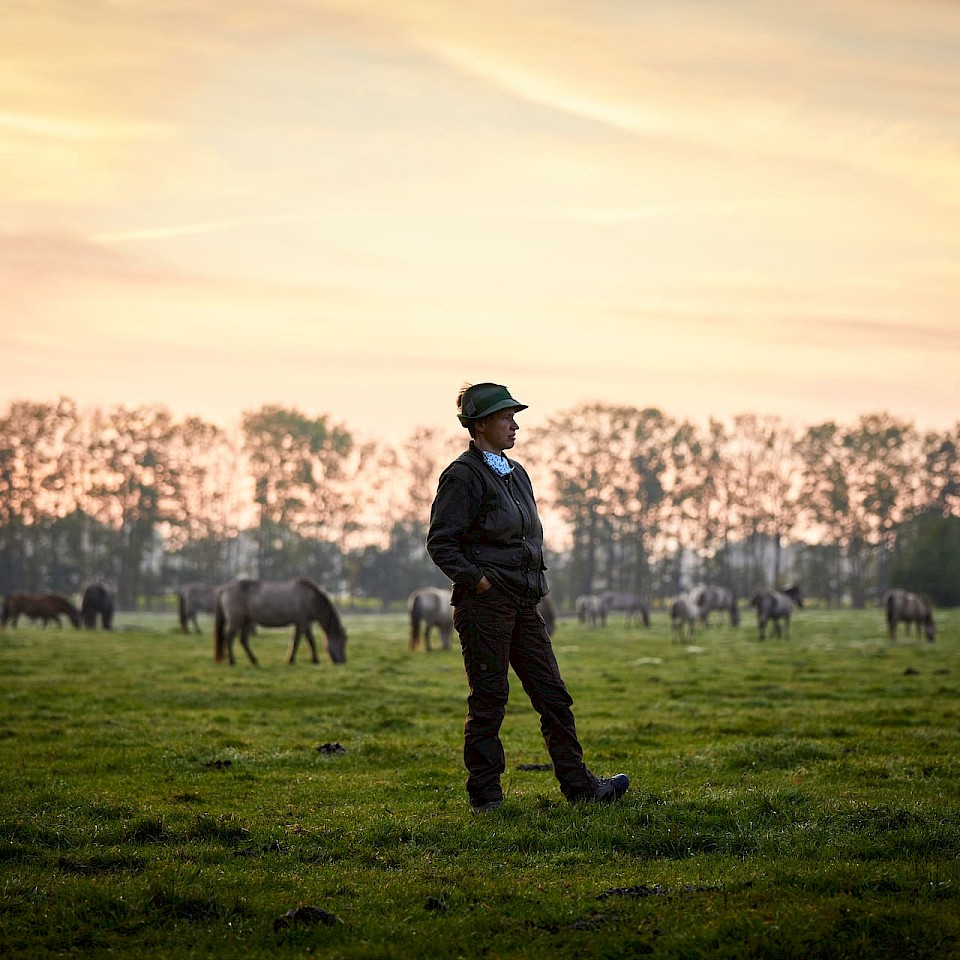
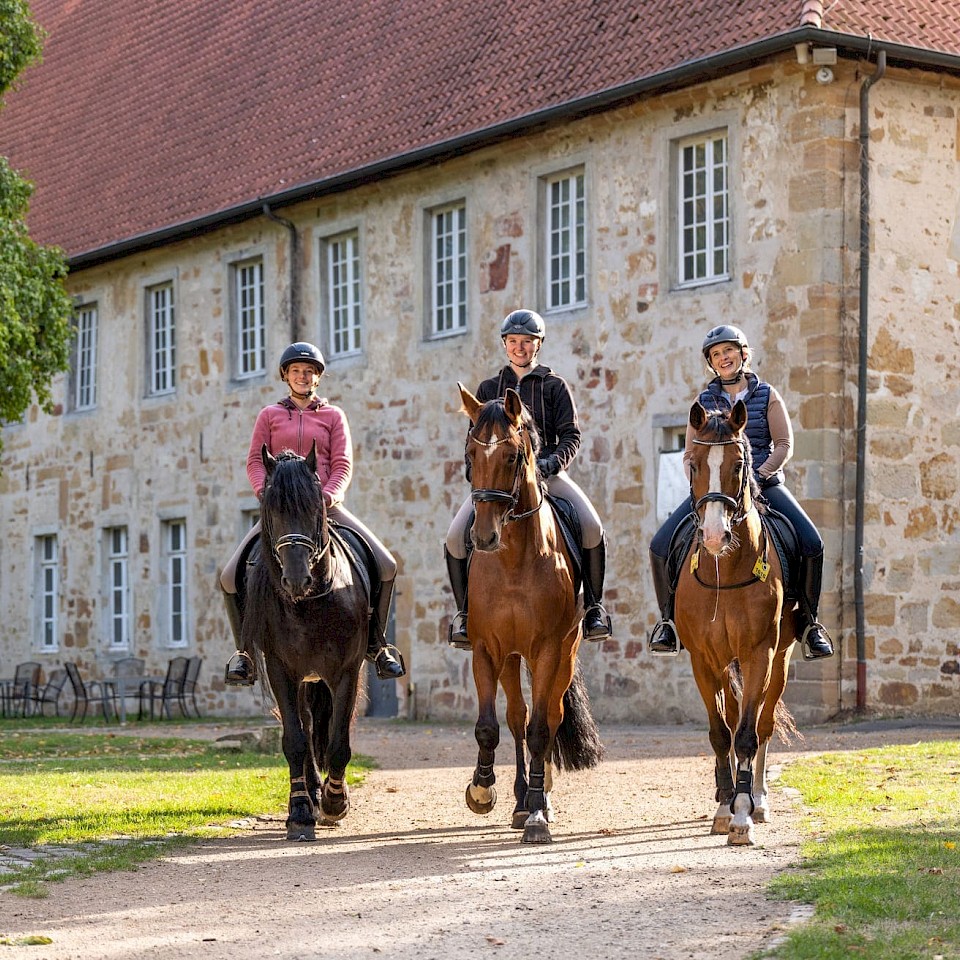
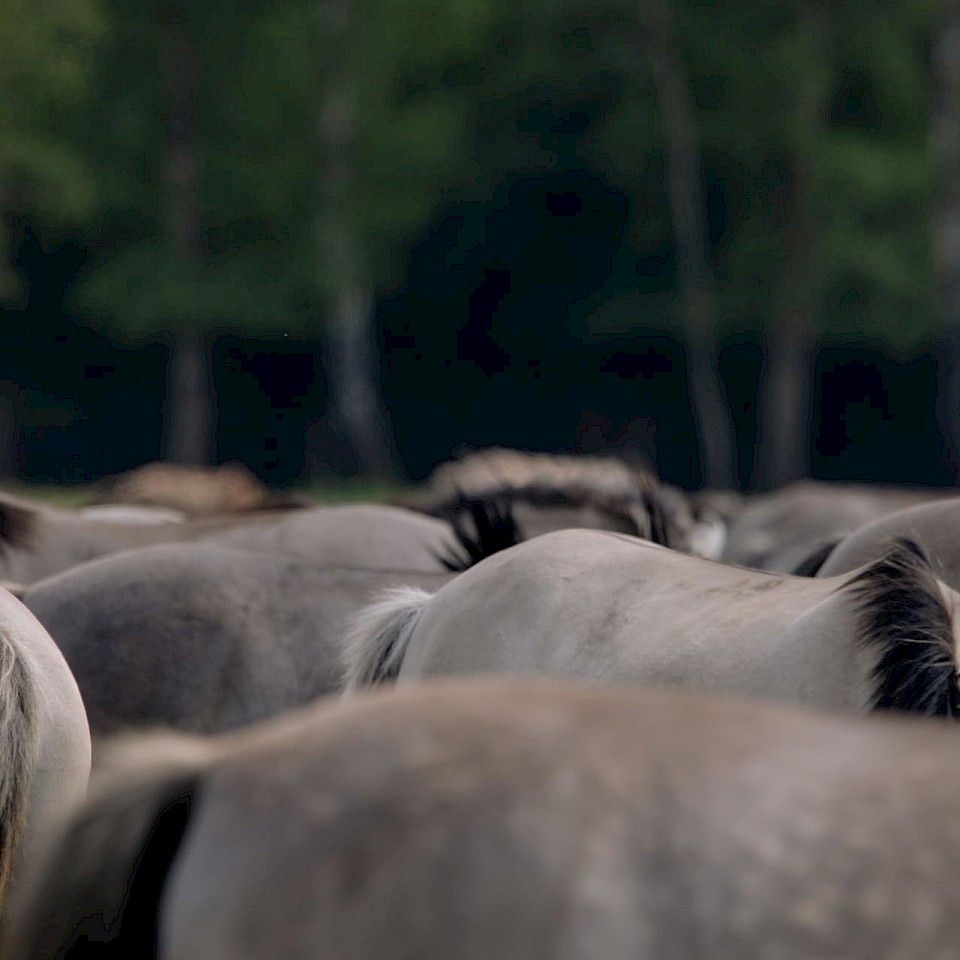
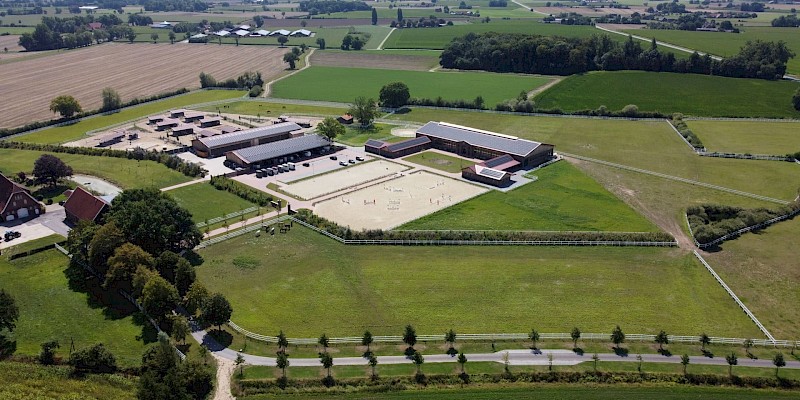
Horses emerge from the back paddock. They stroll in single file between the space dividers made of hedges and fences. They head for the hay rack, which is about to open automatically for the next feeding time. At Haus Brook in Senden, 35 mares and 35 geldings each live in an exercise stable. The approximately 7000 square metre area is divided into paths, rest areas, sand areas, automatic feeders, a large lying area plus access to the pastures - so the horses have to keep moving. This is very close to the nature of horses. In Germany, this form of husbandry has been developing since around 2001. Good training conditions with an indoor riding arena and outdoor arenas are essential to ensure that such a habitat for horses is also of interest to sport horse riders. Such a combination, as offered by Julia and Christoph Deipenbrock, is quite unique in the Münsterland region.
"Horses are simply amazing. I see what they do for our souls every day."

When and how did your day start at Haus Brook today, Mr Deipenbrock?
At five o'clock. My first walk is always to the horses to have a look at all 70 of them. It's very quiet in the stables in the morning. Many of the animals are lying down and sleeping. This moment is so quiet that I even feel like my pulse is slowing down - even though I have a busy day ahead of me. I work with to-do lists. Even though after almost two years all the processes have become familiar, something new is added every day.

What was the initial idea behind your boarding horse business?

My parents ran a traditional farm with livestock and arable farming at Haus Brook. I took over the farm. I'm a rider myself, just like my wife Julia. The idea was to make the farm fit for the future with modern boarding horse husbandry and a new concept - deliberately sophisticated and high quality, even for a higher boarding price than is usual in the neighbourhood. To achieve this, we travelled all over Germany and visited similar facilities. We have always had horses on the farm. However, the construction of the active stable gave us the opportunity to start from scratch - as if on a blank sheet of paper. In a brainstorming session with friends, we put together what could be the optimum for a modern boarding facility. We were actually able to realise all of it - except for a horse walker. We don't need that. We made a conscious decision in favour of a so-called exercise stable. Some horses cover up to ten kilometres a day here.

Who planned the facility?

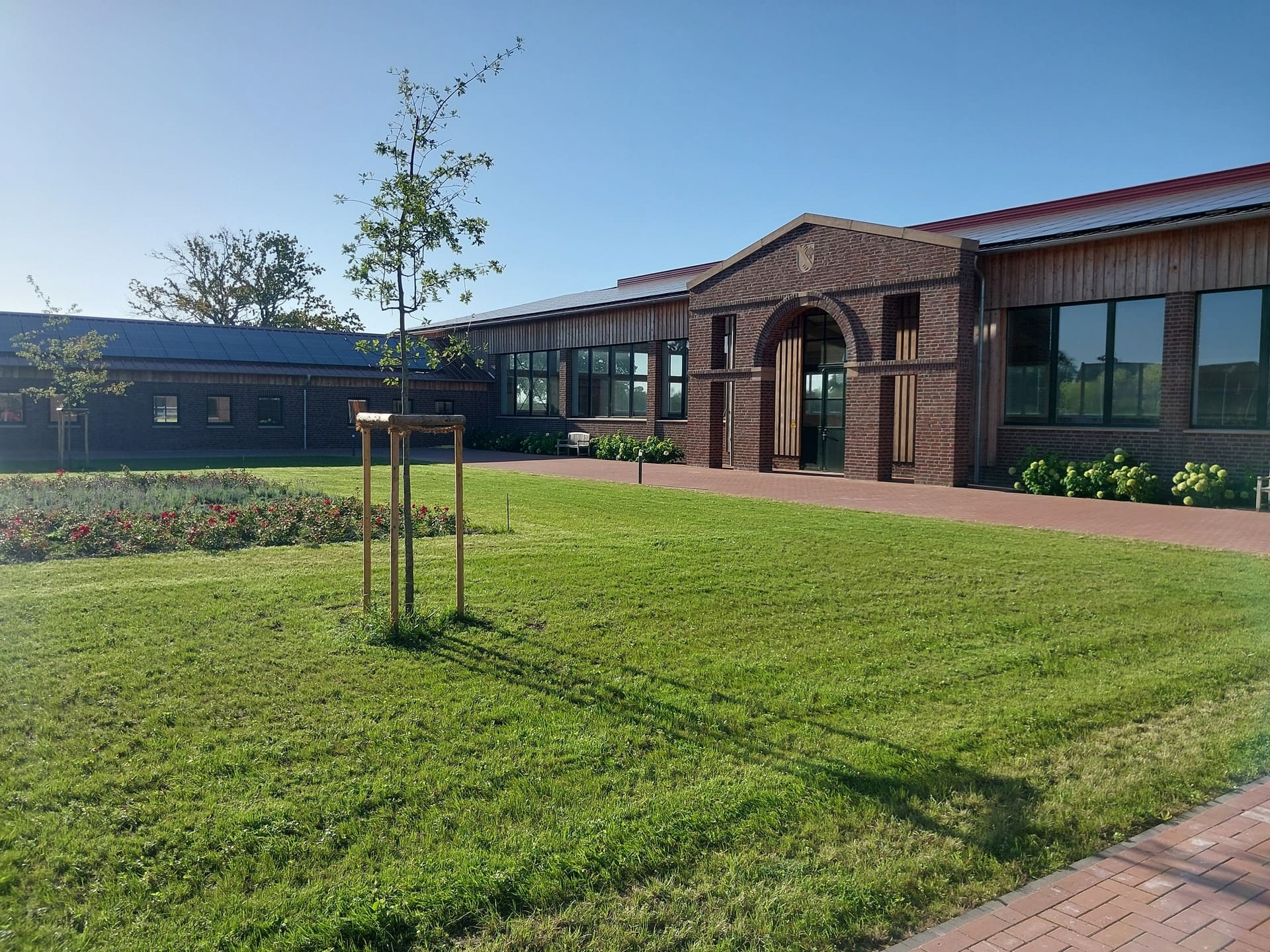
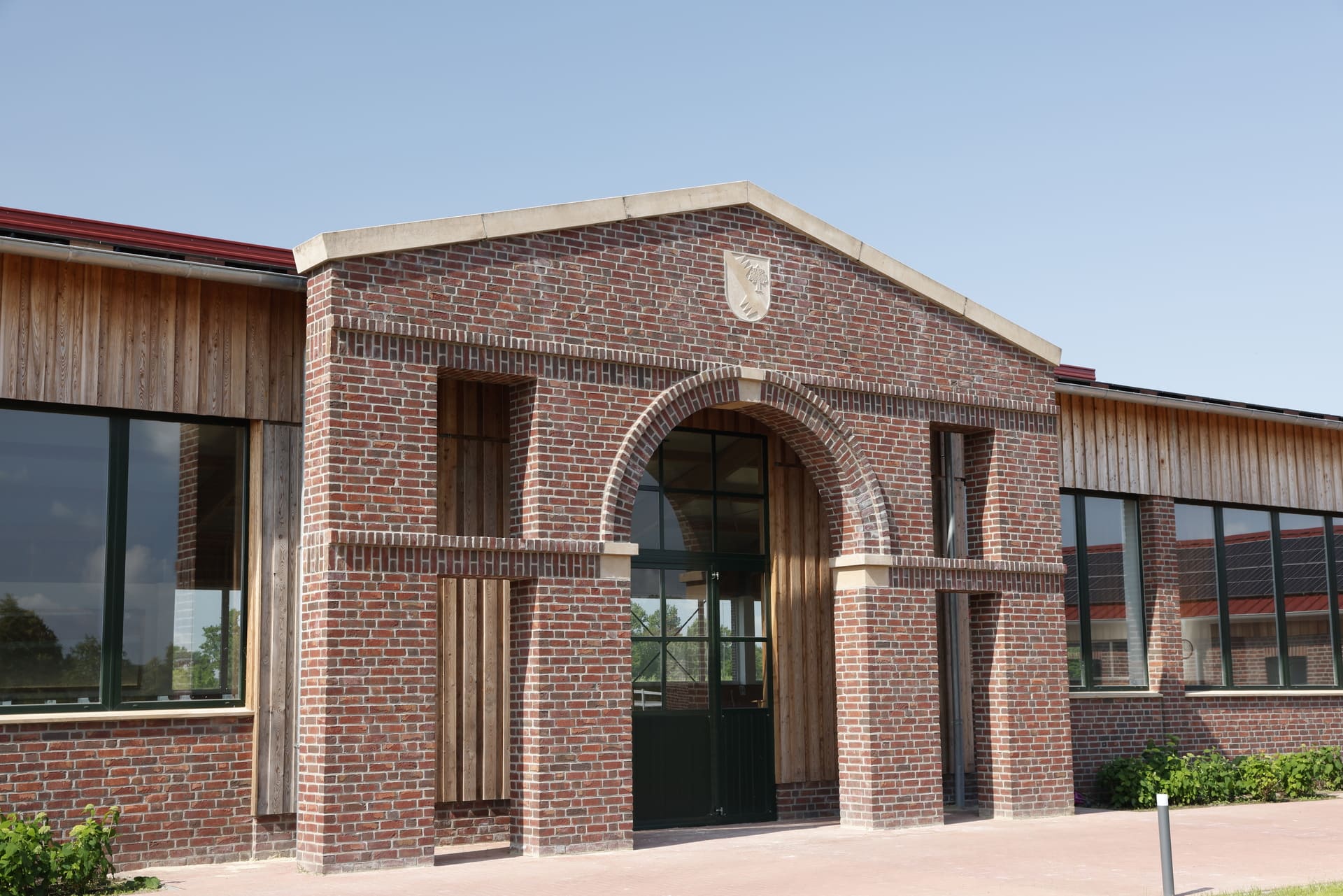
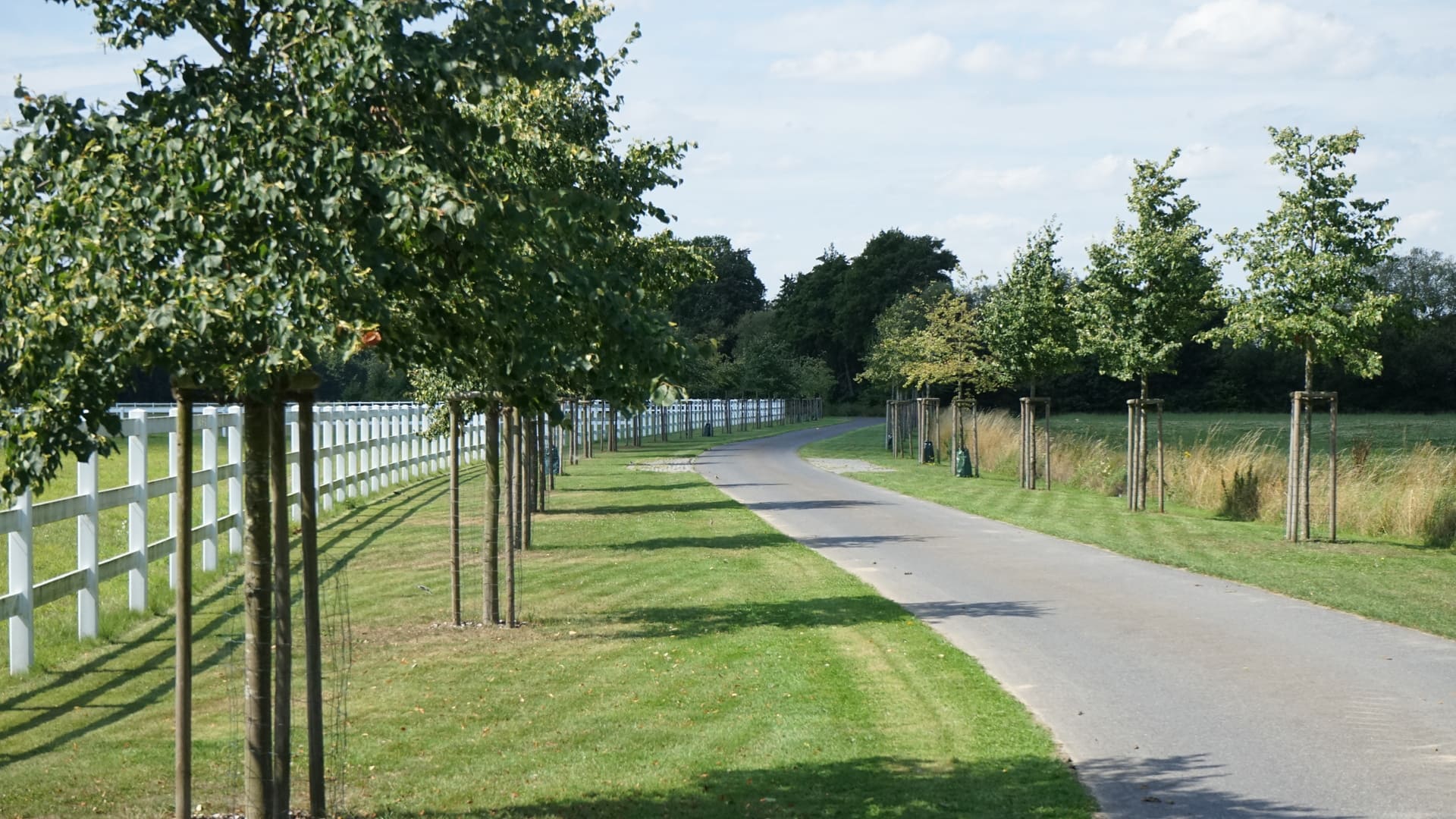
The active stable for the horses was planned by a company specialising in this field. I designed the indoor riding arena with the grooming areas, tack rooms and the riders' parlour with sun terrace as well as the path system myself and then handed it over to an architect. I am interested in history and like the old farms and moated castles in Münsterland. I was particularly inspired by Johann Conrad Schlaun's baroque three-winged complex: the riding hall is in the centre, with a building to the left and right, and the main path is also the visual axis. The typical Münsterland mix of materials was important to me: brick, sandstone and untreated wood. We used larch instead of oak, but it turns just as silver-grey over time. We have also planted a lot of lime trees so that there will eventually be large avenues here. Quite regional, but above all timeless.

You wanted to build a sustainable project that is economically viable. What does that look like in concrete terms?

It was clear from the outset that this had to be a fully-fledged economic sector - and one that fulfils us. A mobile stable only works if a lot is mechanised: we remove manure and spread the bedding in the lying areas by machine. Our bedding system chops and dusts the straw. The horses wear a chip in an ankle bandage and, once programmed, the automatic feeders dispense appropriate portions throughout the day. This means that two of us can feed all 70 horses. The formula for success, however, is the management and observation of the horses and the fact that we enjoy dealing with people. I sometimes see myself as a kind of hostel warden - who also makes sure that the rules are followed. Otherwise it won't work.

You grew up at Haus Brook, didn't you?

Yes, Haus Brook has always been our family home. My family can be traced back to the 1430s in Senden. Farming has always been an issue here, as have horses - in the past as working horses, later as our riding horses.

You have now been running your business for almost two years. What makes you particularly happy?

That we have created a mud-free zone - both in the paddocks and on the paths. And that we have developed everything thoroughly and in one go. Above all, that we are working in an environment that we really wanted, where horses and people feel comfortable and where no temporary solutions have been planned. A visitor from Münsterland once said dryly: "This isn't a makeshift either." That was a nice compliment.

What role do horses play in our society today?

Strictly speaking, there is no longer a need for horses these days. But many people need contact with nature, and for them the horse is the crucial link - for many, horses are important for personal happiness. And the Münsterland without horses and riders would be unimaginable. I like to compare it with the English countryside, where horses are an integral part of the landscape. It is no coincidence that the Westphalian coat of arms bears a horse.

GOOD TO KNOW

From practice for practice: As a farrier, Aletia Reilingh has to deal with problematic horse hooves time and time again. For years, she was unable to find a reliable care product for problems such as thrush in horses' hooves. Developed with the knowledge of a farrier, she tested the various formulations together with vets and horse owners over a year and a half until she was satisfied with the results. The formula also proved effective for brittle hooves, hollow walls and many other problems, which is why Aletia Reilingh patented the product and named it "Strahlfoili" . With the market launch in early 2023, "Strahlfoili" also became the name of her company. There are now other care products with carefully selected ingredients (such as pure laurel oil) that are sold all over the world via her online shop. Aletia Reilingh also offers courses for horse lovers who want to learn something about hooves, such as the "SOS Emergency on the Hoof" workshop, and shares tips from her everyday life as a farrier on Instagram.

Go to the website

To the Instagram profile

Close Contact