Health + Insurance + Money

How does the German healthcare system work and where can you find the right doctors or a suitable clinic? Which insurances are compulsory - and which ones are also worthwhile? How do you set up your account and understand your salary?

We provide information on the following topics:

Medical care

In Münsterland, you benefit from comprehensive medical care with modern clinics, short distances and a well-developed network of GPs and specialists, including many specialised specialists. IMPORTANT: In contrast to many other countries, primary medical care in Germany is initially provided on an outpatient basis and not in hospital. This means that for all everyday health problems, your first port of call is your family doctor (for children: paediatrician).

GPs
You are free to choose your GP practice; it is your first port of call for any complaints you may have. Your GP knows your medical history, coordinates your medical care and refers you to specialists or hospital if necessary. If you are ill and cannot work, you will also receive a certificate of incapacity for work there. GP practices are located in almost every town in Münsterland.

Specialists
Specialists specialise in certain medical fields - for example, heart disease (cardiology), skin diseases (dermatology) or bones and joints (orthopaedics). You will be referred to a specialist practice by your GP practice if a special examination or treatment is necessary. An appointment with a specialist practice may involve waiting times.

Clinics and hospitals
Modern hospitals with various specialist departments and for emergency care are available throughout Münsterland. They offer comprehensive and high-quality inpatient care. In Münsterland, Münster University Hospital (UKM) is one of the largest hospitals in Germany with a high level of medical and scientific expertise.

© Münsterland e.V.
Find multilingual doctors in the Münsterland region

If you are looking for doctors in Münsterland who also speak English or other foreign languages, there are several helpful resources available to you. Here is a small selection:

Emergency care

If you live in Münsterland and suddenly fall ill or have an accident, you should know these important telephone numbers! These numbers are free of charge and can be reached day and night. If you don't speak German, you can say "I speak English" on the phone. They will try to help you in your own language.

© Münsterland e.V.
Emergency numbers

112 - Emergency call for medical emergencies
Dial this number if the situation is very serious - for example in the event of an accident, a heart attack or if someone is no longer breathing. The control centre will send an ambulance immediately and decide whether hospitalisation is necessary.

116 117 - On-call medical service
You can call this number if you are ill but it is not an emergency - for example if you have a fever, severe pain or the flu - and your family doctor is not available (for example in the evening or at the weekend).

0228 19240 - Bonn Poison Control Centre
This number is important if you or someone else has accidentally ingested a poisonous substance - for example medication, cleaning agents or plant parts. The experts at the poison centre will help you immediately, even over the phone.

Health insurance

Health insurance is compulsory in Germany. This means that everyone must have health insurance - either statutory health insurance (GKV) or private health insurance (PKV).

If you work as an employee in Münsterland, you are usually automatically covered by statutory health insurance. You can only take out private insurance under certain conditions. Within the statutory health insurance scheme, you are free to choose your health insurance provider. The benefits are largely the same - some insurance companies offer additional services such as bonus programmes or health courses. The GKV-Spitzenverband's list of statutory health insurance providers in Germany can help you choose the right health insurance provider for you.

  • Statutory health insurance (GKV): The most common form. Contributions are based on your income and are automatically deducted directly from your salary or wages. Your employer pays around half of the costs.

  • Private health insurance (PKV): Possible from a certain income or for certain occupational groups. The premiums depend on age, state of health and scope of benefits. Payment is usually made by bank transfer or direct debit.

How does billing work?

  • GKV: You receive an electronic health card which you present to the doctor or hospital. Billing takes place directly between the practice and your health insurance company. You don't have to pay anything in advance, but you may have to pay a co-payment (e.g. for medication or medical aids).
  • Private health insurance: You receive an invoice from the doctor, pay it yourself and then submit it to your insurance company for reimbursement. Depending on your policy, you may be reimbursed all or part of the costs.

Family insurance

  • In statutory health insurance, spouses and children without their own income can be insured free of charge. In private health insurance, a separate insurance contract is required for each person - this can result in additional costs.

Compulsory and voluntary insurance

Insurance offers you security in Germany and protects you against financial risks - for example in the event of illness, accidents or damage. Some insurance policies are required by law, others are voluntary but recommended - especially if you live and work in Germany permanently.

Compulsory insurance for employees

If you are employed in Germany, you are automatically covered by several important insurance policies. The contributions for these are deducted directly from your salary or wages.

  • Health insurance: As mentioned above, health insurance covers the costs of illness, visits to the doctor, hospitalisation and check-ups.
  • Long-term care insurance: Supports you financially if you need care in old age or after an illness.
  • Pension insurance: Builds up your state pension provision. When you retire, you receive monthly payments.
  • Unemployment insurance Gives you financial support if you lose your job and are looking for a new one.
  • Statutory accident insurance: This insurance is paid for by your employer. It protects you in the event of accidents at work (e.g. in the company, on the building site, in the office), accidents on the way to and from work (e.g. on the direct route to and from work) and occupational illnesses.

Voluntary insurances

Here we present a selection of insurances that we believe can be helpful:

  • Personal liability insurance: Very important! It pays out if you accidentally cause damage to someone - for example, if you drop a mobile phone or cause water damage.
  • Occupational disability insurance: This insurance protects your income if you are permanently unable to work due to illness or an accident.
  • Household contents insurance: Protects your home - for example furniture, clothing, electrical appliances - against damage caused by fire, mains water, burglary or storms.
  • Legal expenses insurance: Helps if you need legal support, e.g. in a dispute with your landlord or landlady or in road traffic. It usually covers legal fees and court costs.
© Münsterland e.V.
TIPS FOR TAKING OUT INSURANCE
  • Compare prices and benefits - don't just look for the cheapest tariff, but for the cover you really need.
  • Special tariffs for young professionals or newcomers can be useful - they are often cheaper and simpler.
  • Read the contract carefully, especially the information on exclusions (what is not covered) and the excess (what part you have to pay yourself).

You can find further helpful information on the subject of insurance on the Make it in Germany or Stiftung Warentest websites.

How do you find the right insurance?

© Münsterland e.V.
Public and independent advice centres:

Finances

There are various payment options available to you in Germany. A German bank account is the basis for many things: your salary or wages are transferred to it, rent is paid and bills are settled. Direct banks often offer free accounts, simple online administration and sometimes English-speaking customer service - this is particularly practical if you are new to the country.

Cash

It is still a good idea to always have some cash with you, especially in smaller shops or at weekly markets, as card payments are not accepted everywhere. You can easily withdraw money from cash machines using your debit or credit card.

Card payment

You can pay with a debit card (EC card) or credit card (e.g. Visa or Mastercard) in most supermarkets, pharmacies and larger shops.

Mobile payment

Paying with a smartphone, for example via Apple Pay or Google Pay, is also becoming increasingly popular - especially among younger people. This requires an NFC-enabled smartphone and a bank that supports this service.

Opening a bank account

The German banking system offers various types of account that fulfil different requirements in terms of availability, interest and term depending on the intended use.

Current account (salary account):

  • Everyday account for daily payment transactions (salary, rent, transfers, direct debits, etc.)
  • Usually no or very low interest
  • Available at any time

Call deposit account

  • Flexible savings account with daily access, no fixed term
  • Variable interest rate
  • Available daily (transfer to current account)

Fixed-term deposit account

  • Invest money securely for a fixed period
  • Higher interest rates than call money
  • Fixed term (e.g. 1 year or 3 years) - no access to the money before expiry

You can obtain further information and independent advice from the consumer advice centre.

Bank accounts

The German banking system offers various types of account that fulfil different requirements in terms of availability, interest and term depending on the intended use.

Current account (salary account):

  • Everyday account for daily payment transactions (salary, rent, transfers, direct debits, etc.)
  • Usually no or very low interest
  • Available at any time

Call deposit account

  • Flexible savings account with daily access, no fixed term
  • Variable interest rate
  • Available daily (transfer to current account)

Fixed-term deposit account

  • Invest money securely for a fixed period
  • Higher interest rates than call money
  • Fixed term (e.g. 1 year or 3 years) - no access to the money before expiry

You can obtain further information and independent advice from the consumer advice centre.

© Münsterland e.V.
Documents for opening a bank account
  • Identity card or passport: Valid proof of your identity is required. If you have a passport, a registration certificate is often also required if you are not from Germany.
  • Registration certificate: If you are new to Germany and do not have a German identity card, a registration certificate (proof of residence) may be required. You can obtain this from the Bürgerbüro or Einwohnermeldeamt.
  • Proof of residence status: If you are not an EU citizen, you may need proof of your residence status or a visa.
  • Tax identification number (optional): Some banks will ask for your tax ID. You will receive this number after registering with the city or municipality. It is required to fulfil tax purposes.
  • Proof of income or employment contract (optional): Some banks ask for proof of income or your employment contract, especially when opening a current account with an overdraft facility or other special account types.
  • Schufa credit report (if required): In rare cases, especially if you want to open an account with an overdraft facility, a Schufa report may be required to check your credit rating.

Salary and taxes

If you work in Germany, a distinction is made between gross and net salary on your payslip. You always receive your salary in "net" - i.e. after deduction of taxes and social security contributions. The following are deducted from your salary:

  • Income tax
  • Solidarity surcharge (in many cases this is not applicable)
  • Social security contributions (health, pension, long-term care and unemployment insurance)

You can use a gross-net calculator (as at: 2026) to calculate your estimated tax burden free of charge and find out how much net you can expect from your salary. Tax brackets affect your net income - depending on your marital status, number of children, etc. At the end of the year, you can submit an income tax return. Many employees receive a refund - often several hundred euros.

  • You can find FAQs about tax returns here.
  • You can find more information on tax returns and social insurance here.

Financial support for families: child benefit

Child benefit is a state payment that you receive every month for your child - regardless of your income.

Who receives child benefit?
If you live and work permanently in Germany with your child, you are generally entitled to child benefit.

How much child benefit is available?
You currently receive €259 per month - for each child (as of January 2026).

How do you apply for child benefit?
The family benefits office of the Federal Employment Agency is responsible. You can find all the important information on applying for benefits, information sheets, forms and applications from the family benefits office to download here.

Tip:
You should submit the application as soon as possible after the birth, as benefits are only paid retroactively for a few months.

Financial support for families: parental allowance

Parental allowance helps you if you do not work or work less after the birth in order to look after your baby.

Who is entitled to parental allowance?
All parents who look after their child themselves and therefore reduce their income - including international professionals with a residence permit and domicile in Germany. If you do not live in Germany, you can only apply for parental allowance via an online service if you or the other parent work in Germany and the employer is based in North Rhine-Westphalia.

How much parental allowance do you receive?
The amount depends on your net income before the birth. You will receive around 65-67% of your previous salary, but at least €300 and a maximum of €1,800 per month. You can also plan and calculate the amount of your parental allowance without obligation using the parental allowance calculator. The income threshold has been lowered for births from 1 April 2025. It is now 175,000 euros for couples and single parents. Further information and an explanatory video can be found on the website of the Federal Ministry of Education, Family Affairs, Senior Citizens, Women and Youth.

How much parental allowance do you get?
Parental allowance is generally available for up to 12 months if one parent stays at home - or 14 months if both parents share the care.

How do you apply for parental allowance?
The parental allowance office in your district or town (Borken, Coesfeld, Münster, Steinfurt, Warendorf) is responsible. The application must be made in writing and you must enclose supporting documents (e.g. payslips, birth certificate). You can prepare the parental allowance application before the birth. Some offices also offer online applications and counselling in English. On the Familenportal NRW website, you can find more detailed information on online applications, local advice and application centres (via a postcode search function) and relevant documents to download. You can find further helpful information on the Make It In Germany website.

© Münsterland e.V.
Tips on parental allowance and child benefit
  • Child benefit and parental allowance are not mutually exclusive - you can receive both at the same time.
  • Unmarried parents or single parents are also entitled.
  • If you are unsure, the parental allowance office, the family benefits office or a migration advice centre will be happy to help you - often in several languages.
  • You should submit the application as soon as possible after the birth, as benefits are only paid retroactively for a few months.
  • In many towns in Münsterland, there are family offices or welcome guides who can help you with applications. They are familiar with forms, deadlines and contact points - and will help you to get everything right.

Your contact person

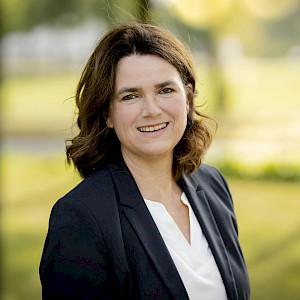
Birgit Stübing-Beunink
© Münsterland e.V./Anja Tiwisina
Birgit Stübing-Beunink
Service Onboarding@Münsterland
Consulting for companies
Consulting professionals

0049 2571 94 93 79

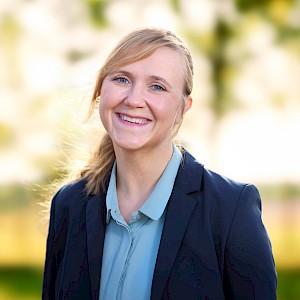
Stefanie Prange
© Münsterland e.V./Philipp Fölting
Stefanie Prange
Service Onboarding@Münsterland
Consulting for companies
Consulting professionals

0049 2571 94 93 52

DISCLAIMER

The information provided on this website does not constitute legal advice and is not intended to address any legal issues or problems that may arise in individual cases. The information you find on this website is of a general nature and is for information purposes only. If you need legal advice for your individual situation or problem, please seek the advice of a suitably qualified lawyer. Furthermore, our website is not official information from the Federal Government or any other public authority. Therefore, you cannot rely on the information you find here when contacting German authorities.

If we are unable to provide you with sufficient information through our service, we will act as a guide and direct you to our official and administrative partners in the region. In doing so, we ensure that you are well informed and can get in touch with the office responsible for you. Our service is free of charge for you and your enquiries will be treated confidentially.

Welcome Internationals
© istock/Giuseppe Lombardo
back to the homepage
Learn more...
Close Contact