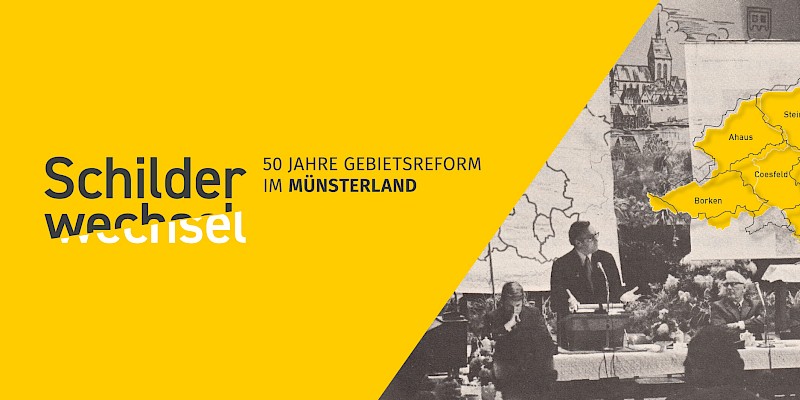
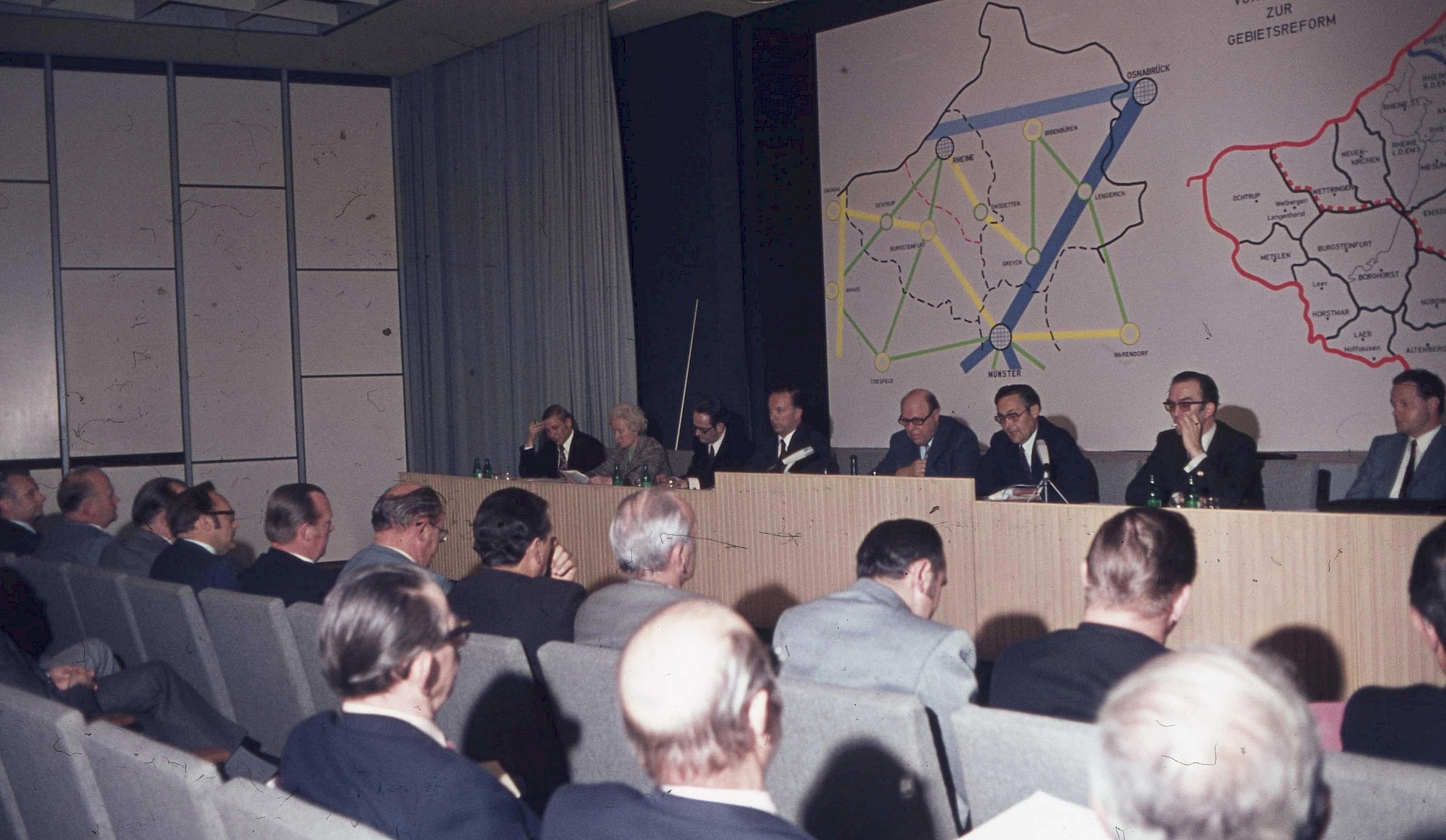
The "Act on the Reorganisation of the Municipalities and Districts of the Münster/Hamm Reorganisation Area (Münster/Hamm Act)" of 9 July 1974 ordered the territorial reform in the region around the cities of Münster and Hamm at municipal level. The law came into force on 1 January 1975. The following reorganisations took place in Münsterland:
- Numerous towns were newly formed (from former towns and municipalities, e.g. Nottuln, Dülmen, Steinfurt).
- The old district of Münster becomes the independent city of Münster. It is expanded to include the surrounding municipalities of Albachten, Amelsbüren, Angelmodde, Handorf, Hiltrup, Nienberge, Roxel, Sankt Mauritz and Wolbeck.
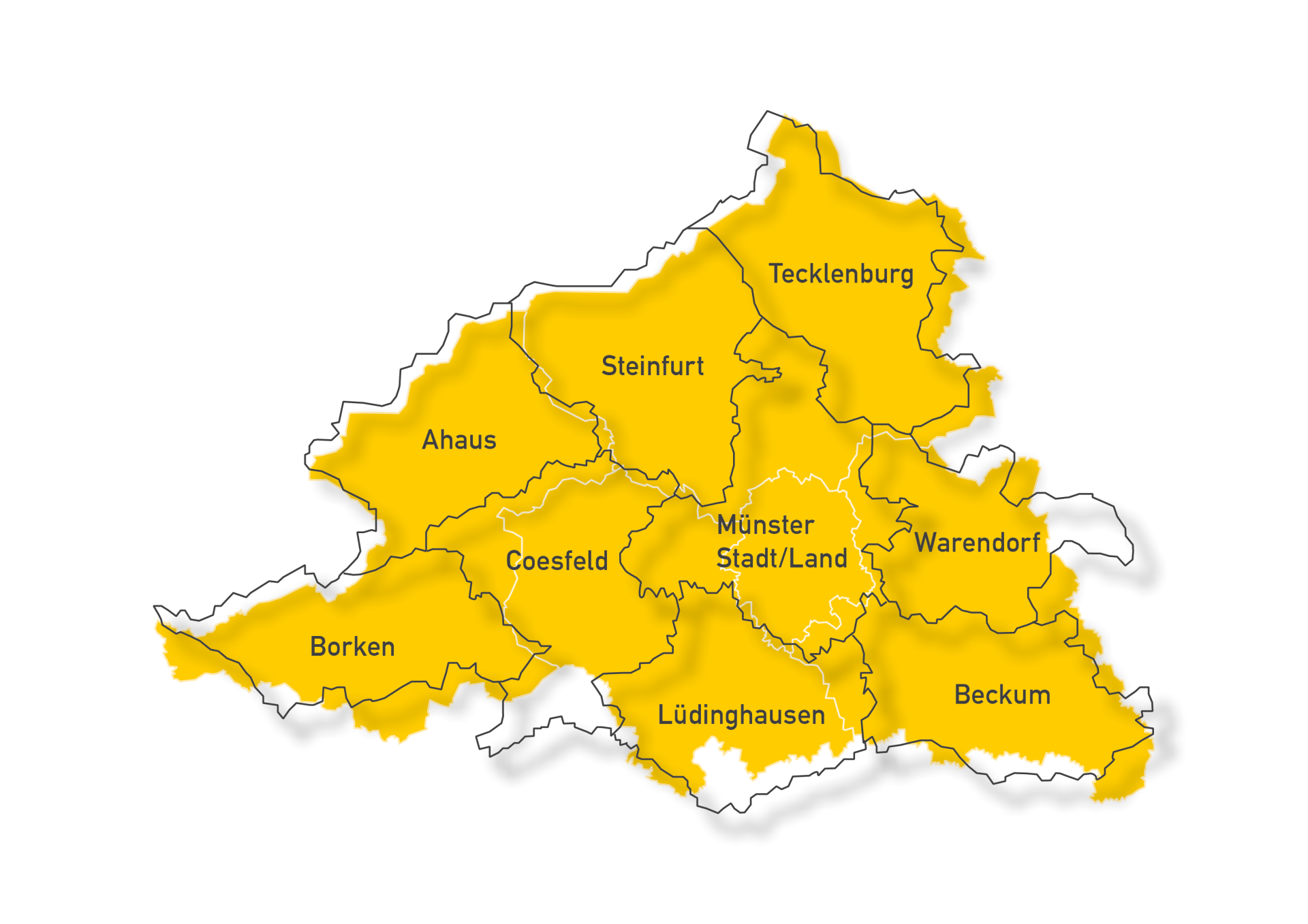
- The following districts are formed:
- the district of Warendorf as successor to the districts of Beckum and Warendorf,
- the district of Steinfurt as successor to the districts of Steinfurt and Tecklenburg,
- the district of Coesfeld as successor to the districts of Coesfeld and Lüdinghausen,
- and the district of Borken as successor to the districts of Ahaus and Borken, including the previously independent town of Bocholt
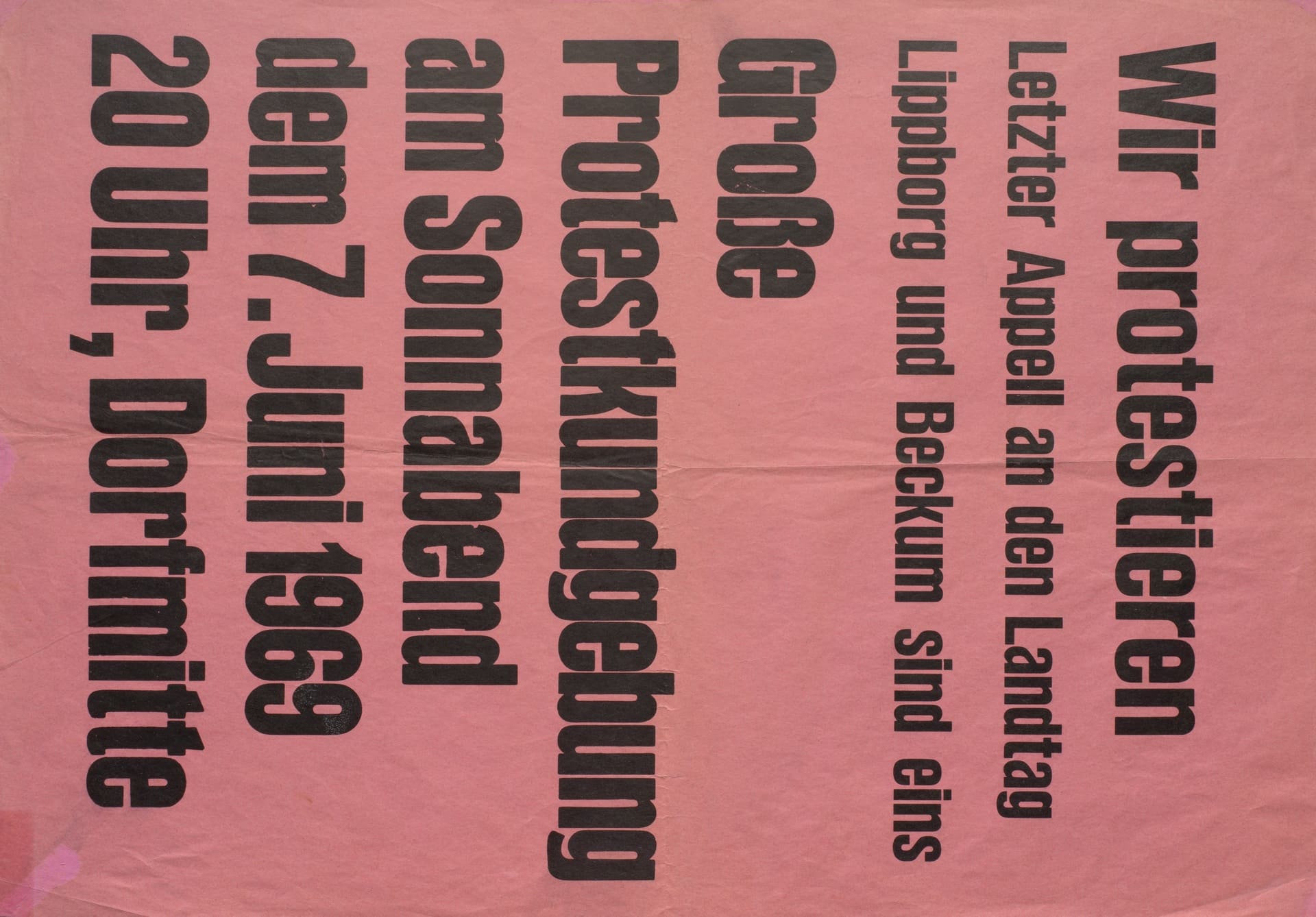
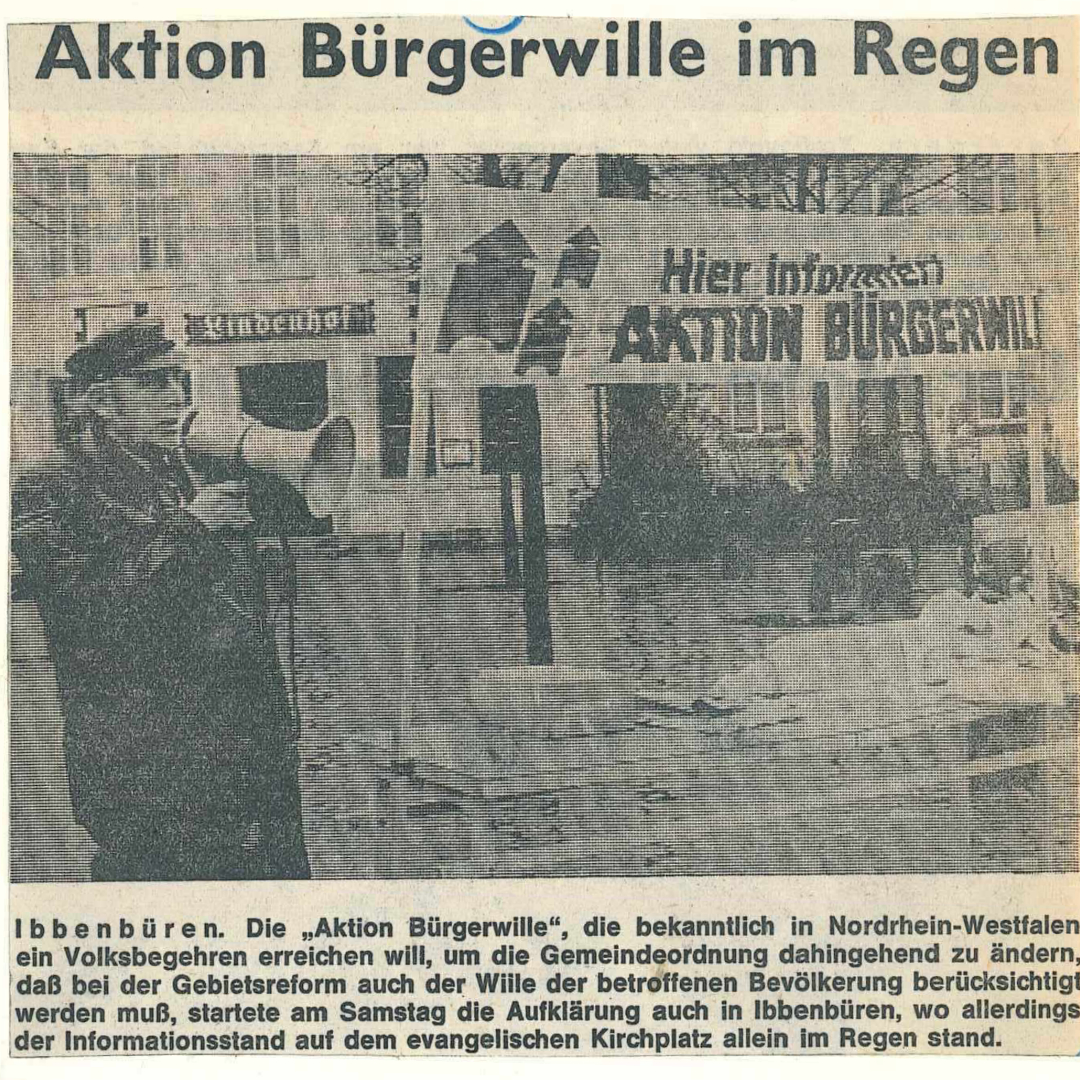
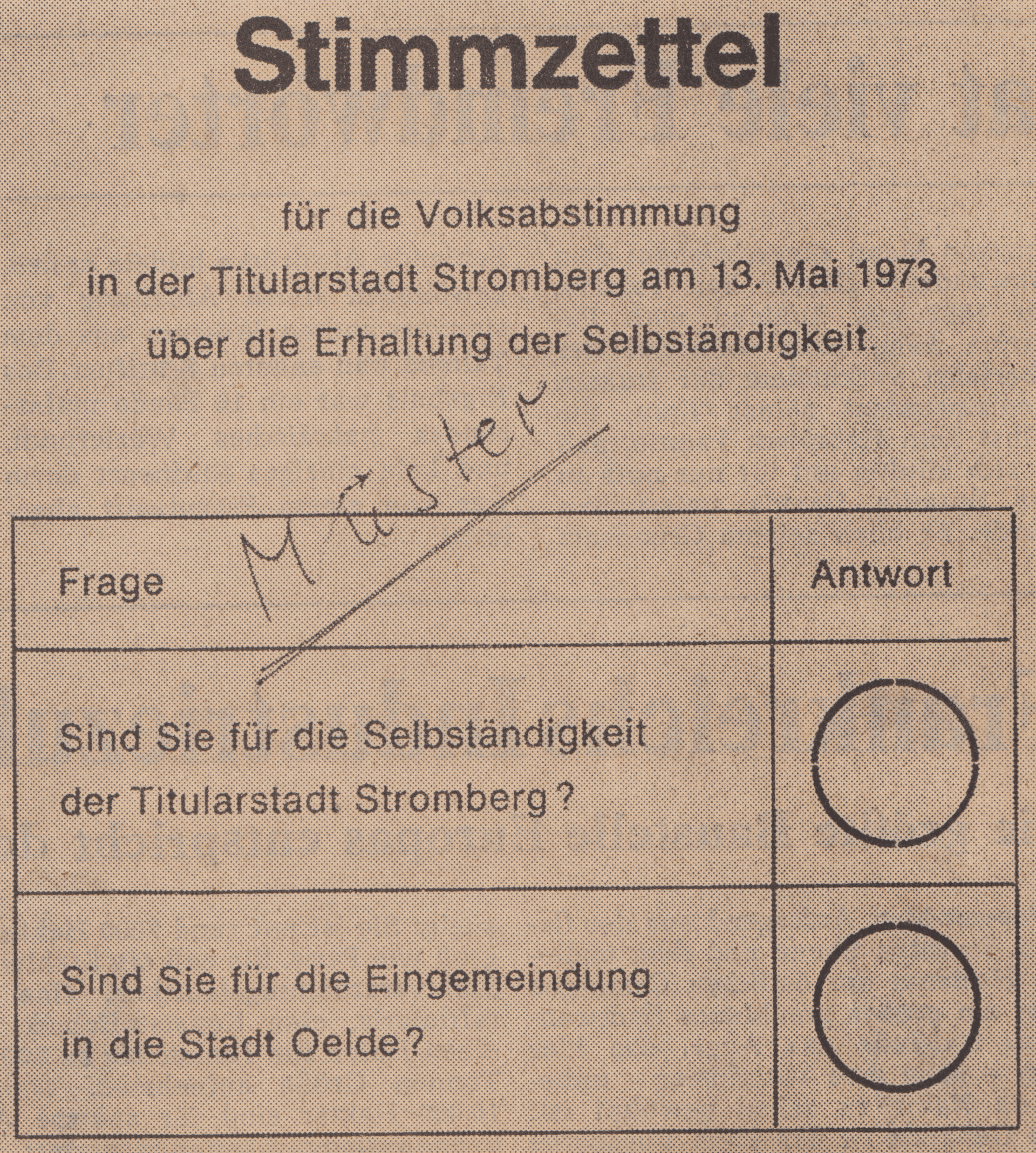
The municipal territorial reform was far more than a mere administrative act. It can certainly be seen as a "creative" and structural policy measure that had a major impact on people's lives and coexistence. The aim was to create optimal spatial and social conditions for the development of society and the economy - from a Prussian-style administrative state to a modern service and welfare state. Whether the territorial reform was a success is as controversial then as it is today.