Sustainable catering in Münsterland - tips for avoiding food waste
As part of the "Münsterland ist Klimaland" initiative, we are pursuing a central goal: avoiding food waste. Events offer great potential for using resources responsibly. The following recommendations are intended to help make catering more sustainable:
1. plan realistic quantities
- Allow for 15 to 20 per cent less
➜ for cancellations at short notice or leaving the event early - Sensitise participants
➜ e.g. by sending a reminder email five days before the event - Actively request acceptances and cancellations
➜ in order to be able to plan better
2. specifically enquire about food requirements
- Ask about participation in the meal and food preferences (food intolerances/meat/vegetarian/vegan) as early as the invitation stage
3. consciously reduce the offer
- Quality over quantity: favour regional food and drinks
➜ Weigh up how many different food options are really necessary
4. offer sustainable drinks
- Provide tap water in carafes in addition to other drinks
5. choose resource-saving equipment
- Favour reusable crockery
- Look for catering-friendly dishes that require less crockery
6. avoid and separate waste
- Provide separate waste bins and crockery returns in a visible location
7. recycle leftovers instead of disposing of them
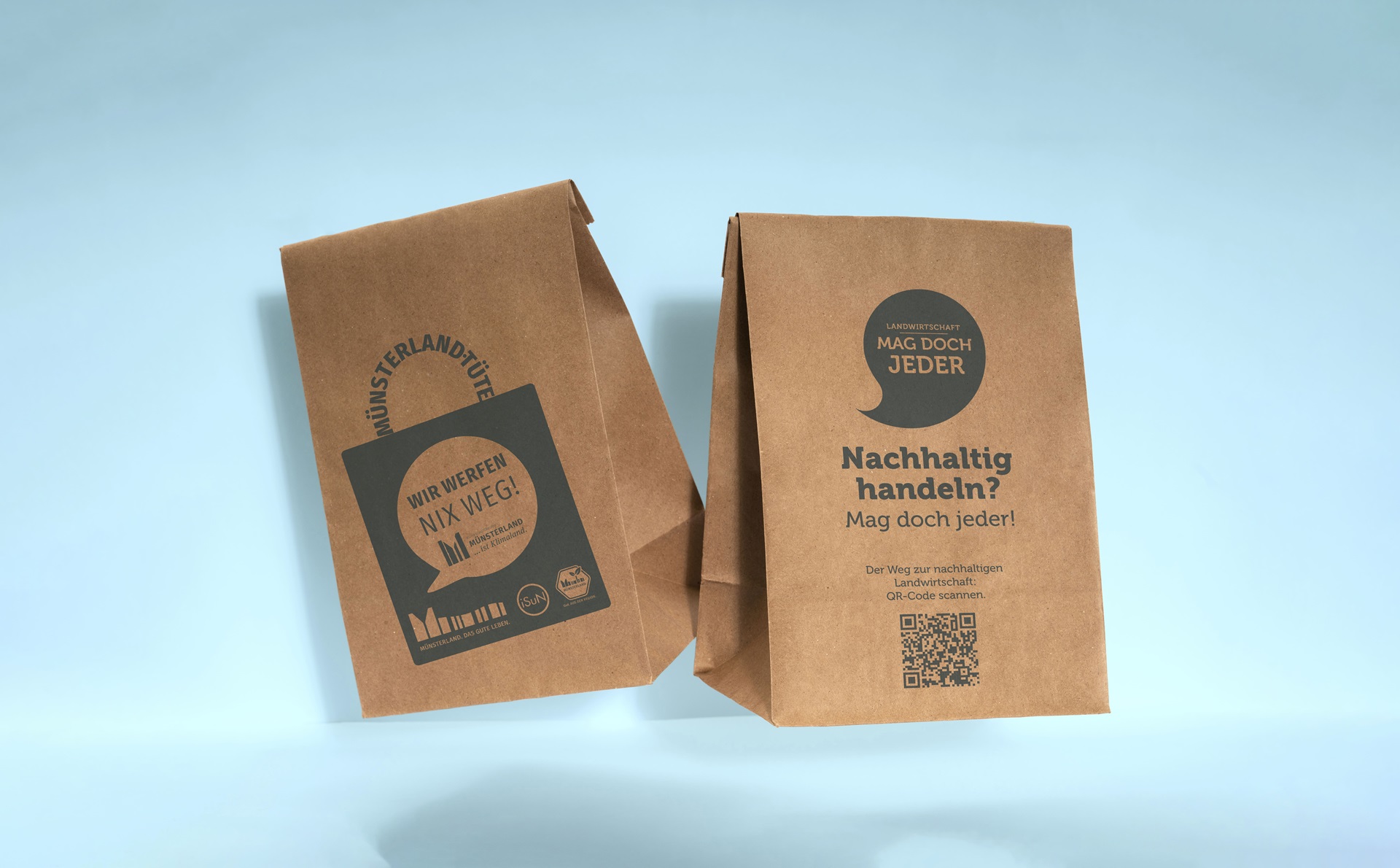
- Display take-away bags, such as the Münsterland bag, and actively motivate guests to take away
➜ e.g. with a "WE DON'T THROW ANYTHING AWAY!" poster - Pass on leftover food internally, e.g. make it available in the kitchenette and inform employees
by email
8. consider shelf life
These measures promote a more conscious approach to food and strengthen the sustainable profile of events in the Münsterland region.
➜ "Sustainable event planning" guidelines from the Fairtrade City of Münster.
➜ "Guidelines for the sustainable organisation of events" from the Federal Ministry for the Environment, Climate Protection, Nature Conservation and Nuclear Safety
➜ Another general tip for events
When selecting gifts for guests, it is worth choosing regional alternatives. This protects the climate and strengthens regional value creation at the same time. For example, picnic boxes from the Münsterland region filled with 100 per cent regional products are ideal for this.