Castles and fortresses hidden object book

Interview with illustrator Till Lenecke
© Münsterland e.V./ Cornelia Höchstetter

Interview with Till Lenecke

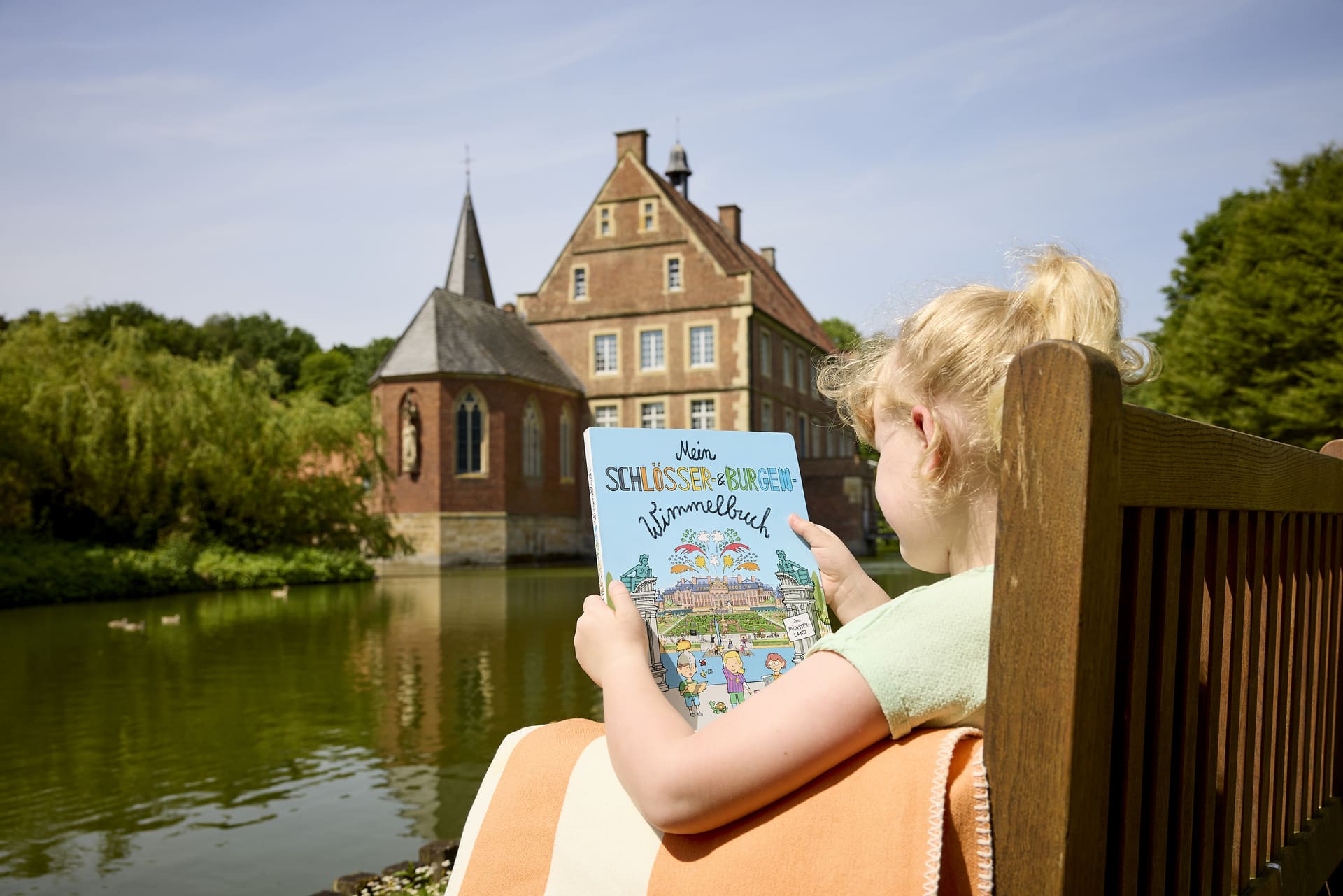
Three children land in a balloon in Münsterland and discover the world of castles and fortresses: This journey of discovery is the subject of a new hidden object book published by Münsterland e.V. together with Coppenrath Verlag. In this interview, illustrator Till Lenecke explains how the book came about.

"When there's a big idea, the small ones come naturally."


Mr Lenecke, how did your work on the Wimmelbuch begin?

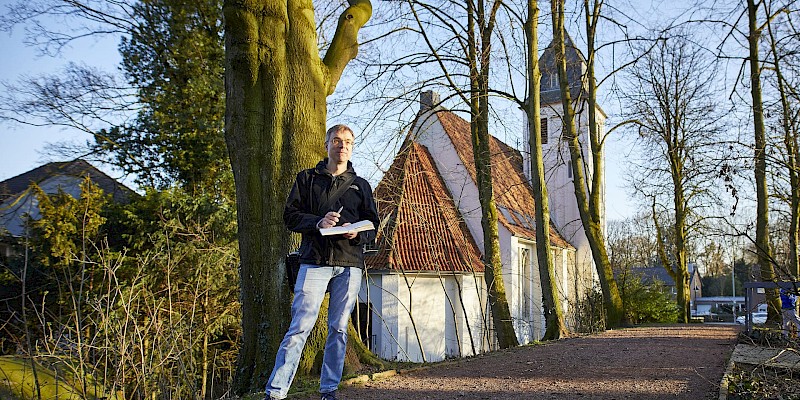
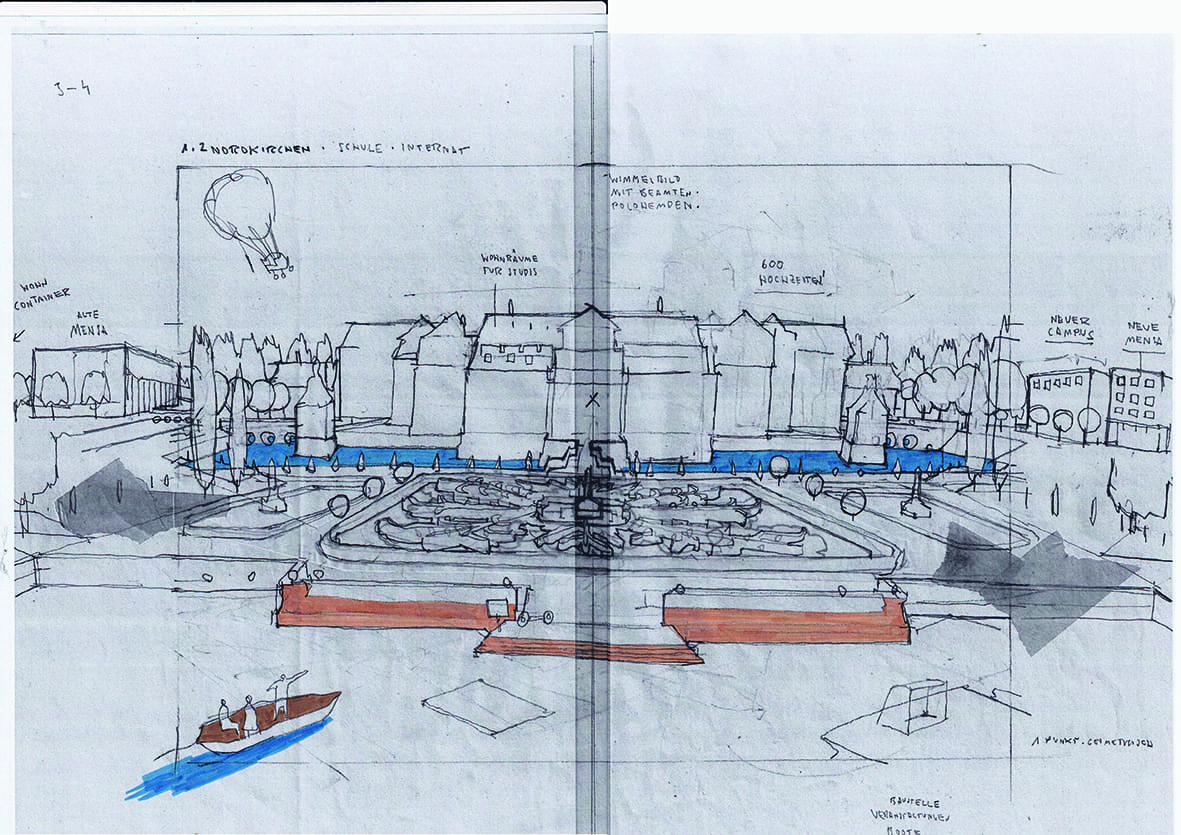
On a tour through Münsterland, I spent a week looking at each selected building and asking myself how I could depict the castle or palace in the most interesting way possible. Fortunately, there was always someone on site who could tell me something about how the building is used today and thus provide ideas. I recorded my impressions in the evening. They were very messy sketches, but the most important things were put down on paper before I went to bed.

With your hidden object pictures, you mainly show what goes on inside the palaces and castles.

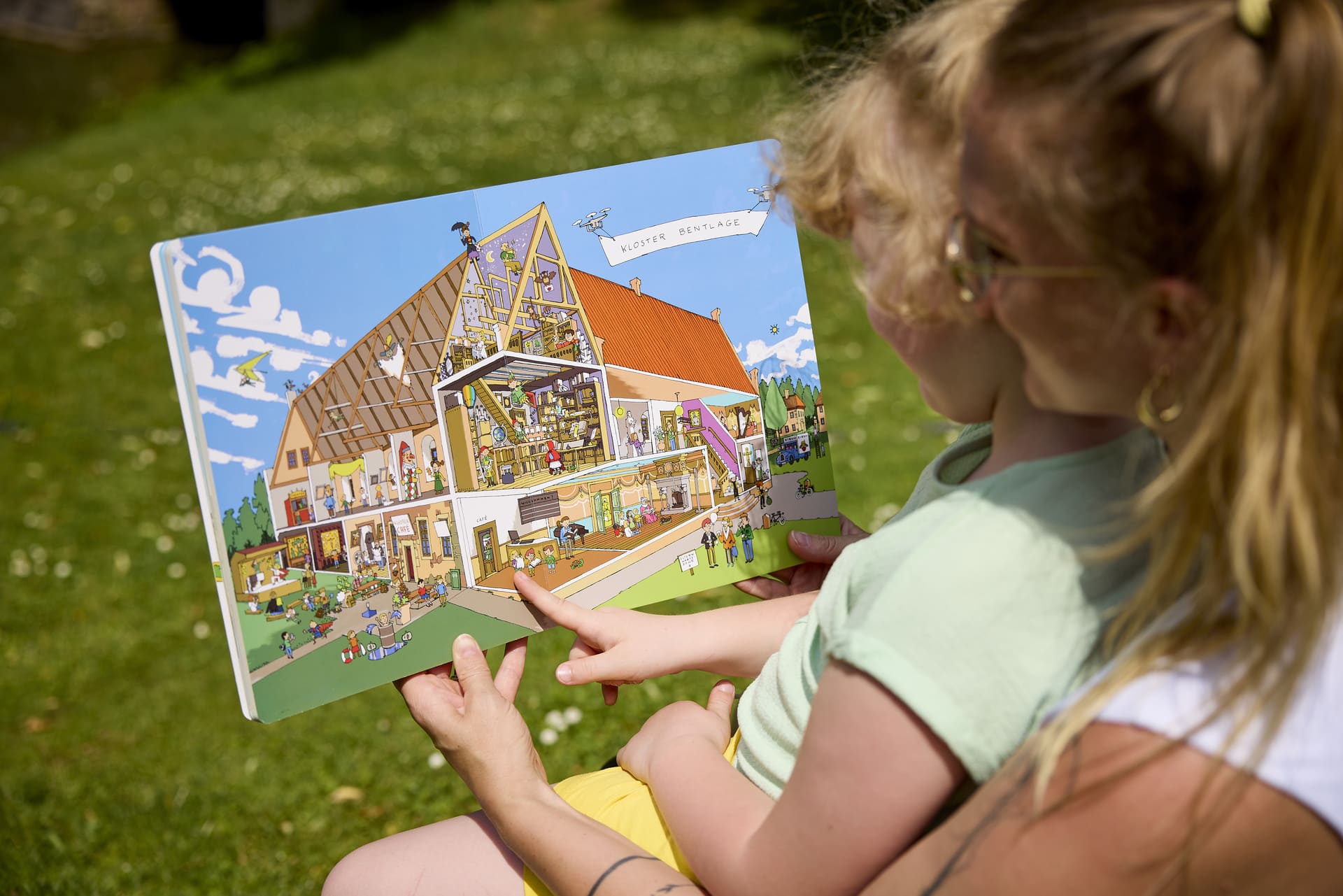
This required a new perspective, because in reality the houses don't look exactly like this. In the case of Hülshoff Castle, we chose the best-known view and cut the building open for the Wimmelbuch. This allows the viewer's eyes to wander through the individual rooms with their various functions. With a realistic perspective, we could have shown far fewer interiors because some of the rooms are behind each other. The main aim was to present the castles and palaces in a varied way. There is something different going on at every location.

What unites the castles and palaces?

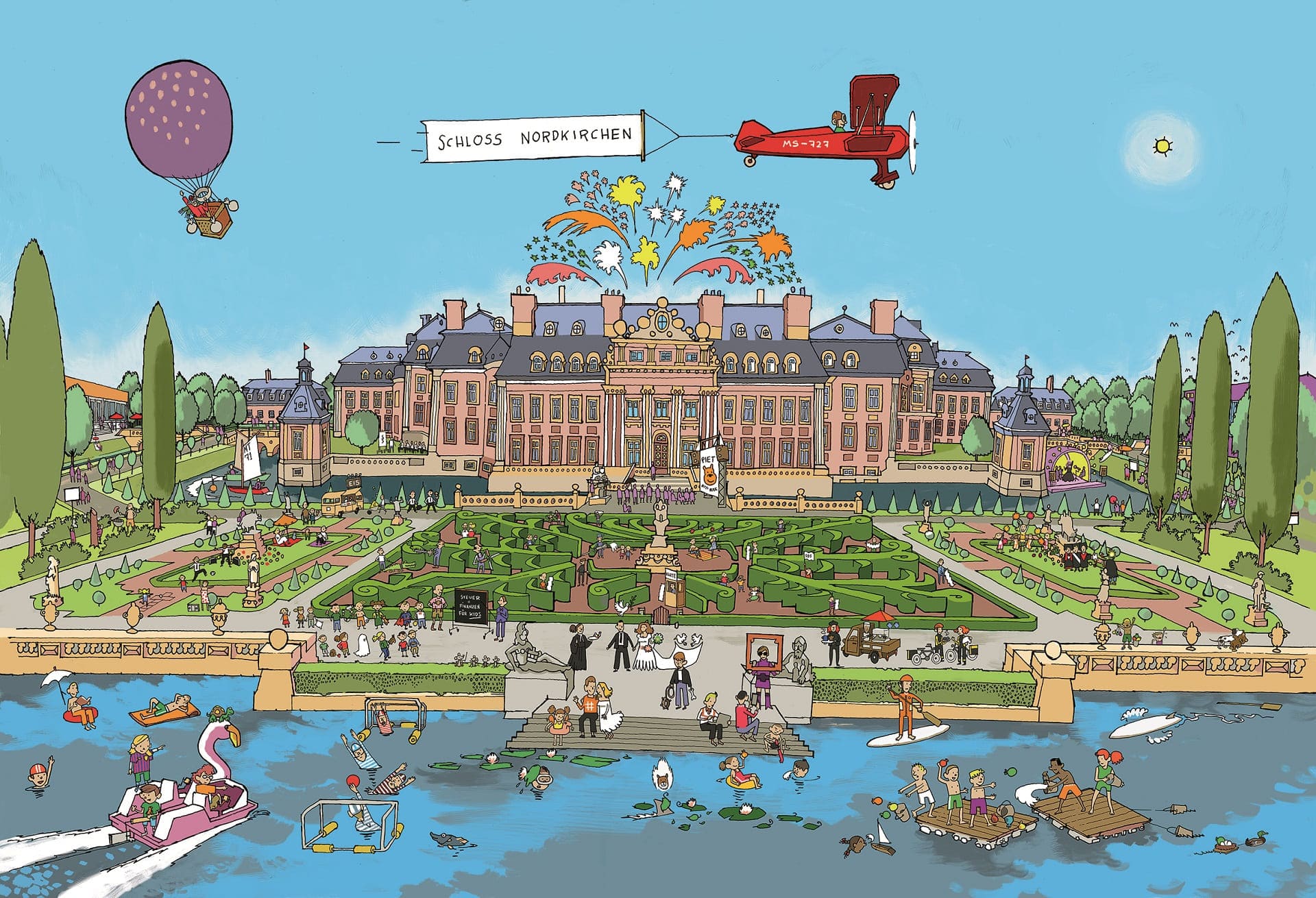
Marriages are possible everywhere. Otherwise, the concepts are different. Hülshoff Castle, for example, is centred around its famous inhabitant Annette von Droste-Hülshoff; it is a museum for one person. At Nordkirchen Castle, which houses the NRW School of Finance, we decided to show the imposing exterior view. I also find the current use of the Erbdrostenhof in Münster, which was almost completely destroyed in the Second World War, exciting. While one side with the huge hall has been resurrected in baroque style, the rest has been converted into relatively boring offices. To remind us of the history, we have included a model of the ruins in the hidden object.

Old buildings fascinate you. What is the attraction of drawing them?

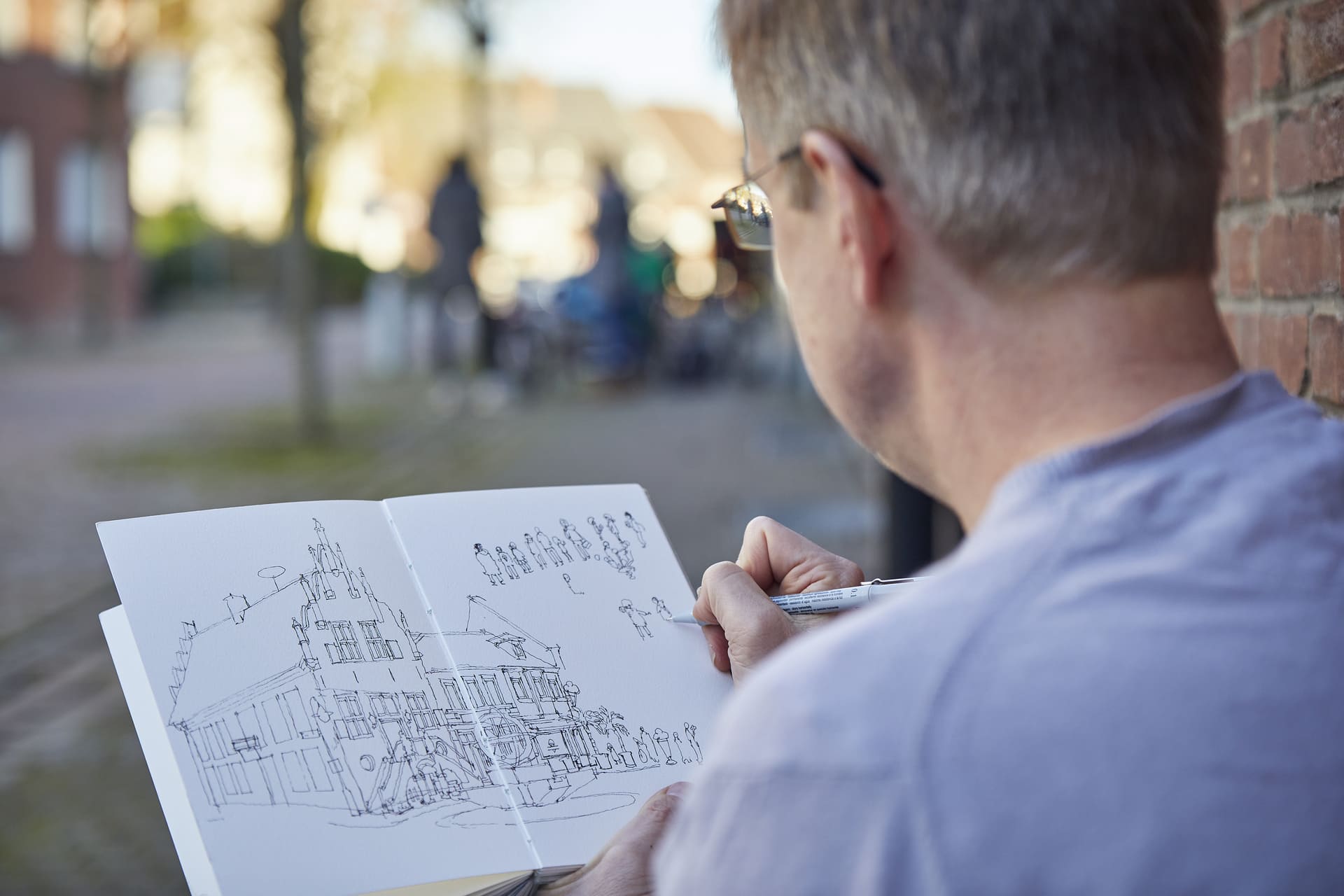
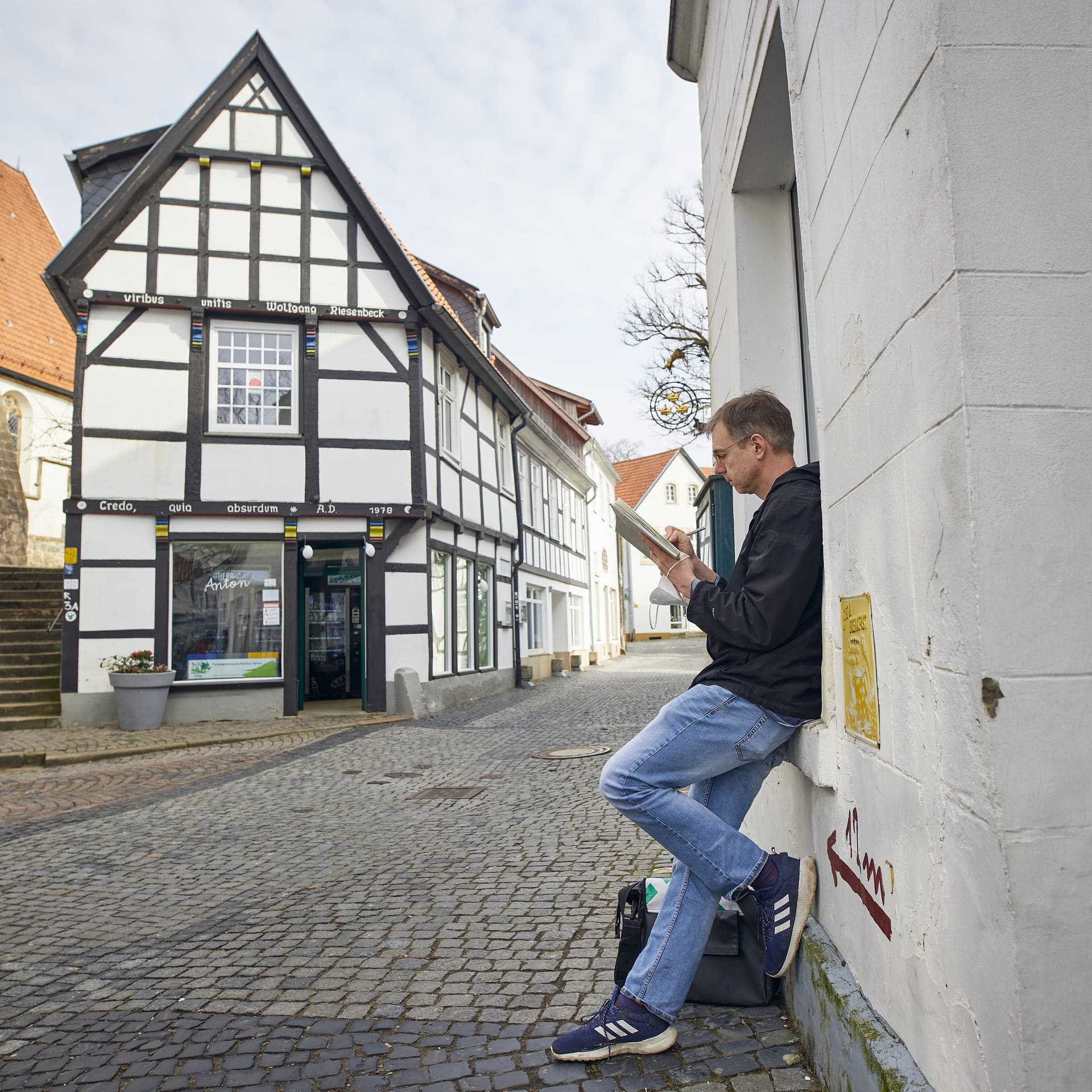
I'm fascinated by architecture, urban planning and everything that has to do with urbanity. I'm a big fan of urban sketching - that means drawing the places where I live or am currently travelling. It's a kind of visual journalism. When urban sketching, however, I like to work in my sketchbook without any preliminary sketches. I have a weakness for the neglected corners of the city with all their architectural sins. They look very forbidding in real life, but as drawings they are beautiful.

How do you develop the ideas for a hidden object picture?

When there's a big idea, the small ones come naturally. For example, I take a look at the old knight's castle in Bentheim, where the barbaric Middle Ages are still present with dungeons, dungeons and torture chambers. Today, a medieval market is held there - with tournaments and a fairground. This automatically gives rise to countless details.

How do you manage to tell a story without text?

Illustration is communication design, so the design communicates. A well-known castle like Nordkirchen has to be recognisable at first glance. And every figure must also communicate. In Raesfeld Castle, where the Akademie des Handwerks is based, a man is sitting in front of a drawing table and holding a book called "Bauhaus" in his hands. It is already clear that he is an architect. At the entrance, I drew the employee who actually gave me a tour of the building. Just like in real life, he is wearing a lumberjack shirt and carrying a large bunch of keys. Everyone immediately thinks: That must be the caretaker!

More about the Castles & Palaces Hidden Object Book

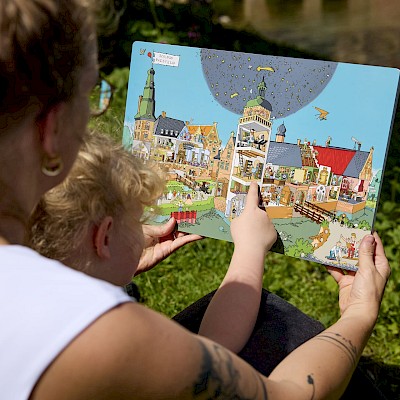
The Castles & Palaces Hidden Object Book
© Münsterland e.V./Philipp Fölting
Bring it home!

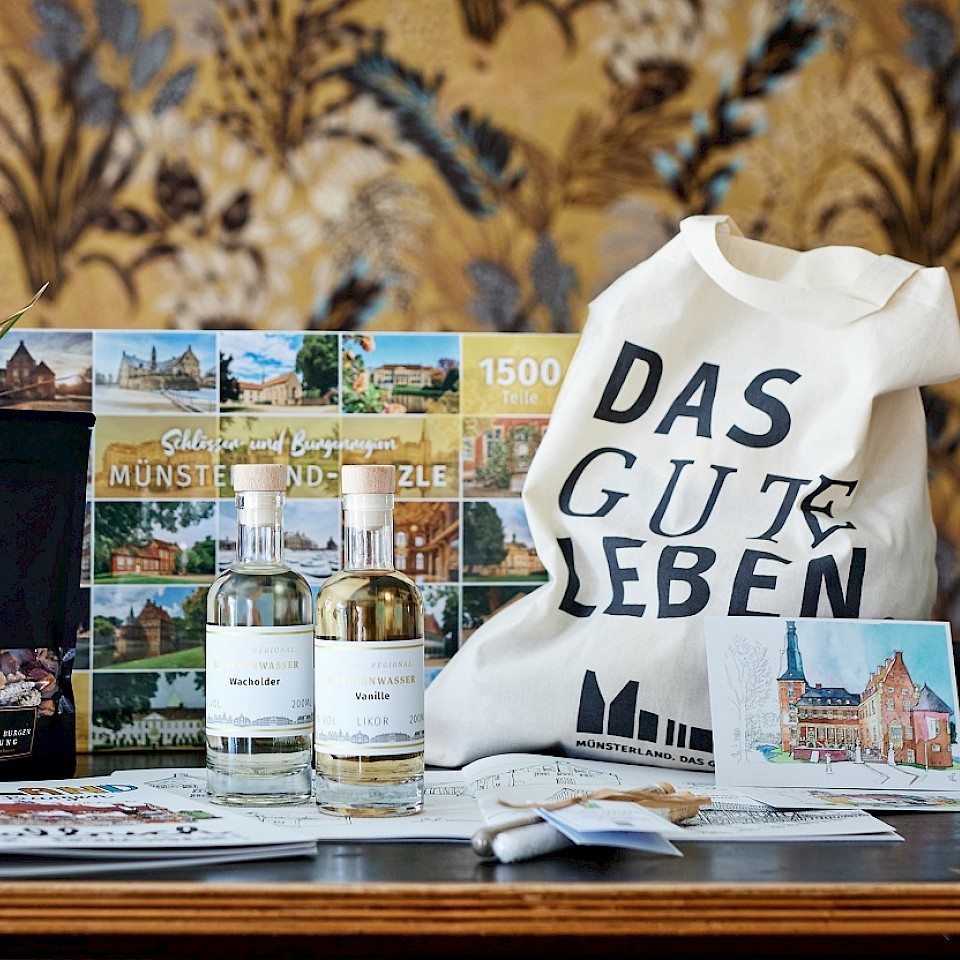
The Castles & Palaces Hidden Object Book is part of the Münsterland collection, which also includes other great products from the region in addition to the book. On the following page, you can find out where you can order the hidden object book and other Münsterland items.

Find out more

Before you became a draughtsman and illustrator, you worked in various professions: Printer, sailor and educator. Do your experiences from back then play a role in your work today?

I always drew on the side. So my sketchbooks from back then not only contain motifs from my travels, but also pictures that I took during or just after my working hours. I captured special things in pencil, as well as important things that I had to memorise. Drawing became as commonplace for me as writing. As a result, I became more practised and more experienced. And I did something about the fear of making mistakes when drawing.

Your motivation to draw was triggered by an encounter with an artist in Hamburg in the mid-1980s...

I happened to see a man in the city who was working on his easel on a one-point perspective of Peterstraße, a half-timbered street that had been restored somewhat to death. I thought: I want to do that too! I wanted to create something beautiful with my own hands. Strictly speaking, I was already a draughtsman, because I drew voluntarily and regularly. In my free time, I used felt-tip pens and paper, drew ships and cities and developed continuous plots with recurring characters. All amateurish, of course, and without any pretence. The draughtsman in Peterstraße made me realise what was possible. Since then, I wanted to do everything differently: I wanted to be better!

Close Contact & Info
Close